Muhammad Aurangzeb: Finance Minister to Visit Washington for US Trade and Investment Talks
Web Desk July 17, 2026Pakistan and the United States will discuss tariffs, trade, investment, and economic cooperation as negotiations on a broader bilateral partnership continue.
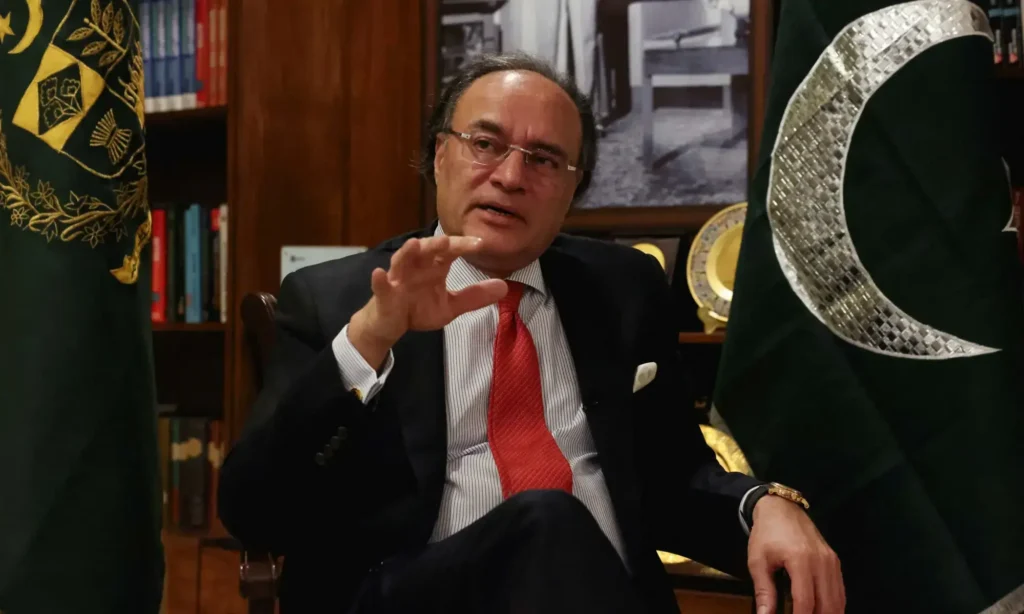
Finance Minister Muhammad Aurangzeb prepares for high-level economic talks in Washington.
Muhammad Aurangzeb, Pakistan’s Finance Minister, will arrive in Washington on Saturday for a three-day visit to strengthen trade, finance, and investment ties with the United States as both countries continue negotiations on a broader economic partnership.
During the visit, Aurangzeb will meet senior officials from the Office of the United States Trade Representative (USTR), the US Export-Import (Exim) Bank, the US International Development Finance Corporation (DFC), and the International Monetary Fund (IMF), according to diplomatic sources.
Pakistan and the United States will focus on developing a framework for a bilateral trade agreement that aims to increase trade, attract investment, and deepen economic cooperation. Officials will discuss tariffs, market access, investment opportunities, and long-term commercial partnerships.
Aurangzeb will also hold talks with the Exim Bank and the DFC to secure financing for infrastructure, energy, and private-sector development projects in Pakistan.
His visit follows another round of trade negotiations that began in Washington last week. Officials from both countries continue to negotiate tariff reductions and broader economic cooperation.
The negotiations stem from tariff measures that US President Donald Trump introduced on 2 April 2025 under the International Emergency Economic Powers Act (IEEPA). The original policy imposed a 29% tariff on Pakistani exports.
A Pakistani delegation visited Washington in July 2025 and successfully convinced US officials to reduce the proposed tariff from 29% to 19%.
Earlier this year, the US Supreme Court struck down the IEEPA-based tariff policy. In response, the Trump administration introduced a temporary 10% global tariff under Section 122 of the Trade Act. That measure will expire on 24 July after the 150-day statutory period.
At the same time, the USTR continues its Section 301 investigation into nearly 60 countries, including Pakistan, over alleged forced labour and related trade practices. Pakistan has submitted detailed responses and provided additional documentation ahead of the latest negotiations.
Under the proposed Section 301 measures, Pakistan could face an additional 10% tariff, while India and 53 other countries could face tariffs of 12.5%. The USTR continues to hold public hearings on the matter.
Alongside tariff discussions, both governments want to expand bilateral trade, encourage foreign investment, and create new opportunities for economic collaboration.
Aurangzeb last travelled to Washington in April to attend the IMF and World Bank Spring Meetings. During that visit, he held more than 50 meetings with international financial institutions, investors, and credit rating agencies to present Pakistan’s economic reform agenda and plans to strengthen macroeconomic stability.
He also outlined Pakistan’s strategy to return to international capital markets through Panda Bonds and Eurobonds. In addition, he met US Treasury officials and representatives of multilateral institutions to discuss the economic effects of regional tensions and volatility in global energy markets.
This version reduces passive constructions significantly and keeps the article aligned with professional international news writing standards.