Mir Raza Ali Case: Judicial Commission Recommends JIT Led by DIG Irfan Baloch
Sindh judicial commission criticises police handling of the death investigation and calls for a fresh probe and accountability measures
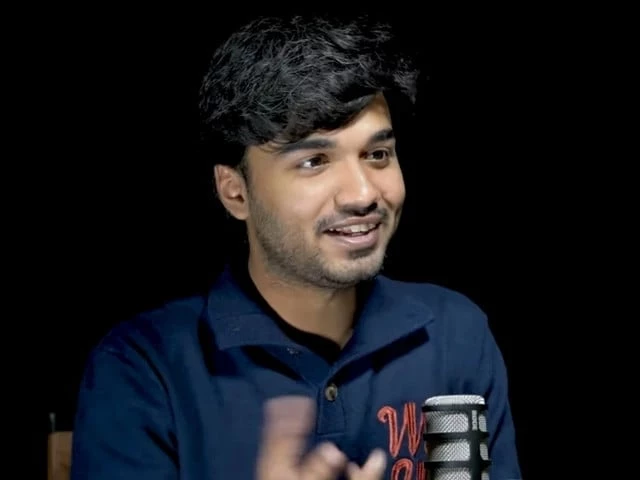
Mir Raza: Judicial commission recommends a multi-agency JIT to investigate the Karachi death case.
KARACHI: A judicial commission investigating the death of 25-year-old Mir Raza Ali has recommended forming a Joint Investigation Team (JIT) led by DIG Irfan Baloch, with representatives from the Inter-Services Intelligence (ISI), Intelligence Bureau (IB), Pakistan Rangers (Sindh) and the National Cyber Crime Investigation Agency (NCCIA).
The commission, headed by Sindh High Court Justice Omar Sial, described the police investigation as a serious failure and said a fresh, intelligence-based probe was necessary to establish the facts and restore public confidence.
Justice Sial submitted the report to Sindh Chief Minister Murad Ali Shah on October 15, 2026. According to The Express Tribune, which reviewed the executive summary, the commission also recommended a separate high-level inquiry into possible misconduct by police officers involved in the initial investigation.
Post-Mortem Findings Rule Out Suicide
Mir Raza Ali, an Institute of Business Administration graduate who operated a waffle-making business under the name Wafflix, went missing from his residence in Karachi’s PECHS area in the early hours of July 28, 2026.
His family registered FIR No. 795/2026 at Ferozabad police station the same day under Section 365 of the Pakistan Penal Code (PPC), relating to kidnapping.
Police found his body the following morning within the jurisdiction of Gulistan-e-Johar police station. Doctors conducted a post-mortem examination at Jinnah Hospital, and the family buried him later that day.
Police initially treated the death as a suspected suicide. However, the family challenged that conclusion, alleging that the body bore visible signs of torture.
The commission said the Police Surgeon identified anomalies in the initial post-mortem report in early August. Authorities subsequently exhumed the body on August 8 for a fresh examination.
The final medical report, issued around August 31, concluded that the cause of death was a perforating firearm injury from the back, ruling out suicide, according to the commission’s findings.
Police later added Sections 302 PPC, relating to murder, and 201 PPC, concerning the disappearance or destruction of evidence, to the FIR.
The commission concluded that the bullet’s trajectory, wound location, absence of blood, condition of the body, alleged acid burns and anaesthesia detected in the blood contradicted the suicide theory.
Its report stated that the available medical evidence pointed to murder.
Commission Criticises Police Investigation
The commission delivered a strong assessment of the police investigation, saying officers had failed in their fundamental duty to establish the truth.
According to the report, the initial suicide theory relied on unverified text messages, selected video footage obtained by SHO Adeel Afzaal and an initial post-mortem report by Dr Osama Shaikh that did not itself establish suicide.
The commission also noted that Dr Shaikh’s second report contradicted his earlier findings.
It described the investigation as a “rudderless ship” and said an active cover-up during the early stages could not be conclusively ruled out.
The report identified several shortcomings, including tunnel vision among senior officers and a failure to reconsider the original suicide theory despite emerging contradictions.
It also criticised the handling of evidence, noting that dozens of authorised and unauthorised police personnel had dealt with material without proper documentation.
Furthermore, the commission said police ignored its recommendation to appoint a focal person for public briefings, allowing speculation to grow and creating embarrassment for the government.
Medical Board Dispute Raises Questions
The report also examined the controversy surrounding the medical board formed to investigate the cause of death.
Following a court order under Section 176(2) of the Code of Criminal Procedure, authorities notified an eight-member board on August 6, headed by Karachi Police Surgeon Dr Summaiya Syed.
However, the Sindh Health Directorate replaced it with a five-member board in the early hours of August 7. The revised panel included a larger representation of doctors from Hyderabad and Jamshoro.
Mir Raza’s family rejected the revised board at the graveyard, delaying the exhumation.
Following public pressure and a legal notice, the government restored the original board on August 8. The exhumation was completed at 11am that day.
The commission called the change highly irregular and legally flawed. It attributed the decision to senior officials in the Sindh Health Secretariat, particularly the secretary and special secretary for health.
The report also criticised the director-general of health services for failing to intervene despite concerns about the legal authority to make the change.
According to the commission, the officials responsible could not provide a convincing explanation for the abrupt alteration.
Commission Reviews Meeting at CM House
The commission also examined a meeting held at the Chief Minister’s House on August 9, 2026, attended by Dr Osama at the request of the Additional Inspector General of Karachi Police.
It found no evidence that the meeting had been arranged to pressure the doctor. The commission said no adverse inference could be drawn from the briefing alone.
However, it observed that inviting the Police Surgeon would have been prudent.
The report also criticised Dr Osama’s subsequent conduct, alleging that his actions continued to make the meeting controversial and contributed to efforts to discredit the Police Surgeon.
JIT and Accountability Inquiries Recommended
The commission said the case had reached a critical stage because public trust in the investigation had deteriorated significantly. It warned that even a correct finding or the arrest of the actual perpetrator might not satisfy the public.
It also noted that a substantial portion of the physical evidence had been compromised, making a rigorous, intelligence-based investigation essential.
The report recommended that police openly acknowledge their operational failures, apologise for past lapses and initiate formal inquiries against the officers responsible.
To address the family’s request and restore public confidence, the commission proposed a JIT led by DIG Irfan Baloch, with senior representatives from the ISI, IB, Pakistan Rangers (Sindh) and NCCIA.
The commission also recommended a separate high-level inquiry, preferably led by the Federal Investigation Agency (FIA), into whether police officers involved in the first 10 days of the investigation violated Sections 201, 166(2) and 218 of the PPC.
It said the inquiry should pursue criminal proceedings alongside departmental disciplinary action against any officials found culpable.
The commission clarified that it lacked the investigative powers needed to determine conclusively whether a deliberate cover-up had occurred. However, it said several unexplained actions raised the possibility that misconduct may have taken place.
Commission Conducts 20 Public Sessions
The commission began its work on August 27, 2026, and recorded statements through October 7. It held 20 public sessions and heard testimony from 50 witnesses.
Investigators also inspected the crime scene and surrounding areas on October 5.
The commission said public hearings were intended to promote transparency and limit speculation. Its detailed findings on accountability and recommendations appear in the main report’s responses to its third and fourth terms of reference.
Sindh Cabinet Reviews Report and Approves Financial Reforms
The report was presented to the Sindh cabinet in seven separate envelopes during a meeting chaired by Chief Minister Murad Ali Shah at the CM House in Karachi, according to the chief minister’s spokesperson.
The cabinet formed a subcommittee comprising Home Minister Ziaul Hassan Lanjar, Nasir Hussain Shah, Saeed Ghani and the advocate general to oversee implementation of the commission’s recommendations.
At the same meeting, the cabinet approved a World Bank-supported programme worth $150 million to reform Sindh’s property tax system and strengthen local government finances.
Under the Sindh Property Revenue Enhancement Programme, the government aims to increase property tax collection across Karachi’s 25 town municipal corporations from Rs2.3 billion to Rs25.5 billion.
The World Bank is expected to provide $110 million for the Programme-for-Results component and $40 million for investment projects. The Sindh government will contribute an additional 20 per cent of the amount linked to the Programme-for-Results component.
The initiative also aims to modernise property tax collection in other urban local councils and strengthen the institutional capacity of 45 selected councils.
The cabinet separately approved introducing an Integrated Financial Management Information System (IFMIS) in local government institutions to improve financial management and administrative performance.
The package includes financing and implementation agreements, a results-assessment framework, verification procedures and environmental and social safeguards. According to the spokesperson, the cabinet granted post-facto approval.
The World Bank’s board is expected to consider the programme package on October 30, 2026.