Lebanon Ceasefire: Israel and Hezbollah Agree Truce After Deadly Escalation
US and Qatari mediators help secure a ceasefire as renewed violence in Lebanon raises concerns over wider regional stability and delays key US-Iran negotiations.
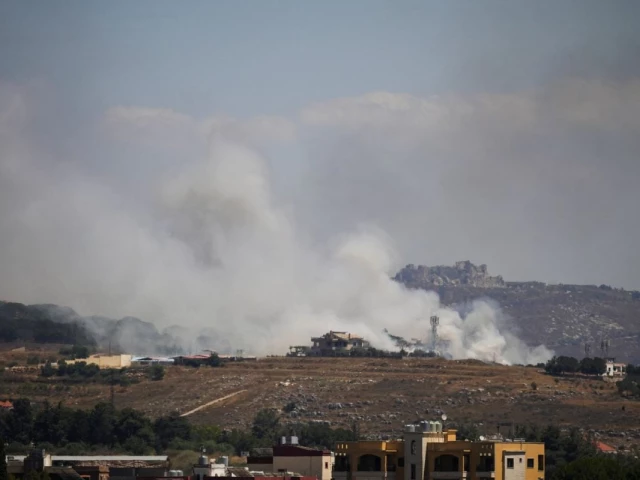
Smoke and destruction in southern Lebanon after Israeli airstrikes ahead of the Israel-Hezbollah ceasefire.
Israel and Hezbollah agreed to a ceasefire in Lebanon on Friday following a sharp escalation in hostilities that threatened broader diplomatic efforts to stabilise the Middle East. The agreement came after intensive mediation by the United States and Qatar, with support from Iran.
A senior US official said the ceasefire took effect at 4pm local time in Lebanon. The official stated that both sides agreed to halt hostilities after exchanging fire earlier in the day, while international mediators worked to prevent further deterioration of the security situation.
The Lebanon Ceasefire follows one of the deadliest days of fighting in recent months. According to Lebanon’s Health Ministry, Israeli strikes killed at least 31 people across southern and eastern parts of the country on Friday. The violence also resulted in significant damage to civilian infrastructure and residential areas.
The renewed clashes disrupted diplomatic efforts between Washington and Tehran. Planned US-Iran talks in Switzerland were cancelled as fighting intensified, creating uncertainty around negotiations considered crucial for maintaining regional stability and ensuring the reopening of the Strait of Hormuz to international shipping.
A senior Hezbollah lawmaker said Iran informed the group that discussions with the United States could not continue without a comprehensive ceasefire. Iran’s Foreign Ministry later accused Washington of bearing direct responsibility for the escalation, arguing that continued Israeli military operations undermined broader ceasefire commitments.
Israel’s military said it conducted extensive overnight operations, targeting more than 80 sites it described as Hezbollah command centres, launch positions and military infrastructure in southern Lebanon. The army also reported the deaths of four Israeli soldiers during combat operations and said several others were injured in separate incidents.
Hezbollah said its fighters launched rocket and mortar attacks against Israeli forces near the strategic Ali al-Taher hills overlooking Nabatieh. The group also claimed it targeted Israeli tanks and engaged troops attempting to advance in the area.
The latest violence marked the most serious confrontation since a US-Iran agreement sought to contain the wider regional conflict. That agreement was also expected to reduce tensions between Israel and Hezbollah along the Lebanese border.
Iran strongly condemned the Israeli strikes, describing them as aggressive attacks that killed and injured Lebanese civilians. Foreign Ministry spokesman Esmail Baghaei warned that continued military escalation could have serious consequences for regional peace and security. He said Tehran would take all necessary measures to protect its interests and allies.
Lebanese authorities say Israel’s military campaign, which began on 2 March, has killed 3,912 people, injured 11,873 others and displaced more than one million residents. During the conflict, Israeli forces advanced more than 10 kilometres into Lebanese territory.
Israeli Prime Minister Benjamin Netanyahu said troops would remain in southern Lebanon for as long as necessary to protect communities in northern Israel. He vowed that Hezbollah would face a heavy price for attacks against Israeli forces and territory.
Israeli Defence Minister Israel Katz echoed that position, saying the military would respond forcefully to any future attacks. Several senior Israeli politicians also called for tougher action against Hezbollah following the deaths of Israeli soldiers.
The ceasefire offers a temporary pause in hostilities, but sharp differences between the parties and continuing political tensions suggest that achieving a lasting settlement remains a significant challenge.