KP Emergency and Governor’s Rule: Federal Government Announces Constitutional Measures
The federal cabinet cites security concerns in Khyber Pakhtunkhwa, while PTI Chairman Gohar Ali Khan criticises the move and Governor Faisal Karim Kundi calls for unity
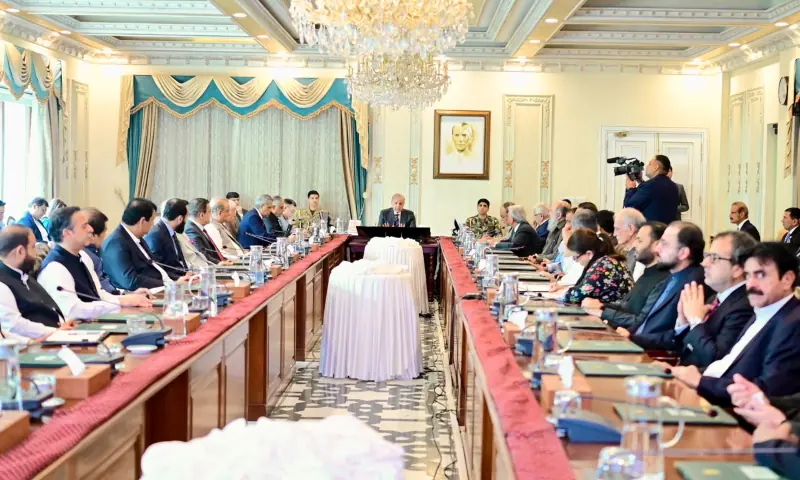
The federal government announces emergency measures and governor’s rule in Khyber Pakhtunkhwa amid security concerns.
ISLAMABAD: The federal government has imposed emergency measures and governor’s rule in Khyber Pakhtunkhwa (KP) following approval by President Asif Ali Zardari of recommendations made by the federal cabinet, according to the supplied report.
The decision followed an emergency cabinet meeting chaired by Prime Minister Shehbaz Sharif. The cabinet reviewed the province’s security situation and cited what it described as the KP government’s “deliberate disengagement from the fight against terrorism”.
According to the report, the measures were approved under Articles 232 and 234 of the Constitution, which deal with emergency provisions and governor’s rule.
New Chief Secretary Appointed
Following the decision, the federal government appointed Dr Muhammad Fakhr Alam Irfan as KP chief secretary. The official notification stated that his appointment would take effect immediately and remain in place until further orders.
Dr Irfan, a Grade 22 officer of the Pakistan Administrative Service, previously served as secretary of the Power Division in the federal Ministry of Energy.
The government also placed Grade 20 officer Muhammad Yahya Akhunzada at the disposal of the KP government. He previously served as an additional secretary at the Prime Minister’s Office and held several administrative positions in the province.
What the Constitution Says
Article 232 provides for a proclamation of emergency when Pakistan’s security, or that of any part of the country, faces a serious threat. The provision includes circumstances involving war, external aggression or internal disturbances beyond a provincial government’s control.
The report notes that invoking Article 232 over internal disturbances beyond a provincial government’s control requires a resolution from the provincial assembly.
Article 234 deals with the failure of constitutional machinery in a province. Under this provision, a proclamation must be presented to a joint sitting of Parliament for approval. It generally expires after two months unless approved and cannot remain in force for more than six months.
The report also states that Article 233, which concerns the suspension of certain fundamental rights during an emergency, was not mentioned in the presidential summary.
PTI Chairman Rejects the Decision
PTI Chairman Gohar Ali Khan strongly condemned the decision, describing it as undemocratic and a threat to provincial autonomy.
He argued that peace and stability could not be achieved by weakening the province’s constitutional authority or disregarding the mandate of its people.
Gohar said his party supported efforts to eliminate terrorism but rejected using the security situation to suppress public voices or pursue political objectives. He called for national unity, negotiations and a joint strategy to address terrorism.
He also said PTI would raise the issue through constitutional, legal and democratic forums.
Governor Kundi Calls for Unity
Khyber Pakhtunkhwa Governor Faisal Karim Kundi said the measures aimed to establish peace, promote prosperity and support the province’s development.
He urged political leaders and citizens to set aside their differences and work together for lasting peace. Kundi also highlighted the sacrifices made by civilians and security personnel in the fight against terrorism.
The governor said he would continue raising public concerns at the relevant forums and called for a united effort to protect the province’s future.
Prime Minister Highlights Security and Economic Concerns
During the cabinet meeting, Prime Minister Shehbaz Sharif said the government would not allow political tensions to undermine economic stability.
He also expressed concern over casualties among civilians, police personnel, security officials, women and children amid the security challenges in KP and Balochistan.
The prime minister reiterated Pakistan’s calls for Afghanistan to take action against terrorist elements. He also expressed solidarity with Saudi Arabia following a reported Houthi attack and reaffirmed Pakistan’s commitment to regional peace.
On the economic front, Shehbaz referred to the recent staff-level agreement with the International Monetary Fund (IMF). He expressed hope that Pakistan would receive a $1.2 billion tranche within the year.
The prime minister also praised the country’s political and military leadership for their efforts to strengthen fiscal discipline and highlighted Pakistan’s diplomatic engagement with international partners.
The decision on KP has prompted contrasting responses from federal and provincial political leadership, with security, constitutional authority and provincial autonomy at the centre of the debate.