Uzbekistan and Jordan Seek New Opportunities for Economic Partnership
Ahead of President Shavkat Mirziyoyev’s planned visit to Amman, both countries are exploring trade expansion, joint manufacturing, investment and cooperation in key industries.
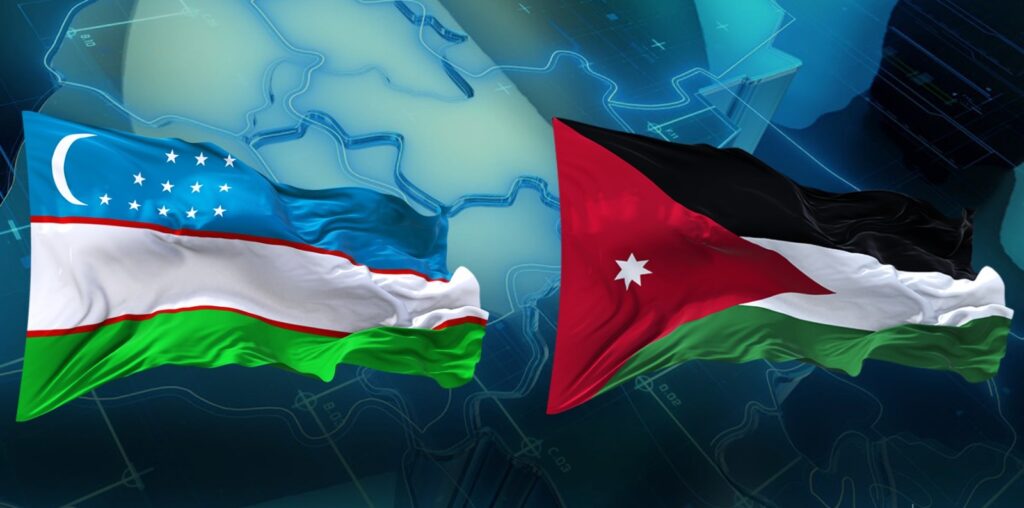
Uzbekistan Jordan economic partnership gains momentum through trade, investment and joint industrial projects.
Uzbekistan and Jordan are moving towards a new phase of economic cooperation, with trade expansion and joint industrial projects emerging as key priorities.
The two countries have complementary economic strengths. Uzbekistan is expanding its industrial and agricultural production while strengthening exports. Meanwhile, Jordan has established expertise in pharmaceuticals, chemicals, logistics and international trade.
These strengths offer opportunities to move beyond conventional trade and develop joint manufacturing and investment projects.
Uzbek President Shavkat Mirziyoyev is scheduled to visit Jordan on November 23–24. The planned visit is expected to provide fresh momentum to bilateral cooperation, with particular attention to trade, investment and direct business contacts.
Diplomatic Relations Provide Foundation for Cooperation
Uzbekistan and Jordan established diplomatic relations on February 15, 1993. However, bilateral ties entered a new phase following the state visit of Jordan’s King Abdullah II ibn Al Hussein to Uzbekistan in August 2025.
During talks in Samarkand, the two sides signed 15 bilateral documents. These covered investment protection, the establishment of a joint commission, tourism, agriculture, higher education and other areas.
The agreements created an institutional framework for expanding economic relations and developing practical cooperation.
Bilateral Trade Records Strong Growth
Trade between Uzbekistan and Jordan increased from $850,000 in 2017 to $8.53 million in 2025, representing almost tenfold growth.
During this period, Uzbekistan’s exports to Jordan rose from $100,000 to $5.42 million. Meanwhile, imports from Jordan increased from $750,000 to $3.11 million.
Trade also grew by 79.2% in 2025. Uzbekistan recorded a positive trade balance of $2.31 million for the first time.
Food products accounted for 94.2% of Uzbekistan’s exports to Jordan in 2025. Major products included biscuits, wafers, confectionery, dried fruits and raisins.
In contrast, Uzbekistan’s imports from Jordan mainly comprised crop protection products, pharmaceuticals and chemicals. This trade structure highlights opportunities to diversify products and expand cooperation.
Jordan Offers Opportunities for Uzbek Exporters
Jordan’s open economy and international trade links make it a potential destination for Uzbek products.
In 2025, Jordan’s total foreign trade reached $43.9 billion, including imports worth $29 billion. The country also maintains trade agreements with the United States and several other partners.
Furthermore, the Port of Aqaba serves as an important regional logistics gateway.
According to an analysis by the Center for Economic Research and Reforms (CERR), Jordan imported approximately $8.9 billion worth of products in categories where Uzbekistan has export potential. This represented 31% of Jordan’s total imports in 2025.
Major import categories included:
- Electrical machinery and equipment: $1.3 billion
- Plastics and plastic articles: $942.5 million
- Knitted fabrics: $747.5 million
- Fruits and nuts: $419.5 million
- Copper and copper products: $288.2 million
Uzbekistan already exports some of these products to international markets in significant quantities. Therefore, electrical equipment, textiles, food products, metals and chemicals offer potential areas for expanding supplies to Jordan.
However, exporters will need to address product certification and distribution requirements. Establishing trading houses, building relationships with local distributors and organising business forums could also strengthen market access.
Joint Investment and Industrial Projects
Currently, 18 enterprises with Jordanian capital are registered in Uzbekistan. Four operate as joint ventures, while 14 are wholly owned by Jordanian investors.
The investment protection agreement signed in 2025 provides an additional legal framework for future projects.
Several industries offer opportunities for collaboration.
Textiles and garment manufacturing
The textile sector presents opportunities for joint production. One possibility involves establishing garment manufacturing facilities in Jordan’s industrial zones using Uzbek yarn and knitted fabrics.
Sindh Minister Opens ABAD Expo, Announces One-Window Office for Builders
Jordan’s trade agreements could provide access to international markets. However, businesses would need to meet applicable rules of origin and other requirements to qualify for trade preferences.
Chemicals and mineral fertilisers
The chemical industry offers another area of potential cooperation. Jordan has significant phosphate and potash resources, while Uzbekistan has experience in producing mineral fertilisers.
This creates opportunities to explore joint production of compound fertilisers. Potential partners include Jordan Phosphate Mines Company and Arab Potash Company.
Pharmaceuticals and technology
Jordan has an established pharmaceutical manufacturing sector. Approximately 75% of its pharmaceutical production is exported.
Cooperation with companies such as Hikma Pharmaceuticals could involve localising medicine production in Uzbekistan, exchanging manufacturing technologies and sharing expertise in quality standards.
The partners could also explore supplying finished pharmaceutical products to Central Asian markets. Such projects would depend on investment conditions, regulatory approvals and commercial agreements.
Overall, joint industrial initiatives could strengthen production links, encourage technology exchange and create new export opportunities.
Logistics, Water Management and Tourism
The Port of Aqaba and Jordan’s free economic zone offer opportunities to improve the storage and distribution of Uzbek products.
Businesses could explore establishing a trading house and warehouse facilities in the zone. Such infrastructure could help Uzbek exporters reach buyers in regional markets.
Water management is another important area for cooperation. Jordan faces severe water scarcity and has developed experience in wastewater treatment, water reuse and reducing distribution losses.
The As-Samra Wastewater Treatment Plant has a treatment capacity of 365,000 cubic metres per day.
Uzbekistan could benefit from exchanging expertise in digital water metering, pressure management and the reuse of treated wastewater. These areas offer practical opportunities for technical cooperation.
Tourism also provides scope for closer ties. Uzbekistan could promote pilgrimage destinations in Samarkand and Bukhara, including the Imam Bukhari Complex, among Jordanian visitors.
Cooperation between tour operators could help develop travel packages. Both countries could also explore hospitality training and stronger tourism promotion.
However, convenient air connections, service quality and digital information platforms will remain important to developing these links.
Business Forum Expected to Advance Cooperation
The agreements signed in 2025 and upcoming high-level negotiations have established a foundation for stronger economic relations.
A business forum and exhibition scheduled for Amman in November 2026 are expected to provide further opportunities for direct contact between companies from both countries.
Expanding trade, diversifying exports and developing joint industrial projects remain important priorities. Uzbekistan’s manufacturing capacity and Jordan’s experience in international trade and industry offer complementary opportunities.
The planned presidential visit is expected to give further momentum to cooperation in trade, investment, manufacturing and services.