Karachi Council of Foreign Relations organize a webinar on “Pakistan-Turkey Relations”
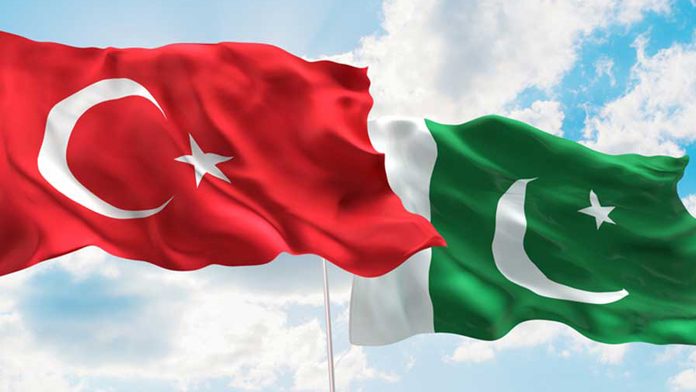
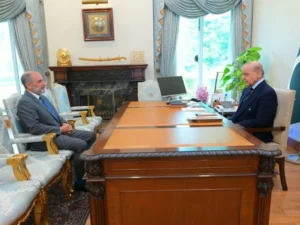
A webinar was held on 15th December 2020 on “Pakistan-Turkey Relations” under the auspices of Karachi Council of Foreign Relations (KCFR) with Mr. Ikram Sehgal in the Chair, and moderated by Dr. Huma Baqai. His Excellency Ihsan Mustafa Yurdakul, Ambassador of Turkey to Pakistan was the Chief Guest.
H.E. the Ambassador said Turkish-Pakistan ties are more than a relationship, and our interactions should be considered as a “bond”; that complement each other. Political relations with Pakistan have always been great regardless of who is in power in Turkey or Pakistan. While there is trade between the two, given the size of the two economies we must do more to enhance it further. I see an increasing appetite from Turkish investors to benefit from the emerging economic indicators of Pakistan.
Turkey is an important destination for Pakistanis, as the number of Pakistani visitors to Turkey are increasing every year. Even during this COVID period, we kept the airline connection open. Turkey is considered as one of the top destinations for Pakistani tourists and we are quite happy to host them.
Answering to a question about UAE recognizing Israel without anything in return for the Palestinian cause, the Ambassador stressed that when this was first made public there was emphasis that post recognition, Palestine would be the beneficiary. However Israel reneged on the commitment for cessation to building of new houses for Israeli citizens, let alone the other “gains the Palestine brothers might receive.”
To a question by Mr. Kaleem Farooqui, Treasurer KCFR about the possibility of revival of RCD and Turkey’s relation with Iran, his Excellency said, “I will stick to one point – neighborhood is very important. It is our tradition, during good times and bad, to be on good terms with neighbours. Regional ownership is very important because we will be open to outsiders or third countries dictating terms and intentions, but the same does not apply to neighboring countries as it will not be beneficial. There was no armed conflict between the Turkish Ottoman Empire and Safavid Iran since 17th century and it is our more peaceful border for decades which we really cherish. I believe our Iranian brothers share the same feeling.
To a question by Mr. Sirajuddin Aziz (Group Financial Institutions, Habib Bank AG Zurich) about Turkish banks opening up in Pakistan, the Ambassador agreed that the role of this major sector is missing in the economic/commercial field and needs to be rectified.
To a question from Dr. Farhatullah Babar about the Ambassador’s views on military takeovers and interference in politics both in Pakistan and Turkey, His Excellency said that the journey to democracy and rule of law is a long one, Turkey’s experience with democracy started with the 1946 elections. This was due to the will of our people, starting from earliest election until the most recent one, the people are quite eager to show up for ballot boxes. It was with the peoples’ efforts that we could uphold the principle of civilian rule and as long as you have a structure in civilian hands, intervention cannot happen.
Mr. Ikram Sehgal thanked the Ambassador “for a very intensive discussion and answering questions”. He recalled an incident in Davos when Mr. Shimon Peres and Mr. Erdogan shared the stage. Something happened on stage and Mr. Erdogan got up and walked off, “approaching me he asked, “Pakistani?” I said ‘Yes” upon which he embraced me. Later I learnt Mr. Perez had passed a remark about Israel upon which Mr. Erdogan just walked off from a world stage.”
As regards to the query about Army’s intervention in politics, he stated that interventions take place when the leaders are corrupt. Mr Sehgal said that the 2016 Turkish coup de etat, Mr. Erdogan flew straight to Istanbul where the eye of the storm was located and importantly, the Turkish Armed Forces supported him. The coup de etats do happen, with or without reason, but if the leaders are corrupt they are successful.
Mr Sehgal thanked the Ambassador for having very candidly answered the questions, and all participants including the members of the Board of Directors (KCFR) and Dr. Huma Baqai for her wonderful moderation of this webinar.