QAHM Hosts Debate on Jinnah’s Political Thought and Pakistan’s Ideological Foundations
Historian Ali Usman Qasmi examines competing interpretations of Jinnah’s legacy, Pakistan’s historiography and the evolution of national identity
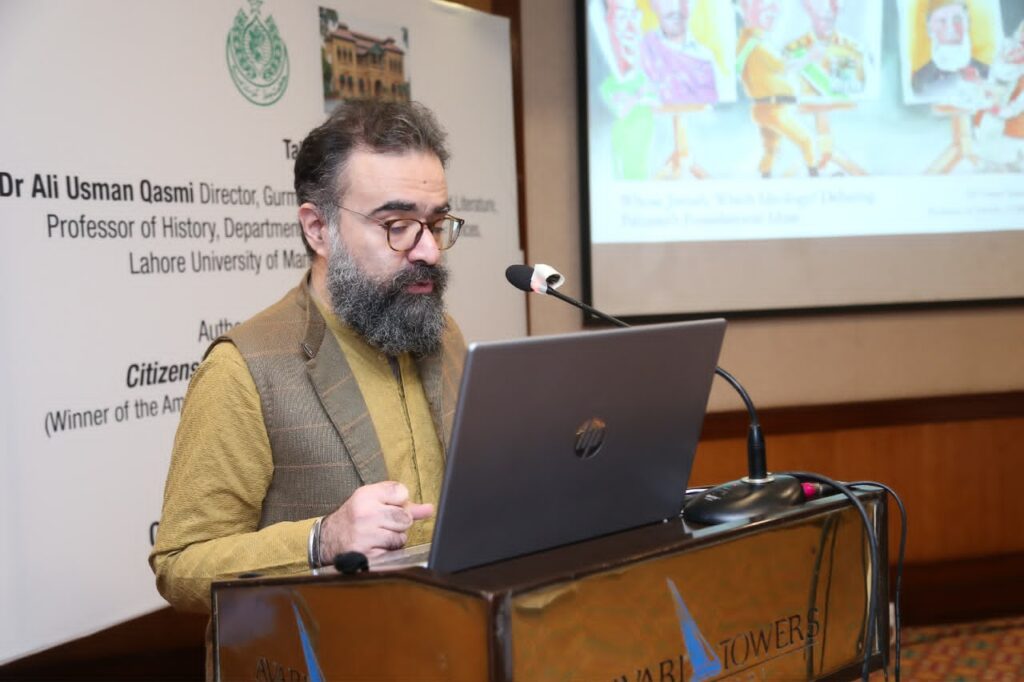
Dr Ali Usman Qasmi speaks at a QAHM discussion on Jinnah’s political thought and Pakistan’s foundational ideas
KARACHI: The Quaid-e-Azam House Museum (QAHM) hosted a thought-provoking discussion on competing interpretations of Quaid-e-Azam Muhammad Ali Jinnah’s political thought and Pakistan’s ideological foundations.
Noted historian and academic Dr Ali Usman Qasmi examined the evolution of Pakistan’s historiography and the different ideas that have shaped debates about the country’s identity.
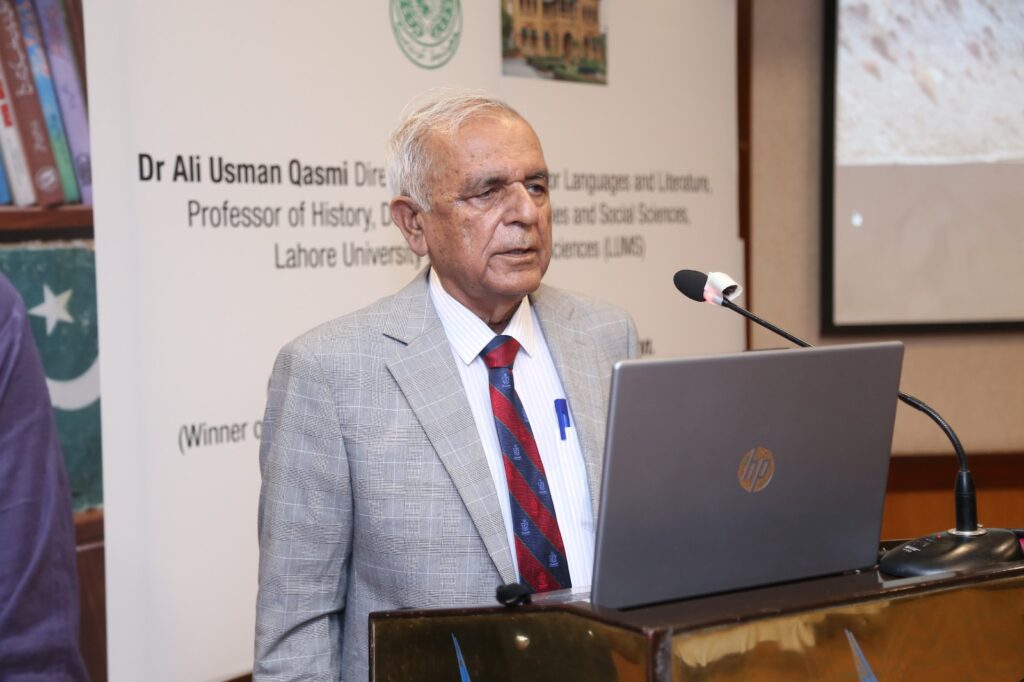
Dr Qasmi, Professor of History and Director of the Gurmani Centre for Languages and Literature at the Lahore University of Management Sciences (LUMS), delivered a talk and PowerPoint presentation titled “Whose Jinnah? Which Ideology? Debating Pakistan’s Foundational Ideas.”
The programme brought together academics, media professionals, civil society members and others interested in Pakistan’s history and intellectual development.
Debate Over Pakistan’s Historical Narrative
Dr Qasmi examined how Pakistan’s history and ideological narrative have been interpreted and reconstructed over the decades.
He focused on the relationship between historiography, state ideology and changing interpretations of the country’s foundational ideas.
The historian also discussed growing contemporary interest in the Indus Valley Civilisation and its presentation as part of a specifically Pakistani historical heritage.
He explored how different and sometimes competing conceptions of Pakistan have influenced discussions about national identity and the country’s historical foundations.
The discussion also examined changes in Pakistan’s ideological and historical understanding following the separation of East Pakistan in 1971.
Dr Qasmi noted that the 1971 rupture created a major challenge for the state and sections of the intelligentsia. They faced the task of explaining the loss of the eastern wing while retaining the ideological framework associated with the creation of Pakistan.
The discussion therefore moved beyond conventional interpretations of Pakistan’s founding narrative. It raised broader questions about Jinnah’s political legacy, Pakistan’s history and the changing understanding of national identity.
Audience Raises Questions on Jinnah and Identity
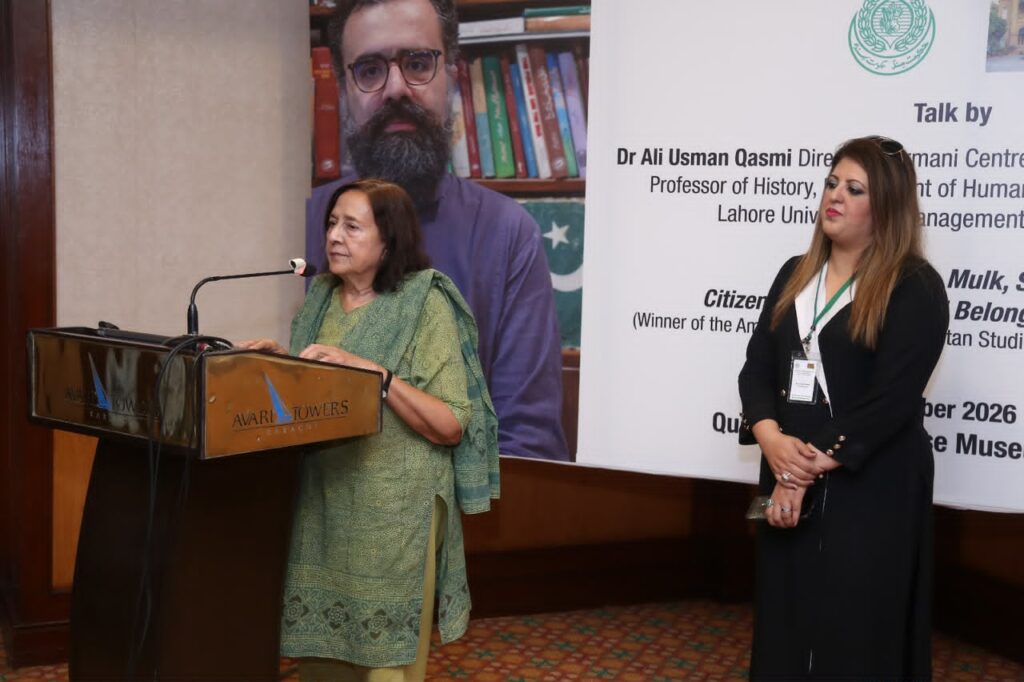
The presentation was followed by an engaging question-and-answer session.
Participants raised questions about historiography, ideology, Jinnah’s political thought and the continuing debate over Pakistan’s historical and national identity.
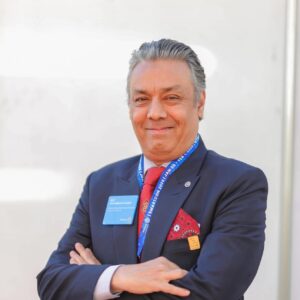
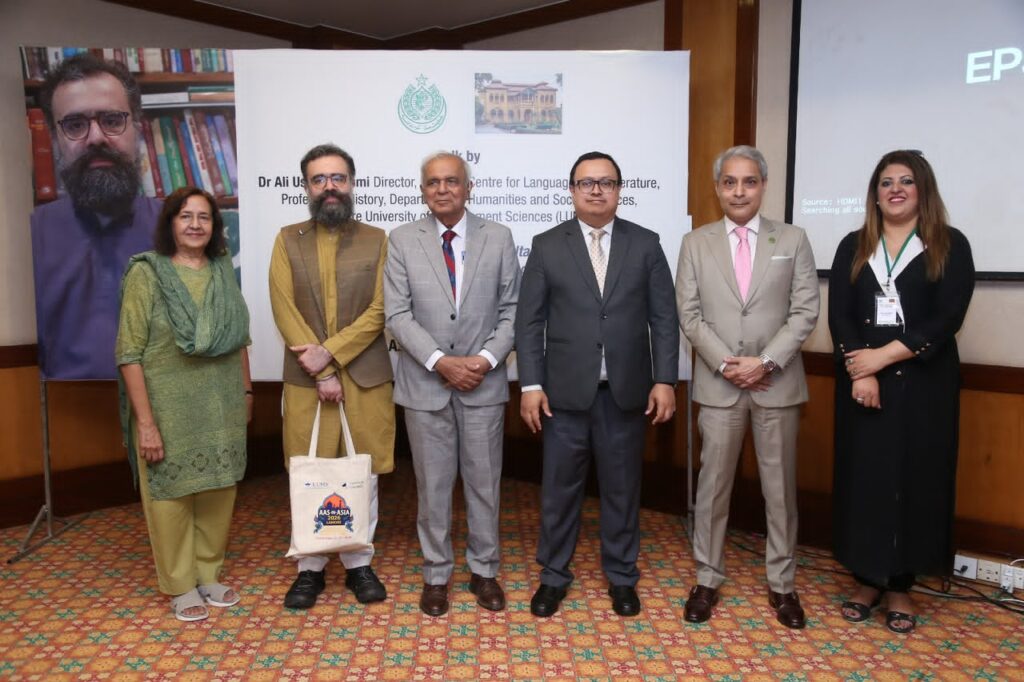
The event began with a welcome address by Commodore (Retired) Sadeed Malik, Secretary General of the QAHM Board.
Ameena Saiyid, S.I., Member of the QAHM Board of Governors, introduced Dr Qasmi and later delivered the vote of thanks and closing remarks.
Among those attending were Bangladesh Deputy High Commissioner Sakib Sadakat, Shahnaz Wazir Ali, former Pakistan State Oil chief Khalid Rahman, IBA Dean Dr Yaqoob Bangash and Nadia Ghani, Publishing Director of Lightstone Publishers.
Academics, media professionals and members of civil society also attended the programme.
QAHM continues to provide a platform for discussions on Jinnah’s legacy, Pakistan’s history and broader questions surrounding the country’s identity and place in the world.
The museum said such programmes aim to encourage informed dialogue and deeper understanding of Pakistan’s historical experience, intellectual traditions and continuing debates over its founding ideas.