Israelis Rally for Opposition Alliance with Arab Parties to Oust Netanyahu
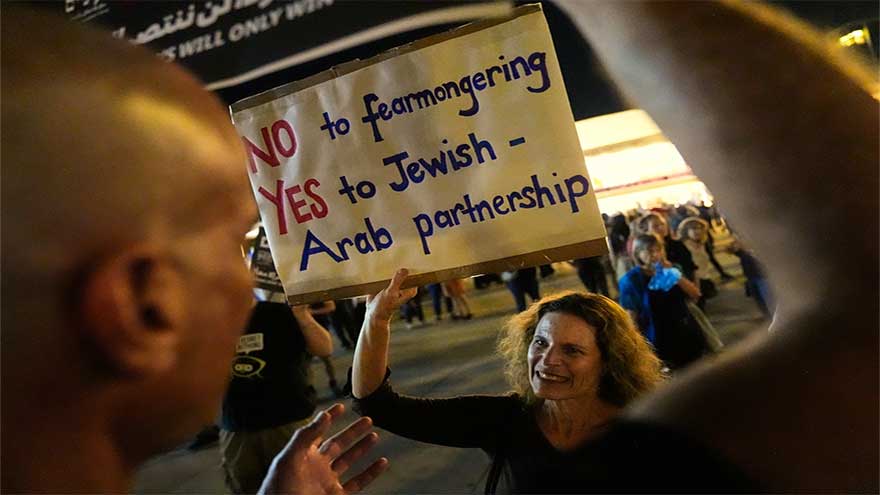
Arab Parties Israeli protesters urge opposition leaders to unite against Netanyahu.
Hundreds of Israelis rallied in Tel Aviv and Jerusalem on Saturday, calling on opposition parties to form an alliance with Arab-majority parties to remove Prime Minister Benjamin Netanyahu from power.
The demonstrations followed Tuesday’s inconclusive election, which left neither political bloc with a majority in Israel’s 120-seat parliament.
Arab-majority parties made significant gains amid anger over rhetoric directed at the Arab community by Netanyahu’s hard-right government. However, opposition leader Gadi Eisenkot has yet to decide whether to pursue a coalition with them.
Protesters Demand Political Unity
Around 500 people gathered in Tel Aviv to urge opposition parties to work with Arab representatives.
Protesters held signs reading, “Arabs and Jews will only win together” and “There is a majority for change”.
Shehbaz Urges PML-N Leadership in KP to Prioritise Public Welfare Projects
Ayelet Raz, a 60-year-old psychologist who attended the rally, said Arab citizens had the right to participate fully in Israeli politics. Arab citizens account for around 20 per cent of Israel’s population.
“It’s the last chance for real change,” she said, describing Netanyahu as a “great manipulator”.
Raz also called for peace, warning that continued conflict would bring further bloodshed.
A separate rally in Jerusalem attracted around 100 people. Protesters displayed placards reading, “67 — United we stand, divided we get Bibi” and “Why not, really — unless we are racist?”
Election Results Leave Parliament Divided
Tuesday’s election produced no clear parliamentary majority.
Jewish-majority parties opposed to Netanyahu secured 48 seats. Meanwhile, two Arab-majority parties, Raam and the Joint List, won a combined 19 seats.
A potential alliance between the anti-Netanyahu parties and the two Arab-majority groups could command 67 seats in the 120-member Knesset.
However, some parties within the opposition bloc oppose such an arrangement.
Coalition Decision Remains Uncertain
The election results have placed renewed attention on the role of Arab-majority parties in Israel’s political future.
Supporters of cooperation argue that an alliance could create a parliamentary majority capable of replacing Netanyahu. Others within the opposition remain reluctant to join forces with the Arab-led parties.
Eisenkot’s decision could therefore prove central to the next stage of coalition negotiations.
The rallies highlighted calls from sections of Israeli society for Jewish and Arab political cooperation. However, the opposition remains divided over whether such an alliance can deliver a change of government.