Iran War: JD Vance emerges as key US negotiator in fragile peace talks with Tehran
US vice president takes central diplomatic role as Washington and Tehran enter high-risk negotiations over nuclear programme, sanctions and regional security.
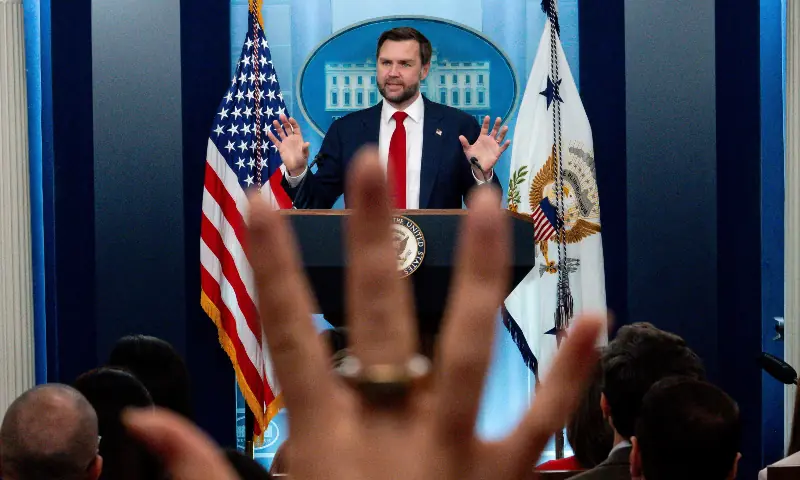
US Vice President JD Vance addressing press briefing on Iran war negotiations and provisional peace talks between US and Iran.
The Iran War has entered a critical diplomatic phase as US Vice President JD Vance steps forward as President Donald Trump’s chief negotiator in efforts to end a three-month conflict with Iran, raising his profile on the global stage while testing his political future.
JD Vance has been positioned at the centre of negotiations following a provisional peace agreement between United States and Iran that paused hostilities earlier this week but left key disputes unresolved, including Iran’s nuclear programme, regional influence and the strategic Strait of Hormuz.
Diplomacy: Ishaq Dar to attend R-4 foreign ministers’ meeting in Cairo
Under the current framework, both sides have agreed to 60 days of talks aimed at securing a more durable settlement, though officials acknowledge the situation remains highly unstable and politically sensitive.
Vance’s emergence as lead negotiator marks his most prominent international role to date and places him at the centre of one of the most consequential foreign policy challenges facing the Trump administration.
The vice president was expected to travel to Switzerland for the start of talks but cancelled the trip at short notice, while the White House said the US delegation remains ready to depart when required.
Speaking publicly during a White House briefing, Vance said Iran would face continued pressure if it failed to change its behaviour, while also suggesting that diplomatic progress could reshape the wider Middle East.
“If the Iranians don’t change their behaviour, their military and nuclear programme is still destroyed,” he said, adding that compliance could open the door to a “transformative relationship”.
Donald Trump has publicly praised the provisional agreement as a breakthrough, while also joking that Vance would bear responsibility if negotiations fail and receive credit if they succeed.
Within Republican circles, some officials have described Vance as a central figure in shaping the emerging deal, with Senator Lindsey Graham referring to him as an “architect” of the agreement and suggesting Senate scrutiny of any final settlement.
However, the agreement has exposed divisions within US political and security circles. Critics argue that Iran still retains significant military capabilities and regional influence despite the suspension of active fighting.
Tensions also remain high across the Middle East, where concerns persist over the stability of ceasefire arrangements and the risk of renewed escalation involving allied groups.
Vance has also drawn attention for his unusually direct political messaging, including sharp criticism of more hawkish voices within his party who favour continued military escalation.
At the same time, he has sought to defend the administration’s approach, urging patience while signalling that further diplomatic work is required to stabilise the situation.
Marco Rubio has been noticeably less visible in the negotiations, prompting questions within Washington about the shifting balance of diplomatic authority inside the administration.
As talks continue, the outcome is expected to influence not only the future of US-Iran relations but also Vance’s political standing within the Republican Party and his potential path toward higher office.