Iran Accuses US of Ceasefire Violations as Tensions Escalate Across Gulf and Lebanon
Iran’s Parliament Speaker and chief negotiator Mohammad Bagher Ghalibaf has accused the United States of violating the ceasefire agreement with Tehran.
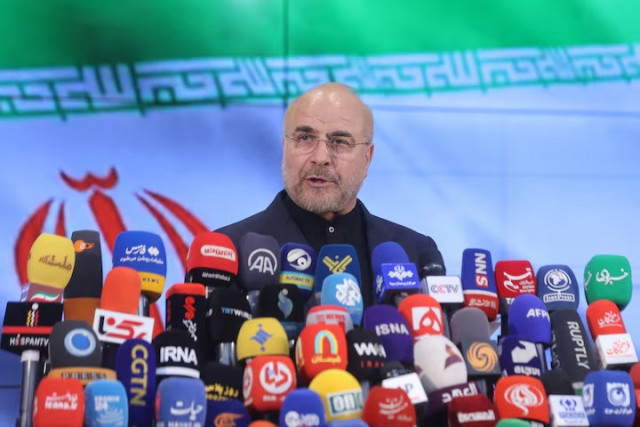
Iran’s Parliament Speaker and chief negotiator Mohammad Bagher Ghalibaf has accused the United States of violating the ceasefire agreement with Tehran.
In a statement posted on X, Ghalibaf cited the continued naval blockade of Iranian ports and Washington’s failure to restrain Israel’s military operations in Lebanon as evidence of non-compliance.
“The naval blockade and escalation of war crimes in Lebanon by the genocidal Zionist regime are clear evidence of US noncompliance with the ceasefire,” he wrote.
His remarks came as regional tensions continued despite ongoing diplomatic efforts to secure a broader agreement between Tehran and Washington.
Iran and Oman Assert Authority Over Strait of Hormuz
Iranian Deputy Foreign Minister Kazem Gharibabadi said Iran and Oman are the only countries with the right to exercise sovereignty over the Strait of Hormuz.
He stated that Tehran has introduced a new system to regulate maritime traffic in the strategic waterway while coordinating arrangements with Oman.
Furthermore, he claimed Iran had urged Oman to resist external pressure regarding the management of the strait.
The Strait of Hormuz remains one of the world’s most important energy transit routes, carrying a significant share of global oil exports.
Lebanon Ceasefire Remains Key Iranian Demand
Iranian Foreign Ministry spokesman Esmaeil Baghaei said any future agreement with the United States must include guarantees for a ceasefire in Lebanon.
Speaking at a news conference, he described a halt to hostilities in Lebanon as an essential condition for ending the wider conflict.
Baghaei also said Iran is not currently engaged in detailed discussions with Washington regarding its nuclear programme.
“At this stage, our priority is ending the war,” he said.
Additionally, he accused the United States of violating the ceasefire and warned that Iran would take whatever measures it considered necessary to protect its national security.
Satellite Analysis Highlights Damage to US Facilities
A BBC analysis based on satellite imagery and video evidence reported that Iranian strikes have damaged 20 US military sites across the Middle East since the conflict began in February.
According to the report, facilities in Saudi Arabia, the United Arab Emirates, Qatar, Kuwait, Iraq, Jordan, Bahrain and Oman sustained varying levels of damage.
The analysis suggested that several advanced missile defence systems, aircraft facilities and communications infrastructure were affected.
Security analysts cited in the report argued that Iran’s retaliatory strikes appeared more extensive and precise than previously acknowledged by American officials.
Fresh Exchange of Strikes Reported
The latest tensions followed reports of new military exchanges between the United States and Iran.
US Central Command said American forces struck Iranian military positions after Tehran allegedly downed a US MQ-1 drone operating over international waters.
According to CENTCOM, US fighter aircraft targeted Iranian air defence systems, a ground control station and attack drones considered threats to maritime traffic.
In response, Iran’s Revolutionary Guards said they targeted a US air base linked to operations against southern Iran.
Meanwhile, Kuwait reported intercepting missiles and drones after air raid sirens sounded across the country.
US Pushes Diplomatic Plan for Lebanon
Despite the renewed hostilities, Washington continues diplomatic efforts aimed at reducing tensions between Israel and Lebanon.
US Secretary of State Marco Rubio held discussions with Lebanese President Joseph Aoun and Israeli Prime Minister Benjamin Netanyahu.
According to a US official, Washington has proposed a phased de-escalation plan.
The proposal reportedly calls for Hezbollah to halt attacks on Israel in exchange for Israeli restraint in Beirut and other areas.
Kuwait Condemns Regional Attacks
Kuwait strongly condemned missile and drone attacks on its territory, describing them as a violation of international law and a threat to national security.
The Kuwaiti Foreign Ministry said the incidents endangered civilians and critical infrastructure.
Furthermore, officials stressed that Kuwait reserves the right to take all necessary measures to protect its sovereignty and security.
Israel Expands Operations in Lebanon
Israeli Prime Minister Benjamin Netanyahu ordered military strikes on targets in Beirut’s southern suburbs, a stronghold of Hezbollah.
Israeli officials said the action followed repeated violations of the Lebanon ceasefire and attacks on Israeli territory.
Fighting between Israeli forces and Hezbollah has continued despite a truce reached in April.
According to Lebanese authorities, more than 3,370 people have been killed since the conflict intensified, while over 1.2 million residents have been displaced.
Trump Defends Negotiations
US President Donald Trump sought to reassure critics amid ongoing negotiations with Iran.
In a social media post, Trump claimed Iran wanted an agreement and urged critics to stop what he called negative “chirping” about diplomacy.
However, significant differences remain between the two sides.
Washington continues to insist that Iran must never obtain a nuclear weapon, while Tehran is demanding sanctions relief and access to frozen financial assets.
Oil Markets Remain on Edge
The lack of progress in negotiations has also affected global markets.
Oil prices rose around two percent in Asian trading as investors monitored developments in the Gulf and concerns over shipping through the Strait of Hormuz.
Analysts warn that continued instability in the region could have broader consequences for global energy supplies and economic growth.
As diplomatic efforts continue, tensions between Iran, the United States and Israel remain a major source of uncertainty across the Middle East.