From Policy To Practice: Pakistan’s Maritime Turn On World Maritime Day 2026
World Maritime Day 2026 shifts the focus from maritime rule-making to implementation, offering Pakistan an opportunity to demonstrate how policy can translate into security, trade and economic development.
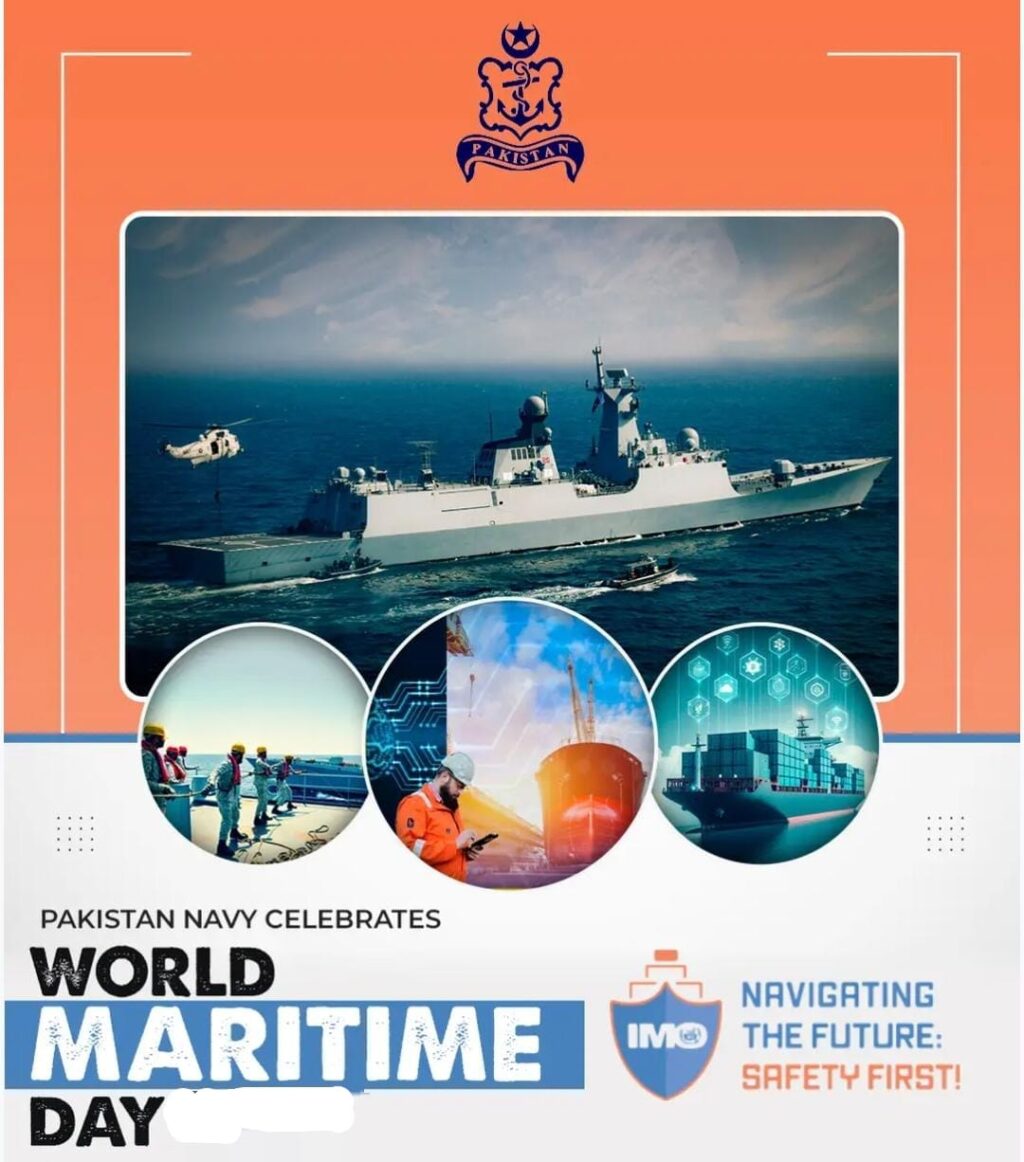
Pakistan’s maritime sector enters a new phase as World Maritime Day 2026 calls for stronger implementation and maritime development.
Dr. Marriyam Siddique
World Maritime Day 2026 adopts the theme “From Policy to Practice: Powering Maritime Excellence.” This is the first two-year theme in the International Maritime Organisation’s history, running through 2026 and 2027. It signals a shift in global maritime governance. The era of treaty-making has matured and the era of enforcement has begun.
The 1982 Convention on the Law of the Sea remains the constitution of the oceans and nearly every coastal state has ratified it. Yet ratification is not implementation and the IMO acknowledges this gap by insisting that a rule must be translated into concrete national legislation, enforcement and day-to-day operations. Paper commitments do not secure sea lanes because only practice does. This gap matters more now than in most years. Attacks on shipping in the Red Sea, a fragile Strait of Hormuz and rising war-risk premiums have shown how quickly the maritime commons turns contested. A convention does not stop a missile from hitting a tanker, only enforcement does.
Pakistan offers an instructive case. In July 2026, the Lloyd’s Market Association’s Joint War Committee removed Pakistan from its listed war-zone countries. The designation had stood since 2001 and it functioned as a standing tax on Pakistani trade by raising insurance costs at Karachi, Port Qasim and Gwadar. Its removal is a milestone. This outcome was not automatic; it followed sustained technical engagement. A formal submission was made in March and verified data was provided. Pakistan Navy worked alongside other national stakeholders in a coordinated whole-of-government effort. The effect is measurable, since war-risk premiums have fallen, competitiveness has improved and confidence in Pakistani ports has increased. This is what implementation looks like – not a signature on a treaty but months of quiet work, evidence and follow-through.
Pakistan Navy, Coast Guards Foil Smuggling Attempt in Balochistan
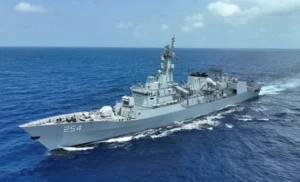
In March 2026, Pakistan Navy launched Operation Muhafiz-ul-Bahr in response to regional escalation. The de-facto closure of the Strait of Hormuz threatened energy supplies and disrupted global energy sea lines of communication, so Pakistan acted. The operation secures national sea lines of communication, protects critical energy supplies, escorts Pakistan-flagged merchant vessels and coordinates with Pakistan National Shipping Corporation. As of late 2026, seventy-six transits have been escorted through the Gulf and the Red Sea, making Pakistan the first nation in the region to commence such escorts. This is implementation in motion. The Pakistan Navy has also maintained a continuous presence in the North Arabian Sea and the Gulf of Oman, which reassures international maritime traffic and contributes to regional stability. Pakistan has also joined the Saudi-led Multinational Maritime Defence Coalition, which aims to strengthen security in the Bab el-Mandeb–Red Sea–Gulf of Aden corridor, actively participating in this burden-sharing and burden-bearing effort. The Pakistan Navy’s sustained presence and escort operations have become a visible expression of Pakistan’s commitment to keeping the region’s sea lanes open and secure.
Implementation requires more than operations because it also requires awareness. Pakistan Navy is playing a key role in the Maritime Awareness Campaign Plan, which seeks to generate maritime awareness, channel efforts to reap the full potential of Pakistan’s maritime sector and promote the Blue Economy. The campaign conducts an annual Maritime Security Workshop, briefs government officials and policymakers, raises awareness about marine pollution, engages the business community and supports domain-specific research at the Maritime Centre of Excellence (MCE). These are capacity-building measures that build the human capital implementation requires.
Pakistan International Maritime Exhibition and Conference is another pillar and its second edition was held in November 2025 under the patronage of the Ministry of Maritime Affairs. It received an overwhelming response, with one hundred and thirty-three international delegations attending and forty-four countries represented. Exhibitions and conferences build networks, share knowledge, attract investment, and showcase capability. They do not by themselves build shipyards or cut port turnaround times, but they are necessary conditions, because they create the connections that later become contracts, signal intent and open doors.
Pakistan’s exclusive economic zone is a frontier and Pakistan Navy is pursuing its exploration with China Geological Survey and National Institute of Oceanography. Three expeditions have been conducted within Pakistan’s EEZ and they have mapped various zones and identified oil and gas reserves whose preliminary estimates rank them sixteenth and fifth largest in the world respectively. If fully realised, these resources could be a game changer by reshaping Pakistan’s energy import bill and anchoring a new industrial base. But identification is not extraction and estimates are not production, because a survey finding is a precondition for success rather than success itself. The task ahead is to convert potential into practice.
World Maritime Day 2026 should be read as an audit rather than a celebration. Pakistan can point to real outcomes, including the Lloyd’s delisting, Operation Muhafiz-ul-Bahr, PIMEC and scientific exploration. These are not declarations but actions. The harder half of the equation remains: regulatory enforcement must be embedded in domestic law, blue-economy potential must be converted into functioning industry, port infrastructure must keep pace with ambition, human capital must be deepened and regional stability must hold. These are long-term tasks that require sustained attention, resources and political will.
IMO Secretary-General Arsenio Dominguez has framed the stakes by stating that the goal is “ensuring regulations are put into action” so that global rules “lead to safer, more secure and environmentally sound shipping worldwide.” Pakistan’s 2026 record shows that it is moving in the direction from policy to practice. World Maritime Day 2026 calls on states to move beyond signature, to enforce, to build and to deliver. Pakistan has answered part of that call by showing that diplomacy can lower costs, navies can protect trade, campaigns can build awareness, exhibitions can build networks and science can map resources. The rest is work of legislation, infrastructure, industry, and time, because the theme “From Policy to Practice” is not a slogan but a standard and Pakistan’s 2026 record suggests it understands the standard while the challenge is to meet it fully.