
Fixing Pakistan’s Foreign and Economic Policy: A Reform Blueprint from the Diaspora
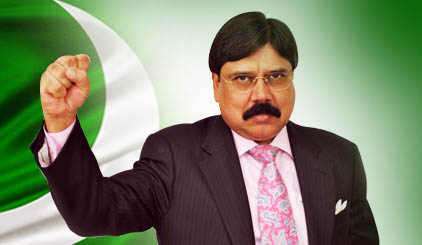
By Dr. Gholam Mujtaba, MD, Ed.D., FRSPH
Abstract?Pakistan’s foreign and economic policy shortcomings stem from structural governance gaps, inconsistent diplomacy, weak export competitiveness, fiscal indiscipline, and under-leveraged diaspora diplomacy. This article diagnoses core deficiencies and proposes actionable reforms aligned with international best practices and U.S. policy frameworks, emphasizing institutional credibility, trade-led growth, geoeconomic diplomacy, and diaspora-driven parliamentary engagement.
I. Core Deficiencies
1) Inconsistent Foreign Policy Signaling
Problem: Frequent policy swings, ad hoc crisis diplomacy, and mixed messaging weaken credibility with Washington, Brussels, Riyadh, Beijing, and multilateral lenders.?Impact: Loss of trust, reduced strategic bandwidth, and missed windows for trade and security compacts.
Fix:
•Publish a 5-year bipartisan Foreign Policy White Paper ratified by Parliament.
•Establish a Strategic Communications Unit in the Foreign Office to coordinate positions across ministries and missions.
•Annual Parliamentary Foreign Policy Review hearings for accountability.
2) Weak Economic Statecraft (Trade & Investment)
Problem: Diplomacy is security-heavy and underweights trade, investment, technology transfer, and market access.?Impact: Low FDI quality, narrow export base, poor integration into global value chains.
Fix:
•Create a Geo-Economics Directorate within the Foreign Office linked to Commerce, BOI, and Finance.
•Appoint Trade Envoys in top 10 markets with export targets and sectoral KPIs (IT services, agri-processing, textiles 2.0, minerals).
•Negotiate mutual recognition agreements for standards and professional services with the U.S./EU.
3) Fiscal Fragility & Debt Dependence
Problem: Chronic deficits, weak tax effort, SOE losses, and stop-go IMF cycles crowd out development.?Impact: Policy capture, inflationary financing, and low investor confidence.
Fix:
•Tax base broadening (retail/agri documentation, digital invoicing), property tax modernization.
•SOE triage (privatize non-strategic, performance contracts for strategic SOEs).
•Medium-Term Debt Strategy anchored in primary surplus rules and transparent contingent liabilities.
4) Export Stagnation & Low Productivity
Problem: Concentration in low-value-added textiles; underinvestment in skills, logistics, and standards.?Impact: Balance-of-payments stress; weak job creation.
Fix:
•Export upgrading: incentives for technical textiles, medical devices, halal agri, and software exports.
•Special Economic Zones 2.0 with plug-and-play utilities, customs automation, and one-window compliance.
•Skills compact with industry: apprenticeships, STEM visas partnerships, and diaspora mentorship.
5) Underutilized Diaspora & Parliamentary Diplomacy
Problem: Diaspora networks and parliamentary channels are episodic, not institutionalized.?Impact: Lost influence in legislatures, think tanks, and business councils abroad.
Fix:
•Formalize Inter-Parliamentary Groups (IPGs) with priority partners to sustain legislative dialogue on trade, visas, climate finance, and security cooperation.
•Launch a Diaspora Investment Window (co-investment guarantees and dispute-resolution fast-track).
•Professionalize public diplomacy with data-driven outreach in U.S. congressional districts.
6) Governance, Compliance, and Reputational Risk
Problem: Perception risks (AML/CFT compliance, regulatory unpredictability) raise the cost of capital.?Impact: De-risking by banks; higher borrowing costs.
Fix:
•Strengthen regulatory certainty (sunset clauses, regulatory impact assessments).
•AML/CFT compliance by design in fintech, remittances, and trade finance.
•Independent Sovereign Risk Committee to publish quarterly risk dashboards.
7) Climate & Energy Vulnerability
Problem: Energy import dependence and climate shocks disrupt growth.?Impact: FX drain, inflation volatility, disaster losses.
Fix:
•Energy transition financing (solar/wind auctions, grid upgrades, storage).
•Climate diplomacy to mobilize adaptation finance and catastrophe bonds.
•Regional power trade, where feasible, to stabilize supply.
II. A Practical Reform Roadmap (24–36 Months)
First 100 Days
•Announce Foreign Policy White Paper process; create Geo-Economics Directorate.
•SOE audit + tax digitalization pilot.
•Diaspora Investment Window launch.
Year 1
•Trade envoys deployed; MRA negotiations opened.
•SEZ 2.0 operational; export finance facility expanded.
•Parliamentary IPGs activated with priority partners.
Year 2–3
•Primary surplus rule legislated; SOE privatizations completed.
•Energy auctions and grid projects are being financed.
•Standards & logistics upgrades lift export diversification.
III. Why the U.S. Partnership Matters (Diaspora Lens)
As an American citizen deeply invested in Pakistan’s stability, I argue for a rules-based partnership with the United States, centered on trade facilitation, technology co-creation, skills mobility, and climate finance, complementing security cooperation. Legislative diplomacy (IPGs), private capital mobilization, and regulatory trust can unlock durable growth and restore credibility.
Summary
Pakistan’s foreign and economic policy renewal requires institutional coherence, trade-first diplomacy, fiscal realism, export upgrading, diaspora-led parliamentary engagement, and compliance-driven credibility. The pathway is hard—but entirely achievable with disciplined execution and bipartisan ownership.
References
1World Bank. Pakistan Development Update (various editions).
2IMF. Pakistan Staff Reports & Article IV Consultations.
3UNCTAD. World Investment Report.
4WTO. Trade Policy Review: Pakistan.
5OECD. Policy Framework for Investment.
6World Economic Forum. Global Competitiveness Report.
7Asian Development Bank. Pakistan Economic Outlook.
8FATF. AML/CFT Standards & Mutual Evaluations.
9Harvard Growth Lab. Economic Complexity & Export Diversification.
10U.S. International Trade Administration. Market Access & Standards Cooperation.
Author Note: Dr. Gholam Mujtaba is an American citizen and policy advocate engaged in diaspora-led parliamentary diplomacy and geoeconomic cooperation between the United States and Pakistan.