
Cotton Arrivals Jump 32% as Sindh’s Record Harvest Offsets Punjab Decline
Pakistan’s seed-cotton arrivals climbed sharply by the end of July, driven by a strong harvest in Sindh, while experts warned that shrinking cotton acreage in Punjab remains a growing concern.
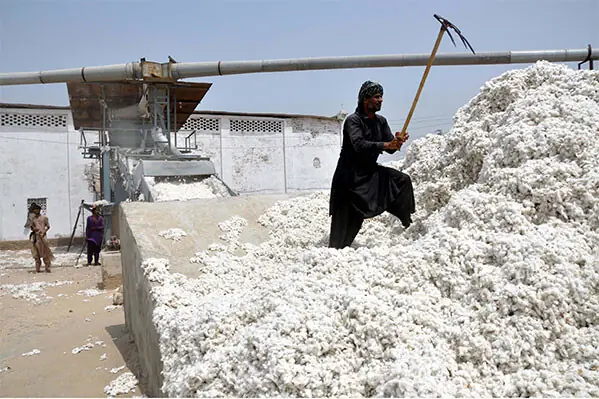
Freshly harvested seed cotton arrives at a ginning factory in Pakistan.
Cotton Arrivals in Pakistan recorded a strong start to the new season, rising by more than 32 per cent year-on-year by July 31, according to the latest figures released by the Pakistan Cotton Ginners Association (PCGA). A sharp increase in Sindh’s production helped offset a slight decline in Punjab, boosting overall supplies to ginning factories.
The PCGA reported that seed-cotton (phutti) arrivals reached 785,822 bales by the end of July, compared with 593,821 bales during the same period last year. The increase reflects stronger early-season harvesting, particularly in Sindh, where favourable sowing conditions supported higher output despite recent monsoon rainfall.
More than 100 words into the article – Cotton Arrivals data showed that Punjab received 298,150 bales, a decline of 1.1 per cent from a year earlier. In contrast, Sindh produced 487,672 bales, marking a record 66.82 per cent increase. Balochistan also recorded strong growth, with arrivals rising 52.67 per cent to 22,900 bales.
Punjab Figures Raise Questions
Cotton Ginners Forum Chairman Ihsanul Haq highlighted a significant gap between PCGA figures and data released by Punjab’s Crop Reporting Service (CRS). While the PCGA estimated Punjab’s arrivals at around 298,000 bales, the CRS reported production of nearly 435,000 bales by July 30.
Mr Haq said the difference of roughly 32 per cent requires clarification from the relevant authorities to ensure accurate crop reporting.
He also expressed concern over the collapse of cotton production in the Bahawalpur Division, once Pakistan’s leading cotton-growing region. According to CRS figures, the area produced only about 17,000 bales this season.
Karachi Traffic Plan Enforced as Chehlum Procession Brings Road Closures Across City
Sugarcane Expansion Threatens Cotton
Mr Haq blamed the rapid expansion of sugarcane cultivation for reducing cotton acreage across traditional farming regions. He said the growing number of sugar mills had encouraged farmers to switch crops, transforming key cotton-producing districts into sugarcane belts.
He warned that declining cotton cultivation is increasing Pakistan’s dependence on imported cotton and edible oil. He urged federal and provincial governments to protect designated cotton-growing areas by limiting sugarcane cultivation.
Pakistan imported a record 3.482 million tonnes of edible oil worth $3.785 billion during 2025-26, up from 3.214 million tonnes valued at $3.40 billion a year earlier.
Mills Purchase Most of the Crop
The PCGA said textile mills purchased 704,000 bales, while exporters bought 3,400 bales. Around 78,044 bales remained unsold at ginning factories.
A total of 231 ginning factories operated across Pakistan, including 108 in Punjab and 123 in Sindh. However, some factories reduced operations or temporarily suspended production because of financial and commercial challenges.
Sanghar district remained the country’s largest cotton-producing area, contributing 398,000 bales. That represented 82 per cent of Sindh’s output and 51 per cent of national production. Early sowing in coastal areas during February and March helped growers bring the crop to market sooner than other regions.
Experts Cautious Despite Strong Start
Sajid Mahmood, head of the Transfer of Technology Department at the Central Cotton Research Institute (CCRI), Multan, said the early-season figures indicate a stronger start than last year, particularly in Sindh.
However, he cautioned that August and September will provide a clearer picture of the overall cotton crop. He warned that prolonged humidity and rainfall could increase the spread of whitefly, pink bollworm and other crop diseases, reducing lint quality and overall yields.
He advised farmers to improve field drainage, monitor pest activity closely and follow crop protection recommendations issued by agricultural extension authorities.