

China Tech shifts gears as AI and robotics firms surge
Thousands of companies have exited China’s EV, solar and battery sectors, while generative AI, humanoid robots and advanced manufacturing continue to attract new investment.
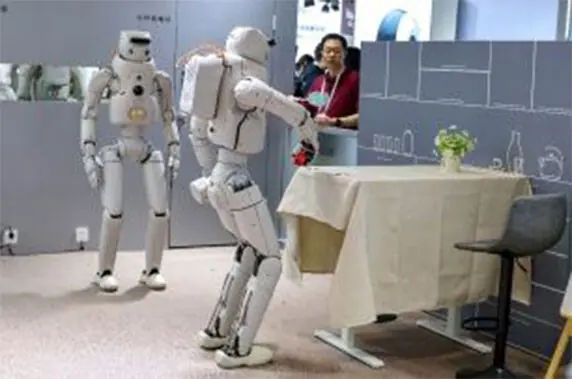
China’s technology sector shifts towards AI, robotics and advanced manufacturing.
China Tech is undergoing a significant shift as thousands of companies leave the electric vehicle, photovoltaic and lithium battery industries while investment continues to accelerate in artificial intelligence, humanoid robotics and other advanced technologies.
China’s State Administration for Market Regulation said 7,632 companies linked to the new energy vehicle sector were deregistered during the first six months of the year. The figure represents a 4.6 per cent increase from the same period a year earlier.
The photovoltaic industry recorded an even larger rise in company deregistrations. A total of 5,089 solar-related businesses exited the market, an increase of 8.3 per cent year-on-year.
The lithium battery sector also experienced a rise in business closures, with 155 companies deregistered during the period. That was 12.3 per cent higher than a year earlier.
The figures point to a period of consolidation across several industries that have expanded rapidly in recent years. Companies facing intense competition and changing market conditions appear to be leaving the sectors, while newer areas of technology continue to attract entrepreneurs and investment.
Generative artificial intelligence has emerged as one of the strongest areas of growth.
According to the market regulator, around 55,000 new companies operating in the generative AI sector were established during the first half of the year. The number was 28 per cent higher than during the same period last year.
Pakistan Test cricket finds belief in the Caribbean ahead of England
Humanoid robotics recorded even stronger expansion. Some 116,000 new companies were registered in the sector, representing a 9.5 per cent year-on-year increase.
The figures highlight the growing interest in technologies that Chinese policymakers and businesses increasingly view as potential drivers of future economic growth.
The shift is also visible across China’s wider high-tech manufacturing sector.
By the end of June, China had approximately 330,000 high-tech manufacturing enterprises. Around 15,000 new companies entered the sector during the first six months of the year, according to the regulator.
Some specialised manufacturing industries recorded particularly rapid expansion.
New companies involved in spacecraft and launch vehicle manufacturing increased by 185.7 per cent year-on-year. Optical fibre and cable manufacturing also recorded substantial growth, rising by 129.4 per cent.
Integrated circuit manufacturing, a strategically important area for China’s technology ambitions, saw the number of new companies increase by 24.2 per cent.
The contrasting trends illustrate a changing pattern within China’s industrial economy. Some mature sectors are experiencing consolidation as companies leave increasingly competitive markets, while emerging technologies are attracting a fresh wave of businesses.
The developments are particularly significant for industries such as AI, robotics, semiconductors and aerospace, where China is seeking to strengthen domestic capabilities and develop new sources of economic growth.
The rapid increase in new businesses does not necessarily mean every company will succeed. High levels of registration can also reflect intense competition and entrepreneurial experimentation. However, the figures indicate that investors and businesses continue to see considerable potential in emerging technologies.
At the same time, the decline in some green-energy sectors suggests that China’s earlier expansion in electric vehicles, solar manufacturing and batteries is entering a more mature phase.
The combination of business exits in established industries and rapid company formation in frontier technologies could therefore represent a broader restructuring of China’s industrial landscape.
For policymakers, the challenge will be to ensure that new industries develop sustainably while managing excess capacity and competition in sectors that have already expanded rapidly.
The latest figures suggest that China’s next phase of industrial growth could increasingly depend on artificial intelligence, robotics, advanced manufacturing, semiconductors and aerospace rather than simply continued expansion of its established clean-energy industries.