Customs Agrees to Consider PCDMA Price Certificates, Assures DPL Waiver Relief
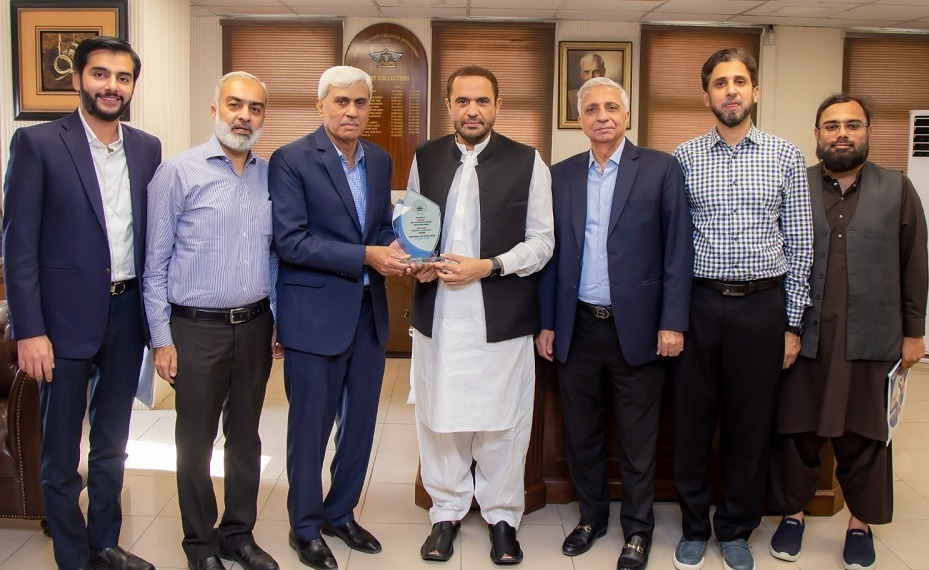
PCDMA: Customs officials meet the association’s delegation at Customs House Karachi to discuss importer facilitation.
The Customs Department and the Pakistan Chemicals & Dyes Merchants Association (PCDMA) have agreed to improve coordination and address challenges faced by commercial importers.
The discussions covered alternatives to costly ICIS scan pricing, implementation of the DPL waiver, self-clearance facilities and customs valuation rulings.
The understanding emerged during a meeting at Customs House, Karachi. A PCDMA delegation, led by Chairman Muhammad Saleem Muakti, met Chief Collector of Customs Appraisement (South) Wajid Ali.
The meeting focused on import-stage difficulties and practical measures to streamline customs procedures.
The PCDMA delegation included Managing Committee members Mustafa Asad and Irfan Asgher. Former Chairman Arif Lakhani and former Managing Committee members Umair Anwar and Yahya Arshad also attended.
PCDMA Price Certificates Proposed as ICIS Alternative
The delegation highlighted the high cost of ICIS scan pricing. It said the service costs approximately $15,000 to $20,000 annually, placing it beyond the reach of many importers.
The Chief Collector agreed that PCDMA could issue price verification certificates when Customs requires confirmation of imported raw material prices.
The association would prepare these certificates using available resources and market information. Customs could accept them as an alternative to ICIS scan pricing.
Pakistan’s Vitamin D Crisis Highlights Need for Evidence-Based Diagnosis and Treatment
Wajid Ali noted that Customs maintains scan subscriptions for only a limited range of products. He described PCDMA’s assistance as a practical option for price verification.
Customs Assures Full Implementation of DPL Waiver
The delegation also raised concerns about the DPL waiver granted by the relevant regulator, NEPSA.
It said the regulator had approved a three-month waiver. PCDMA requested that Customs recognise the entire concessionary period without exceptions.
The association stressed that importers should not face unnecessary complications while clearing their consignments.
The Chief Collector assured the delegation that Customs would fully implement the three-month waiver. He also said the department would not create hurdles in this regard.
NTN-Based Self-Clearance Facility to Be Restored
The delegation highlighted difficulties with the existing self-clearance process.
It explained that commercial importers previously received permission to clear consignments using their National Tax Number (NTN) for one year. Authorities later reduced the facility to six months.
Customs now grants the facility on a case-by-case basis against the Bill of Lading (BL). According to the delegation, this change has made clearance slower and more complicated.
PCDMA requested restoration of NTN-based self-clearance for at least six months.
The Chief Collector agreed to the proposal. He said PCDMA could issue recommendation letters for its members.
Customs would use these letters to verify importers and grant NTN-based self-clearance approval for at least six months. The department would also process such cases on a priority basis.
Customs to Examine Valuation Rulings
The delegation also called for a review of existing customs valuation rulings.
It said the current mechanism did not adequately reflect daily fluctuations in international commodity prices. PCDMA urged Customs to update relevant rulings in line with prevailing market conditions and changing trade practices.
The Chief Collector assured the delegation that Customs would examine the matter. He said the department would consider appropriate measures through further consultation.
PCDMA Welcomes Customs Cooperation
Chairman Muhammad Saleem Muakti appreciated the positive response from Customs authorities.
He said stronger coordination between Customs and the business community could remove import-related bottlenecks. It could also improve the efficiency and transparency of the clearance system.
Muakti expressed confidence that implementing the understandings would reduce difficulties for commercial importers.
He added that cooperation between the association and Customs could help create a more business-friendly import environment.