US and Saudi Arabia Sign Landmark Civil Nuclear Agreement
Washington says the deal will support Saudi Arabia’s civilian nuclear programme while maintaining strict non-proliferation safeguards.
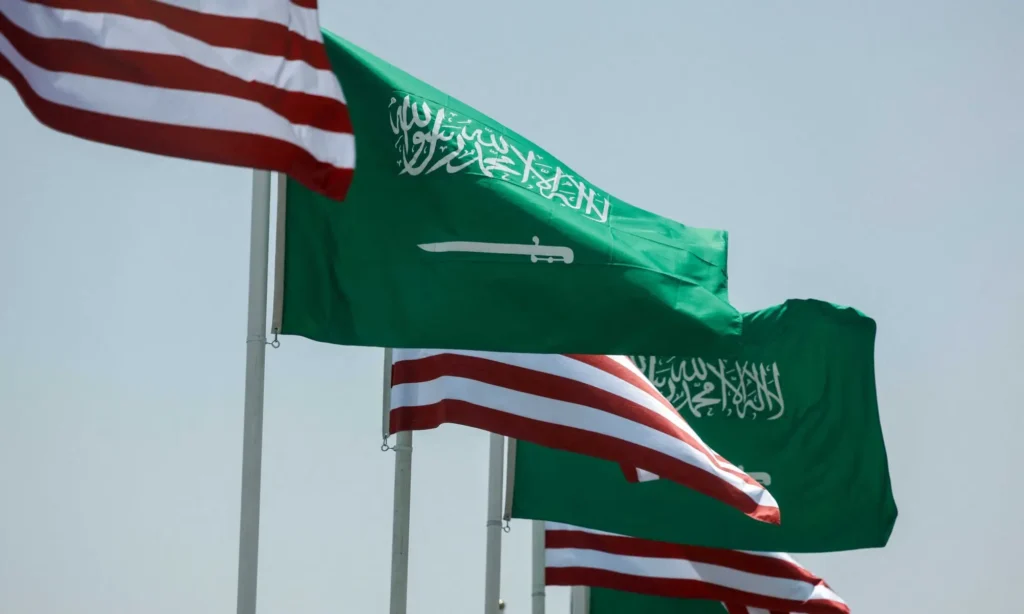
US and Saudi officials sign a landmark civilian nuclear cooperation agreement.
Saudi nuclear deal moved forward on Wednesday after the United States and Saudi Arabia signed landmark agreements to establish a civilian nuclear programme, marking a significant step in their long-term strategic partnership.
US Energy Secretary Chris Wright and Saudi Energy Minister Prince Abdulaziz bin Salman signed two agreements covering peaceful nuclear cooperation and bilateral safeguards, according to the US Department of Energy.
Washington said the agreements create the legal framework for a multi-billion-dollar partnership that could last for decades while reinforcing international nuclear non-proliferation standards.
Although US officials have not released the full text of the agreements, media reports suggest the deal could allow American companies to build a uranium enrichment facility in Saudi Arabia. The US Energy Department has neither confirmed nor commented on that provision.
The agreement will now go before the US Congress for review. However, analysts expect the Republican-controlled legislature to approve the deal.
The announcement comes as the United States remains engaged in conflict with Iran, where concerns over Tehran’s nuclear programme continue to shape regional security and international diplomacy.
Middle East Tensions Escalate as Houthis Attack Saudi Oil Tankers and US Strikes Iran
Saudi Arabia has consistently maintained that it seeks nuclear technology solely for peaceful civilian purposes, similar to its long-standing position on developing nuclear energy.
Washington has also sought to link closer nuclear cooperation with broader regional objectives, including strengthening security ties with Saudi Arabia and encouraging the kingdom to normalise relations with Israel.
Concerns Over Nuclear Proliferation
The agreement has revived debate over nuclear proliferation in the Middle East.
Some US lawmakers and Israeli officials have previously opposed allowing Saudi Arabia to enrich uranium, warning that such capabilities could eventually contribute to a regional arms race if converted for military purposes.
US Energy Secretary Chris Wright rejected those concerns, saying the agreements uphold the highest standards of nuclear safety and non-proliferation while relying on advanced American nuclear technology.
The agreement falls under Section 123 of the US Atomic Energy Act, which governs civilian nuclear cooperation between the United States and foreign governments.
The US already maintains similar nuclear cooperation agreements with more than 50 countries, including the United Arab Emirates, which operates the Arab world’s only commercial nuclear power plant but does not enrich uranium domestically.
Experts Divided on the Agreement
Nuclear policy experts offered mixed reactions to the deal.
Matthew Kroenig of the Atlantic Council warned that allowing uranium enrichment inside Saudi Arabia could weaken long-standing non-proliferation safeguards, even as he supported closer US-Saudi relations.
Jennifer T. Gordon, Director of the Atlantic Council’s Nuclear Energy Policy Initiative, welcomed the agreement, arguing it strengthens Washington’s influence by ensuring Saudi Arabia partners with the United States rather than Russia or China for its civilian nuclear ambitions.
The agreement marks one of the most significant US-Saudi energy partnerships in recent years and could reshape nuclear cooperation and strategic alliances across the Middle East.