US-Iran Conflict: Tensions Escalate as Tehran Vows Resistance and Washington Intensifies Strikes
Iran declares it is in a “full-scale war” with the United States as both sides exchange attacks, diplomatic efforts continue and fears grow over regional stability.
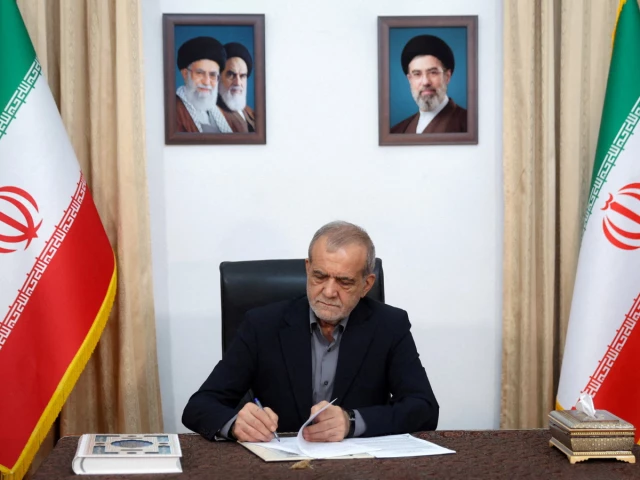
Iranian officials address the media as tensions with the United States continue to escalate.
US-Iran Conflict intensified on Monday as Iranian President Masoud Pezeshkian declared that the country is engaged in a “full-scale war” with the United States while both nations continued military operations across the Middle East.
Pezeshkian said Iran must accept the consequences of the conflict but insisted that the Islamabad Memorandum of Understanding signed with Washington protects Iran’s national interests.
Pakistan-China Trade: Zubair Tufail Calls for Stronger Investment and CPEC Cooperation
He said none of the agreement’s 14 clauses required Iran to compromise its rights, principles or revolutionary values.
Moreover, he argued that the memorandum largely benefited Iran rather than the United States.
Military Operations Continue
Hostilities continued despite the June agreement intended to reduce tensions.
Iran’s Islamic Revolutionary Guard Corps (IRGC) vowed to repel any US ground incursion immediately.
Brigadier General Rouhollah Nouri said Iranian forces remain at the highest level of readiness and would respond to any hostile action without delay.
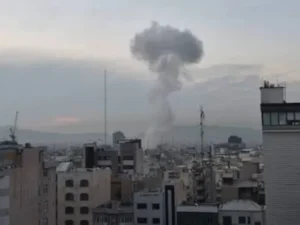
Meanwhile, the United States launched another wave of airstrikes targeting military sites in southern and northwestern Iran.
Explosions were reported in Tabriz, Bushehr and Isfahan, while Iranian authorities confirmed casualties following strikes near Tabriz.
Regional Security Concerns Grow
Iran claimed it launched drone and missile attacks against US military facilities in Kuwait, Jordan and Syria.
The IRGC also said it targeted military assets at Kuwait’s Ali Al Salem Air Base.
Kuwaiti authorities confirmed that air defence systems intercepted hostile drones, although officials reported no immediate casualties or major damage.
In Bahrain, authorities activated emergency warning sirens and advised residents to move to safe locations as a precaution.
Shipping Risks Increase in Strait of Hormuz
Maritime security concerns intensified after a vessel caught fire in the Strait of Hormuz following a reported projectile strike.
The United Kingdom Maritime Trade Operations (UKMTO) said the crew abandoned the vessel safely before rescue teams recovered them.
Separately, Iran claimed that two oil tankers exploded and became immobilised in the strategic waterway, although independent verification was not immediately available.
The continued attacks disrupted commercial shipping and pushed global oil prices above $90 per barrel.
Diplomatic Channels Remain Open
Despite the fighting, Iran confirmed it had received proposals from international mediators aimed at reducing tensions.
Foreign Ministry spokesman Esmaeil Baghaei said Tehran remains committed to diplomacy while continuing military operations.
He said Iranian diplomats would continue their work alongside the country’s armed forces.
Baghaei also confirmed that Oman remains involved in discussions concerning regional security and the future management of the Strait of Hormuz.
United States Reaffirms Military Response
US Secretary of State Marco Rubio said Washington would continue military operations while Iran threatened international shipping routes.
He also stressed that the United States remains open to a diplomatic solution if Iran changes its approach.
Meanwhile, the Pentagon identified two US service members killed during Iranian missile and drone attacks in Jordan.
The military said American forces continue operations against ISIS while responding to escalating regional threats.
International Community Watches Closely
South Korea urged its citizens to leave the Middle East unless travel was absolutely necessary.
At the same time, Iran called on the International Atomic Energy Agency (IAEA) to condemn US strikes on the Darkhovin nuclear facility, insisting the site serves peaceful purposes.
Iranian Foreign Minister Abbas Araghchi said negotiations would only become possible when Tehran believes it has secured a stronger strategic position on the battlefield.
As military operations continue and diplomatic contacts remain active, international concern over the widening conflict and its impact on regional security continues to grow.