
Trump Threatens Strikes on Iran’s Bridges and Power Plants as US-Iran Conflict Escalates
US president warns Tehran to return to negotiations or face attacks on critical infrastructure, while military clashes intensify across the Gulf.
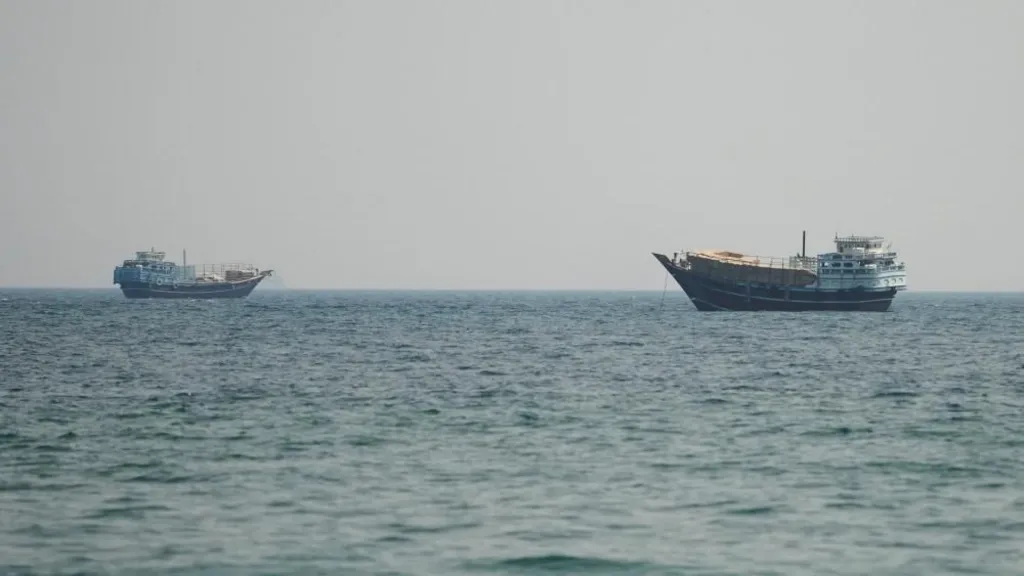
Commercial ships sail through the Strait of Hormuz as US-Iran tensions escalate.
Trump Iran: US President Donald Trump has threatened to target Iran’s bridges and power plants next week unless Tehran returns to negotiations, marking a sharp escalation in tensions as both countries exchanged military strikes for a fourth consecutive day.
In an interview with Fox News, Trump said Iran faced severe consequences if it refused to negotiate.
“Next week it gets really bad for them. We’re going to knock out all their power plants. We’re going to knock out all their bridges unless they get to the table and negotiate,” he said.
Trump added that US officials had warned Iranian negotiators they had better reach an agreement or risk losing “anything left.”
The remarks came after Trump abandoned his earlier proposal to impose a 20% fee on cargo passing through the Strait of Hormuz. Instead, he said the United States would pursue “massive” trade and investment agreements with Gulf states while continuing military operations against Iran.
Despite dropping the shipping fee, Washington resumed its naval blockade of Iranian ports and launched a seven-hour wave of airstrikes. US Central Command (CENTCOM) said it struck dozens of Iranian military targets near the Strait of Hormuz to reduce Iran’s ability to threaten commercial shipping and civilian crews.
PMYP: Rana Mashhood Begins US Visit to Expand Global Opportunities for Pakistani Youth
Iranian authorities said at least seven military personnel were killed in strikes on a military base in Bampur in southeastern Iran.
Tehran responded by launching missiles and drones at US positions in Jordan, Kuwait and Bahrain, according to Iranian state media. Kuwait said its air defence systems intercepted hostile drones, while Bahrain activated air raid sirens and urged residents to seek shelter.
CENTCOM also accused Iran of intentionally targeting civilians by attacking commercial shipping in the Gulf, saying several crew members had been killed, injured or reported missing.
The United Arab Emirates said Iranian cruise missiles struck two Emirati tankers, killing one Indian crew member and injuring eight others. Iran’s Islamic Revolutionary Guard Corps later confirmed attacking the vessels, claiming they had ignored warnings and attempted to pass through a mined route.
The renewed conflict has sharply disrupted shipping through the Strait of Hormuz, one of the world’s most important oil transit routes, pushing global oil prices higher as tanker traffic slowed significantly.
Trump also announced that the United States would continue blocking Iranian shipping while keeping the Strait of Hormuz open for other international vessels.
Speaking after meeting Iraqi Prime Minister Ali al-Zaidi in Washington, Trump said he abandoned the proposed shipping fee after discussions with Gulf leaders but maintained that the United States should not bear the burden of protecting the strategic waterway without compensation.
Iran rejected Trump’s demands, insisting it would maintain control over the Strait of Hormuz.
Deputy Foreign Minister Kazem Gharibabadi said increased US military action and economic pressure would not force Tehran back to the negotiating table, arguing that Washington’s latest actions had effectively undermined previous diplomatic understandings.
The escalating confrontation has raised concerns about regional stability and global energy supplies as both sides continue military operations and diplomatic tensions deepen.