Faceless Assessment should undergo independent review, says Khurram Ijaz
FPCCI adviser urges Pakistan Customs to evaluate its group-less assessment model against international standards.
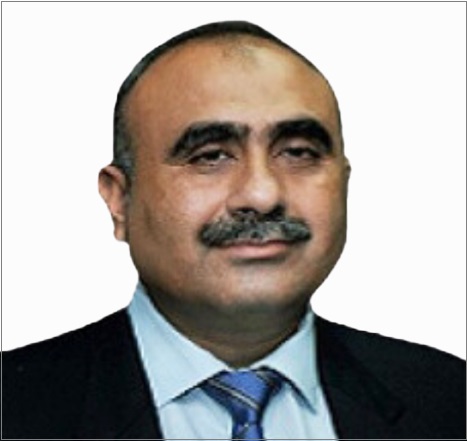
Khurram Ijaz calls for an independent review of Pakistan Customs' assessment model.
Faceless Assessment should undergo an independent performance review to determine whether Pakistan Customs’ group-less assessment model is delivering its intended results, according to Khurram Ijaz, Chairman of the FPCCI Advisory Council on Customs.
In a statement issued on Wednesday, Mr Ijaz said his proposal was not a criticism of the Faceless Customs Assessment (FCA) system, which he described as an important reform aimed at improving transparency, integrity and consistency in customs procedures.
He said the removal of sector-specific assessment groups alongside the introduction of FCA marked a significant structural change that now requires an objective, evidence-based evaluation.
2nd Sindh Energy Diversity Conference-2026
Mr Ijaz noted that several major customs administrations have retained sector-specific expertise while introducing modern customs reforms. He said India strengthened commodity specialisation through National Assessment Centres (NACs) and Faceless Assessment Groups (FAGs), while the United States, the European Union, Canada, Australia and Singapore continue to rely on specialised officers for technically complex customs assessments.
He added that the World Customs Organization consistently highlights the importance of technical expertise in tariff classification, customs valuation and risk management. As international trade becomes increasingly technology-driven, he said assessments involving machinery, chemicals, pharmaceuticals and electronics require specialised knowledge and experience.
Mr Ijaz proposed that Pakistan Customs commission an Independent Performance Evaluation (IPE), preferably with support from an international institution such as the World Bank, the World Customs Organization or the Asian Development Bank, to compare Pakistan’s group-less assessment model with global best practices.
According to him, the review should examine whether the current system has reduced customs assessment times and cargo dwell times, improved trade facilitation and consistency in tariff classification, reduced disputes and litigation, strengthened revenue protection and enhanced the quality of assessments for technically complex goods.
He also noted that recent World Bank trade facilitation frameworks increasingly assess customs performance using operational indicators, including customs processing times, cargo dwell times and border efficiency, making it important to determine whether structural reforms have produced measurable improvements.
Mr Ijaz said that if the independent review confirms the effectiveness of the current model, Pakistan Customs should strengthen it further. However, if the findings identify shortcomings, he suggested adopting a hybrid model that combines the transparency of Faceless Assessment with sector-specific expertise in line with international best practices.
He said major customs reforms should be measured through evidence, performance indicators and international benchmarking, with the ultimate goal of achieving faster cargo clearance, stronger trade facilitation, greater technical accuracy and improved revenue protection.