
BISP Audit: Over 600,000 Ineligible Beneficiaries Received Billions Due to System Weaknesses
Audit report identifies payments to government employees, pensioners and duplicate beneficiaries, exposing major flaws in profiling and verification mechanisms.
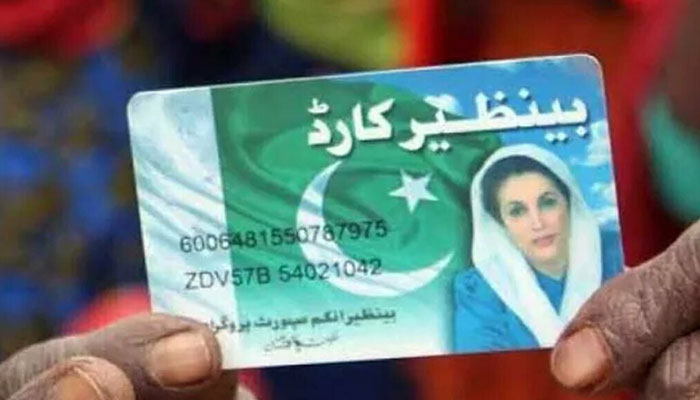
Audit report highlights irregular payments under the Benazir Income Support Programme.
BISP Audit findings have revealed that more than 600,000 ineligible individuals received billions of rupees in financial assistance under the Benazir Income Support Programme (BISP) due to weak profiling procedures and deficiencies in the programme’s data management system.
According to the audit report for the 2025-26 audit year covering the 2024-25 financial year, serious weaknesses were identified in the profiling of spouses within the BISP Management Information System (BISP-MIS). Auditors highlighted financial irregularities exceeding Rs25 billion across 601,850 cases.
SIU Arrests: Karachi Police Detain Online Drug Dealer and Street Crime Suspect in Separate Raids
The official audit document states that during the 2024-25 financial year, BISP disbursed Rs515.712 million under the Unconditional Cash Transfer (UCT) programme to 12,078 government employees, pensioners or their spouses, despite a federal cabinet directive issued on December 24, 2019, that explicitly excluded such individuals from receiving assistance.
The audit detailed several categories of irregular payments.
Among serving government employees, 673 beneficiaries from Grade 1 to 16 received Rs25.20 million, while eight Grade 17 employees received Rs0.09 million.
The report also found that spouses of serving government employees received substantial payments. A total of 9,124 spouses of Grade 1 to 16 employees received Rs402.80 million, while 87 spouses of Grade 17 to 20 employees received Rs2.54 million.
Orangi Town Murder: Travel Agent Shot Dead Outside Home in Karachi’s Mominabad
In addition, 218 pensioners from Grade 1 to 16 received Rs7.41 million, while 22 pensioners from Grades 17 and 18 received Rs0.70 million.
The spouses of pensioners also benefited from the programme. According to the audit, 1,847 spouses of pensioners from Grade 1 to 16 received Rs74.16 million, while 107 spouses of pensioners from Grades 17 to 20 received Rs2.81 million.
Following the audit observations, the Departmental Accounts Committee (DAC) directed authorities to immediately block the identified beneficiaries and initiate recovery of the irregular payments.
The report raises fresh concerns about data verification, beneficiary screening and oversight mechanisms within one of Pakistan’s largest social welfare programmes.