Peshawar: Torkham Motorway: Peshawar-Torkham Motorway project cost rises amid restructuring plan delays
The Peshawar-Torkham Motorway project is facing fresh uncertainty as the government moves to restructure the scheme amid rising costs, delays and repeated failed procurement attempts, with the Peshawar-Torkham Motorway Rs130bn cost now emerging as a key concern in policy discussions.
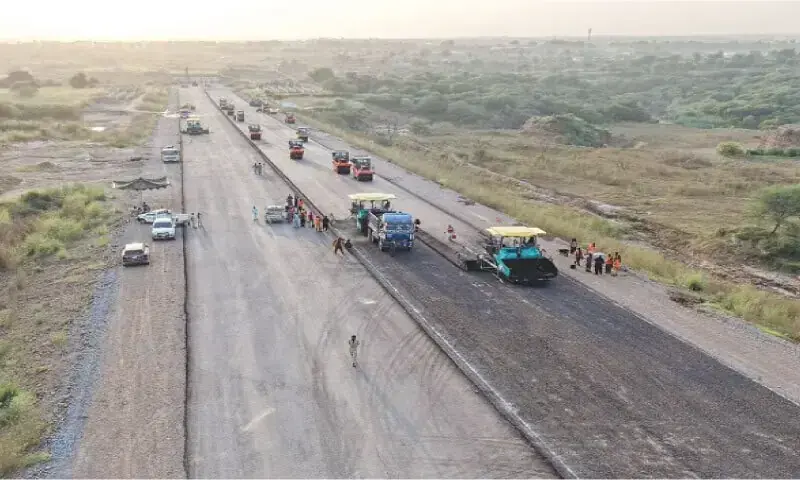
Delays and rising costs prompt restructuring of Peshawar-Torkham Motorway project
The government is reviewing a major overhaul of the Peshawar-Torkham Motorway project, which has seen its estimated cost rise to nearly Rs130 billion and has yet to begin construction despite a World Bank loan agreement signed in 2019.
Dettol: Dettol 1 Litre Price Debate Follows Brand Backlash After China Advert
Officials say the Peshawar-Torkham Motorway Rs130bn cost has forced planners to reconsider the design and scope of the 47-kilometre corridor, originally approved at Rs41.44 billion. The project now faces restructuring as authorities struggle with delays, repeated failed tenders, and design revisions.
The World Bank approved a $460 million loan in December 2019 to fund the project, which aims to link Peshawar with Torkham as part of a wider regional trade route connecting Pakistan with Afghanistan and Central Asia. Although the loan became effective in 2020, construction has not started, and officials now negotiate an extension beyond the original 2026 closing date.
Planners originally designed the motorway as a four-lane controlled-access highway under the Khyber Pakhtunkhwa Economic Corridor. The scheme also included a 55-kilometre Southern Link Road to connect major national highways. However, officials have now removed that link from the revised plan to reduce complexity and manage rising costs.
The revised proposal splits the motorway into three construction packages of roughly equal length. Project authorities made this change after multiple bidding rounds failed when contractors submitted bids that exceeded revised cost estimates.
The Planning Commission has raised concerns about weak coordination among key institutions, including the National Highway Authority, the Ministry of Communications, and the Economic Affairs Division, along with the World Bank. It has also criticised repeated delays, noting that the project has remained stalled for more than five years.
Officials say they based the original estimates on 2014 construction rates, which no longer reflect current market conditions. They now expect to submit a revised PC-I after completing detailed design work and updating cost benchmarks.
Despite earlier ambitions to transform the region into a key trade corridor linking Pakistan with Afghanistan, Tajikistan, Uzbekistan, and the Arabian Sea, the project continues to face uncertainty as planners reassess its scope and financial viability.