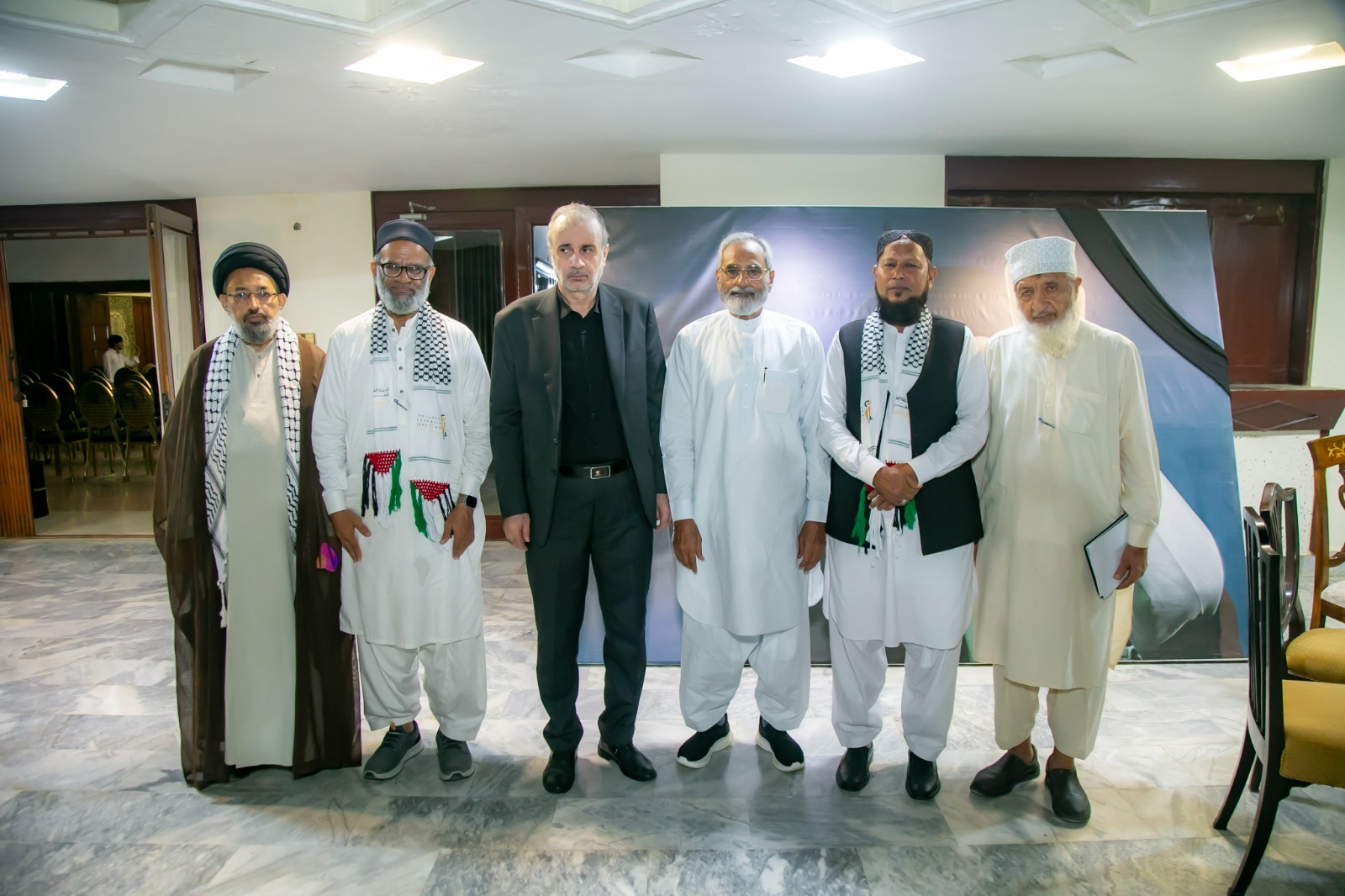
Attendees gather at the Iranian Consulate in Karachi to commemorate Imam Khomeini’s anniversary. PHOTO THE AZB
The Imam Khomeini anniversary was observed at a dignified ceremony held at the Iranian Consulate General in Karachi. The event brought together religious scholars, lawyers, political figures, intellectuals, and members of the business community.
The gathering highlighted the enduring influence of Imam Khomeini and the message of resistance, unity, and independence associated with his legacy. Moreover, speakers discussed the significance of these principles in shaping regional and international discourse.
Imam Khomeini Legacy Highlighted
Addressing the ceremony, Iranian Consul General Akbar Issa Zadeh stated that the movement of Imam Khomeini was rooted in the teachings of the Holy Quran, the Seerah of Prophet Muhammad (PBUH), and the teachings of Ahl-e-Bayt.
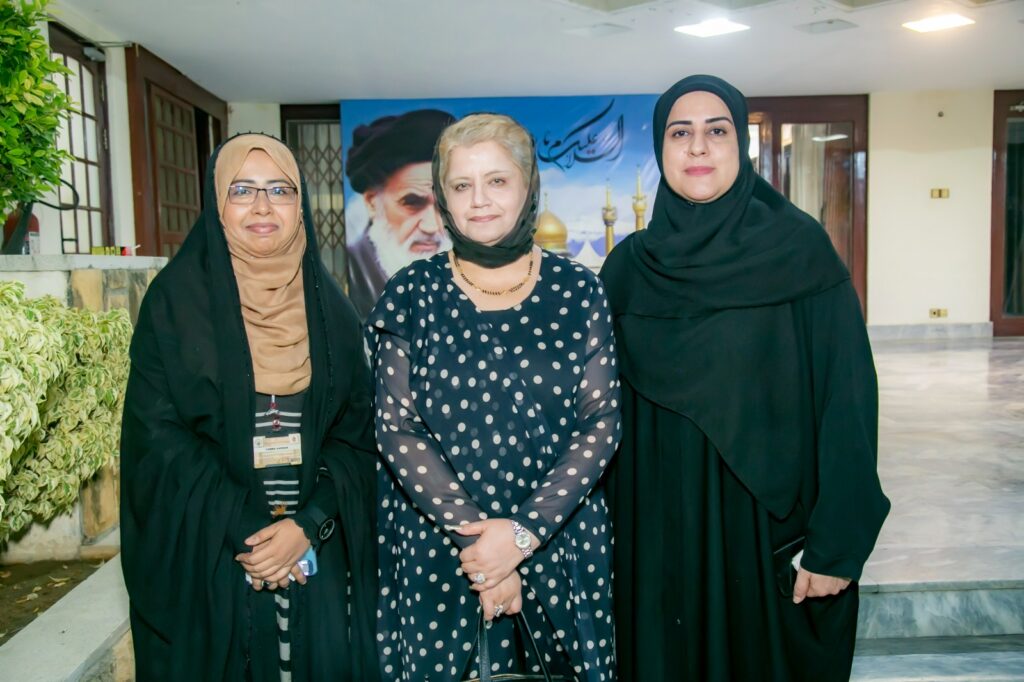
According to his remarks, Imam Khomeini helped instill a renewed sense of independence, self-confidence, and freedom within the Iranian nation. Furthermore, he said these values continue to influence Iran’s national identity and political outlook.
Issa Zadeh reportedly emphasized that Iran has consistently pursued a path of resistance against external pressure and aggression. As a result, he stated that the country has maintained its sovereignty despite political, economic, cultural, and security challenges.
Imam Khomeini Vision and Resistance
The Consul General noted that while Imam Khomeini established the foundations of the Islamic Revolution, Ali Khamenei has guided it through various internal and external developments.
He further highlighted several areas that he described as achievements of the revolution. These included Muslim unity, national self-reliance, scientific advancement, technological progress, and the promotion of resistance-based thinking.
In addition, he stated that Iran’s foreign policy remains centered on dignity, sovereignty, independence, and autonomous decision-making. Consequently, these principles continue to shape the country’s position on the global stage.
Akbar Issa Zadeh Addresses Gathering
A large number of prominent personalities attended the ceremony. Religious scholars, social leaders, legal professionals, and representatives from different schools of thought participated in the event.
Among the speakers were Jamaat-e-Islami Karachi leaders Mairaj-ul-Huda Siddiqui and Muhammad Hussain Mehanti. Other participants included Muslim Pervaiz, Nadeera Panjwani, Dr. Syed Mehboob, Aslam Rizvi Jafri, MNA Syed Hifz-ud-Din, Syeda Masooma Shirazi, Haseeb Jamali, and Sahibzada Abul Khair Zubair.
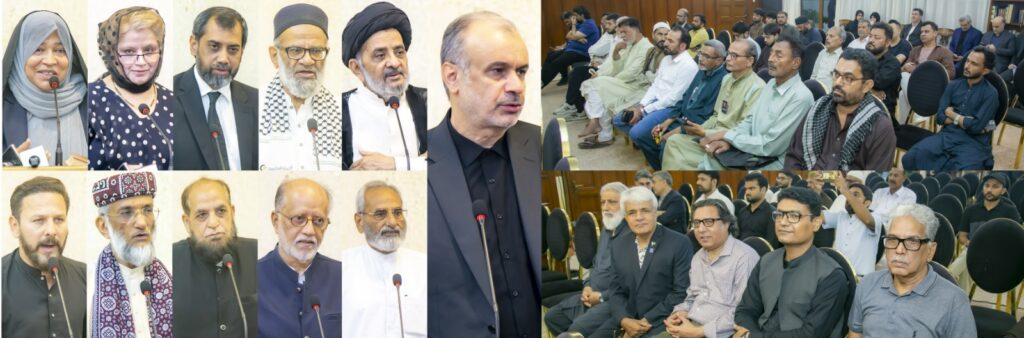
The speakers paid tribute to Imam Khomeini’s political, ideological, and revolutionary contributions. Moreover, they stated that his message inspired people beyond Iran and resonated across the wider Muslim world.
Karachi Ceremony Honors Imam Khomeini
Participants stated that Imam Khomeini’s teachings promoted dignity, freedom, and resistance against oppression. They also emphasized the importance of unity and collective strength in addressing contemporary challenges.
Meanwhile, the ceremony concluded with prayers for Imam Khomeini, the martyrs of the Islamic Revolution, the martyrs of the Sacred Defence, and other martyrs across the Muslim world.
The event reaffirmed themes of resistance, independence, and unity. Therefore, organizers and attendees described the gathering as an opportunity to reflect on the continuing relevance of Imam Khomeini’s message.