World Cup identity: Sweden midfielder Yasin Ayari marked his World Cup debut with a goal against Tunisia, but his muted celebration highlighted a growing theme at this year’s tournament: the complex identities of modern international footballers.
Ayari, who was born in Sweden but has Tunisian heritage through his father and Moroccan links through his mother, raised his hands in apology after scoring. He later said he felt a strong emotional connection to Tunisia and chose not to celebrate out of respect.
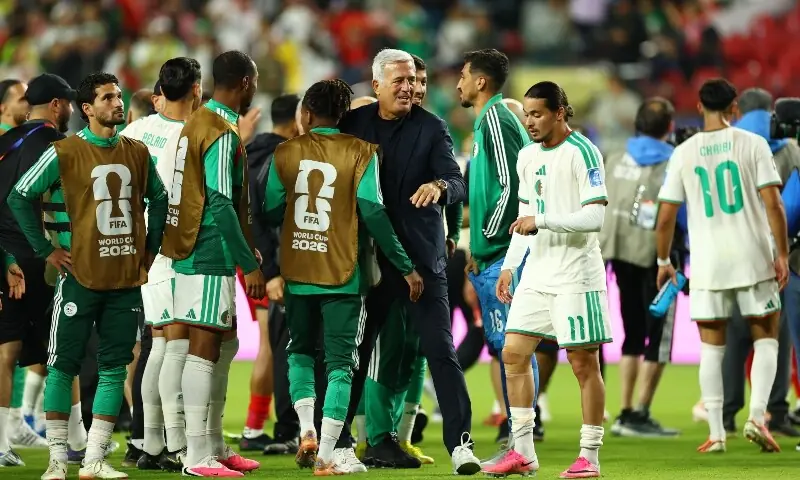
Algeria fight back: Benbouali and Gouiri seal 2-1 win over Jordan
The midfielder is part of a wider trend at the tournament, where nearly a quarter of players represent nations different from their birthplace, reflecting global migration patterns and evolving eligibility rules.
Several teams have benefited from this diversity. Morocco, for example, fielded a fully foreign-born starting XI during their draw with Brazil, underlining the scale of dual-national representation at elite level.
Smaller nations have also leaned heavily on diaspora talent. Curacao national football team included almost entirely Dutch-born players in their squad, while reaching a historic draw against Ecuador under former Netherlands coach Dick Advocaat.
The tournament has also featured notable family splits across national teams. Brothers have chosen different allegiances, including players representing France, Ivory Coast, Scotland, Australia, Spain and Ghana.
Cape Verde’s strong defensive performances have also drawn attention, with players like Roberto Lopes—born in Ireland to Cape Verdean heritage—symbolising the global scouting networks now shaping international squads.
FIFA rule changes allowing young players to switch national teams more easily have further accelerated these trends, enabling cases such as England’s Declan Rice and Germany’s Jamal Musiala to change allegiance after youth careers elsewhere.
Players like Bayern Munich’s Michael Olise have also spoken about their multicultural identities, reflecting how modern footballers increasingly see nationality as layered rather than fixed.
The growing influence of diaspora and dual-national players continues to reshape international football, making identity one of the defining themes of this World Cup.