
US Strikes Iran Again Near Strait of Hormuz as Trump Warns Tehran
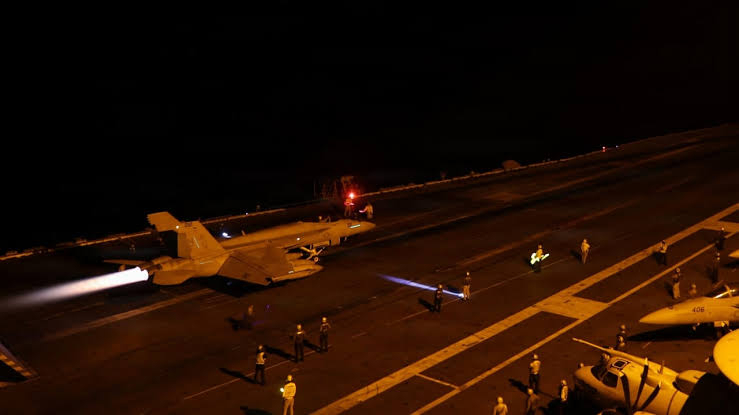
US forces launched new strikes against IRGC targets near the Strait of Hormuz as tensions with Iran escalated.
The US military launched fresh strikes against targets in Iran on Tuesday, according to US Central Command. Washington said the operation targeted sites linked to Iran’s Islamic Revolutionary Guard Corps, known as the IRGC.
The US strikes Iran operation began at 12:00 ET, or 16:00 GMT, CENTCOM said. The command said the attacks followed recent alleged attempts by the IRGC to target commercial shipping in the Strait of Hormuz and American troops deployed in the region.
The new military action marks another escalation between Washington and Tehran. It follows an exchange of attacks between the two countries that began over the weekend and continued into Monday.
Iran said it fired missiles towards US military targets in Jordan and the United Arab Emirates. Tehran described the action as retaliation for an earlier US attack on Iranian rocket launchers on Larak Island.
Washington said Iran had attempted to deploy sea mines in the Strait of Hormuz.
Trump Warns Iran Against Retaliation
President Donald Trump confirmed the latest military action in a post on Truth Social.
CDC Excludes Two Pennsylvania Measles Deaths From National Tally as Dispute Escalates
Trump described the strikes as large and powerful. He said the US launched them in response to what he called Iran’s failed attempt to place sea mines in the Strait of Hormuz.
He also accused Iran of firing eight missiles towards a US military base in Jordan.
Trump said US forces intercepted the missiles successfully.
The US president warned Tehran against launching further attacks.
He said Iran could face much stronger military action if it retaliates. Trump also suggested that an even larger operation remained possible.
Iran, however, responded with its own warning.
Iran’s Armed Forces Central Headquarters said the country would deliver crushing and devastating blows against the United States.
Iranian state media quoted officials as saying continued US military action could bring heavier losses for American forces.
Explosions Reported Near Strategic Ports
Iranian authorities said four projectiles struck the neighbouring port cities of Chabahar and Konarak in southeastern Iran.
State broadcaster IRIB also reported explosions east of Bandar Abbas and around Qeshm Island.
The locations hold major strategic importance.
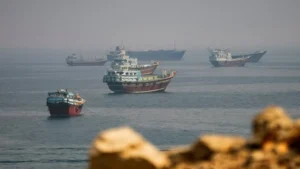
Bandar Abbas and Qeshm Island sit along the northern side of the Strait of Hormuz. The waterway remains one of the world’s most important routes for energy shipments.
Chabahar and Konarak sit along the Gulf of Oman. The port cities support commercial shipping and important maritime and military infrastructure.
The Strait of Hormuz has become a central point of tension in the conflict.
Iran’s alleged attempts to deploy sea mines have raised concerns about commercial shipping and global oil supplies.
Trump said the Strait remained in good condition and that many ships continued to pass through it.
However, shipping data has indicated that traffic remains below levels seen before the conflict.
Oil Prices Rise After New Attacks
Global energy markets reacted quickly to the latest developments.
Oil futures rose above $94 a barrel after CENTCOM announced the new strikes.
The previous exchange of attacks had already pushed global oil prices higher. It also sent US stock indexes lower.
Investors remain concerned about the impact of a prolonged conflict on energy supplies.
The Strait of Hormuz serves as a critical route for global oil exports. Any disruption could affect international energy markets and fuel prices.
Trump had said on Monday that US military action against Iran would remain limited.
He claimed that American operations had severely damaged Iran’s naval and air capabilities.
Trump also said US forces had significantly reduced Iran’s surveillance capacity.
However, he added that Washington could launch further attacks if necessary.
The latest US strikes Iran operation represents a shift from Washington’s recent emphasis on economic pressure.
The exchange of military attacks has now increased fears of a wider conflict.
Iran has promised retaliation, while Trump has warned of stronger action.
With both sides exchanging threats, attention remains focused on whether the conflict will expand further and what it could mean for the Strait of Hormuz and global oil markets.