US-Iran Talks: Trump and Iran Exchange Warnings as Direct Negotiations Begin in Switzerland
Leaders trade sharp messages while negotiators push for progress on a final agreement to end regional conflict.
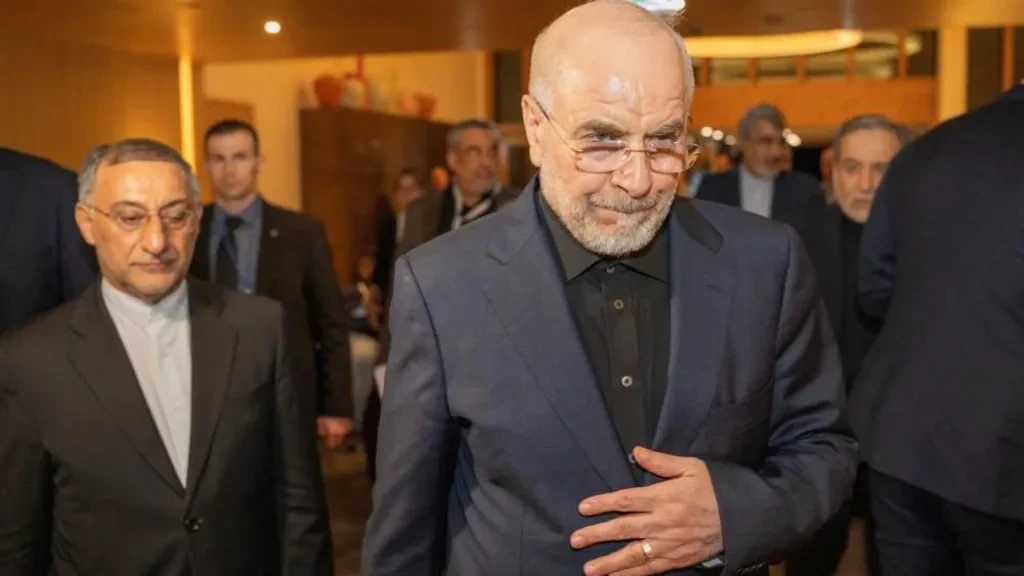
US and Iranian delegations begin direct negotiations in Switzerland.
US-Iran Talks entered a critical phase as US President Donald Trump and Iran’s lead negotiator Mohammad Bagher Ghalibaf exchanged warnings while officials opened the first round of direct negotiations in Switzerland following last week’s initial agreement to end the war.
Trump warned that the United States could launch further action against Iran if Tehran failed to restrain Hezbollah, the Lebanese armed group involved in continued clashes with Israeli forces in southern Lebanon.
In response, Ghalibaf rejected the warning and stated that Iran’s armed forces remained prepared for confrontation.
The initial agreement signed last week committed both sides to pursuing a final settlement within 60 days, ending hostilities across all fronts, including Lebanon, and reopening the Strait of Hormuz.
Headline: Loggerhead Turtle: Tagged Female Returns to Oman Nesting Beach After 12 Years
Despite the agreement, violence escalated in southern Lebanon, where fighting continued between Hezbollah and Israeli forces alongside Israeli air strikes that Lebanese health authorities said caused civilian casualties.
The renewed escalation led the United States to announce a new ceasefire arrangement between Israel and Hezbollah on Friday.
However, continued hostilities prompted Iran to announce on Saturday that it had closed the Strait of Hormuz, although vessel tracking data indicated maritime traffic continued through the strategic route.
As negotiations opened in Lucerne, Trump stated that Iran must immediately stop supporting armed groups in Lebanon and warned of strong consequences if tensions continued.
Ghalibaf responded by questioning the effectiveness of external pressure and said Iran would continue acting according to its own strategic decisions.
On Sunday, reports indicated that fighting had eased, although Israeli Prime Minister Benjamin Netanyahu maintained that Israeli forces would remain in southern Lebanon as long as necessary to protect northern Israel.
Hezbollah leader Naim Qassem rejected any continued Israeli military presence and said the group would defend itself.
Ahead of the talks at the Bürgenstock resort, US lead negotiator JD Vance said President Trump had instructed negotiators to pursue a new chapter in relations.
Vance added that if Iran moved away from regional confrontation and abandoned long-term nuclear weapons ambitions, Washington would be prepared to transform relations with Tehran.
Iran has repeatedly stated that its nuclear programme serves peaceful purposes.
The US delegation included Jared Kushner and special envoy Steve Witkoff, while Ghalibaf was joined by Iranian Foreign Minister Abbas Araghchi.
Pakistan and Qatar also remained engaged in diplomatic efforts. Pakistan continued its mediating role after previously hosting negotiations, while Qatari Prime Minister Sheikh Mohammed bin Abdul Rahman Al Thani welcomed the continuation of direct dialogue.