Donald Trump Orders New Iran Strikes as Middle East Conflict Escalates and Ceasefire Faces Fresh Pressure

US and Iran exchange fresh strikes as tensions rise across the Middle East.
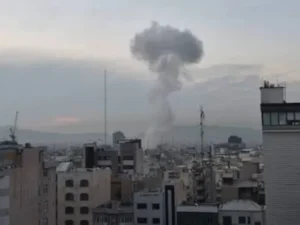
The US-Iran Conflict intensified for a second consecutive day after both countries exchanged military strikes across the Middle East. The latest developments have raised concerns about regional stability and the future of a fragile ceasefire agreed in April.
The renewed attacks matter because they could affect diplomatic efforts, regional security, and global energy markets. In addition, growing tensions have increased uncertainty around key shipping routes and military operations throughout the region.
Donald Trump Warns Iran After Strikes
US Central Command (CENTCOM) announced that it completed a series of what it described as self-defense strikes targeting military, surveillance, and radar facilities in southern Iran.
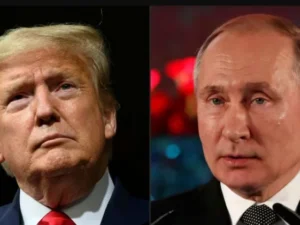
The operation came shortly after US President Donald Trump stated that American forces would strike Iran hard if progress toward a permanent agreement was not achieved. According to his public statements, Iranian leaders had taken too long to negotiate a lasting deal.
Furthermore, US Defense Secretary Pete Hegseth reportedly said Iran had been given an opportunity to reach an agreement but had not acted on it. He stated that key facilities could face additional attacks if tensions continued.
Iran Responds With Regional Missile Attacks
The US-Iran Conflict expanded further when Iran launched retaliatory strikes against US military assets across the Middle East.
According to Iranian state media, the Islamic Revolutionary Guard Corps (IRGC) fired ballistic missiles toward military facilities linked to the United States. Bahrain and Kuwait reported air defense activity after hostile aerial targets were detected.
Meanwhile, the IRGC claimed it targeted the Muwaffaq Salti Airbase in Jordan. Iranian media reported that military facilities and aircraft were damaged, although those claims have not been independently verified.
As a result, regional governments increased security measures. Kuwait temporarily closed its airspace, while Bahrain activated air raid sirens during the latest round of attacks.
Strait of Hormuz Faces New Security Concerns
The Strait of Hormuz became another focal point of the US-Iran Conflict after Iranian state media reported disruptions to maritime traffic.
Iranian reports claimed that the waterway had been closed to vessels and that two oil tankers were targeted. However, CENTCOM stated that commercial ships continued to transit through the strategic shipping route.
The Strait of Hormuz remains one of the world’s most important energy corridors. Therefore, any disruption quickly attracts global attention from governments, shipping companies, and energy markets.
Oil Prices Rise Amid Conflict Fears
Energy markets reacted swiftly to reports involving the Strait of Hormuz and regional military activity.
Brent crude oil, which serves as a global benchmark, climbed to approximately $95 per barrel after gaining around 2%. Analysts have closely monitored developments because any prolonged disruption could affect international energy supplies.
Consequently, investors and policymakers are watching the situation carefully as military exchanges continue and diplomatic efforts remain uncertain.
Masoud Pezeshkian Rejects External Pressure
Iranian President Masoud Pezeshkian said Iran would stand firm against pressure and threats. He stated that the country would continue defending its interests despite growing tensions.
At the same time, Iran’s foreign ministry accused the United States of harming diplomatic efforts through what it described as contradictory messages. Officials argued that recent military actions have complicated attempts to restart meaningful negotiations.
United Nations Calls For Diplomacy
The current escalation follows a ceasefire agreement reached in April. Although both sides reduced large-scale hostilities, intermittent attacks have continued in recent months.
Recent attempts to revive negotiations between Washington and Tehran have reportedly stalled. Meanwhile, military incidents have increased across several countries in the region.
United Nations Secretary-General António Guterres warned that the Middle East is being pulled deeper into crisis. According to his statement, all parties should work toward a diplomatic settlement and avoid further attacks.
As tensions persist, international observers continue to monitor whether diplomacy can prevent the US-Iran Conflict from expanding into a broader regional confrontation.