US Iran Conflict Escalates as Donald Trump Orders Strikes Again
Aerial view of missile launches and naval activity during rising US Iran tensions in the Middle East.
The US Iran conflict escalated sharply after fresh military exchanges across the Middle East.
The situation reportedly intensified as both sides launched attacks for a second consecutive day.
It further strained a fragile ceasefire that had been in place since April.
According to officials, the violence risks expanding into a wider regional confrontation.
The developments matter because they involve global energy routes and US military assets.
Donald Trump US Iran escalation warning
Donald Trump warned that US forces would strike harder if tensions continued.
He stated that Iran had taken “too long” to reach a lasting agreement.
The US Iran confrontation deepened after his remarks were followed by new airstrikes.
Reports say the rhetoric increased pressure on already stalled diplomatic negotiations.
US Central Command strikes Iran sites
US Central Command confirmed a wave of “self-defense strikes” on Iranian military sites.
The targets reportedly included surveillance and radar installations in southern Iran.
The US Iran conflict escalated further after these coordinated operations.
Officials said the strikes aimed to reduce immediate operational threats.
Iran IRGC retaliation across region
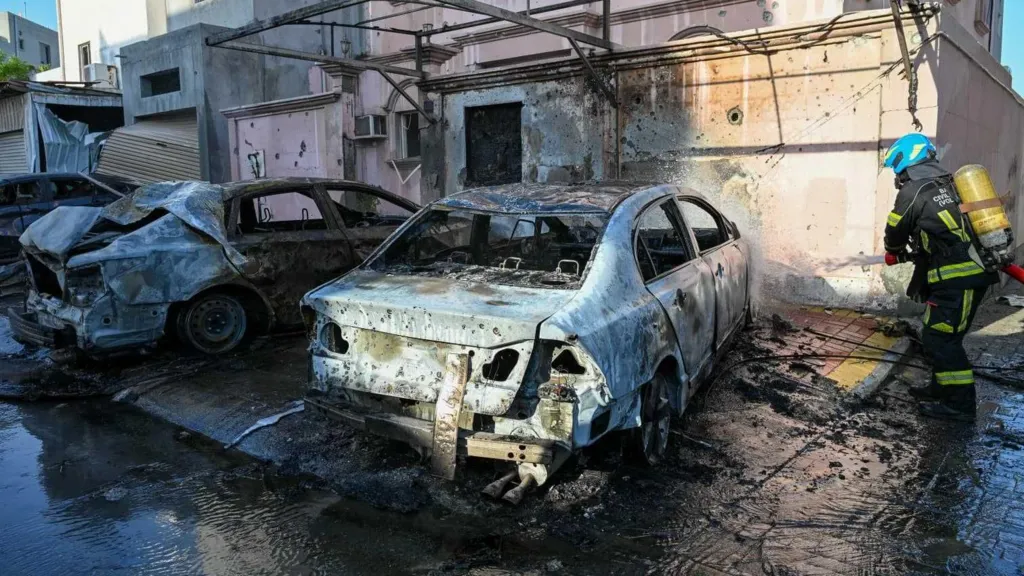
Islamic Revolutionary Guard Corps responded with missile attacks on US-linked bases in the region.
Bases in Bahrain and Kuwait were reportedly targeted.
Iran also claimed strikes on a US command centre in Jordan.
However, these claims have not been independently verified.
The US Iran confrontation has now expanded across multiple countries.
Strait of Hormuz tensions rise sharply
Iranian media reported disruption near the Strait of Hormuz after reported strikes on tankers.
Centcom later stated that commercial shipping continued normally in the region.
The US Iran escalation has raised fears over global oil supply stability.
Brent crude prices reportedly surged following the reported attacks.
António Guterres warns of crisis risk
António Guterres warned that the Middle East is being pushed deeper into crisis.
He said the ceasefire risks collapsing into broader conflict if attacks continue.
The US Iran situation, he added, requires urgent diplomatic intervention.
He urged all parties to avoid further escalation and return to negotiations.
Masoud Pezeshkian defends Iran stance
Masoud Pezeshkian stated that Iran will resist pressure and threats.
Iranian officials accused the US of weakening diplomatic channels through contradictory messaging.
The US Iran dispute continues despite earlier attempts at a temporary ceasefire.
Both sides have since exchanged intermittent strikes without full de-escalation.
US Iran conflict risks wider war
The US Iran crisis now involves multiple regional actors and military fronts.
Analysts reportedly warn that continued escalation could trigger a broader conflict.
Oil routes, military bases, and airspace remain under heightened alert.
Diplomatic efforts are now seen as critical to preventing further escalation.