

Unitree Robotics Surges 460% in Shanghai Debut as China’s Robot Race Accelerates
The Chinese humanoid robot maker’s record first-day performance highlights growing investor confidence and intensifying US-China competition in robotics and AI
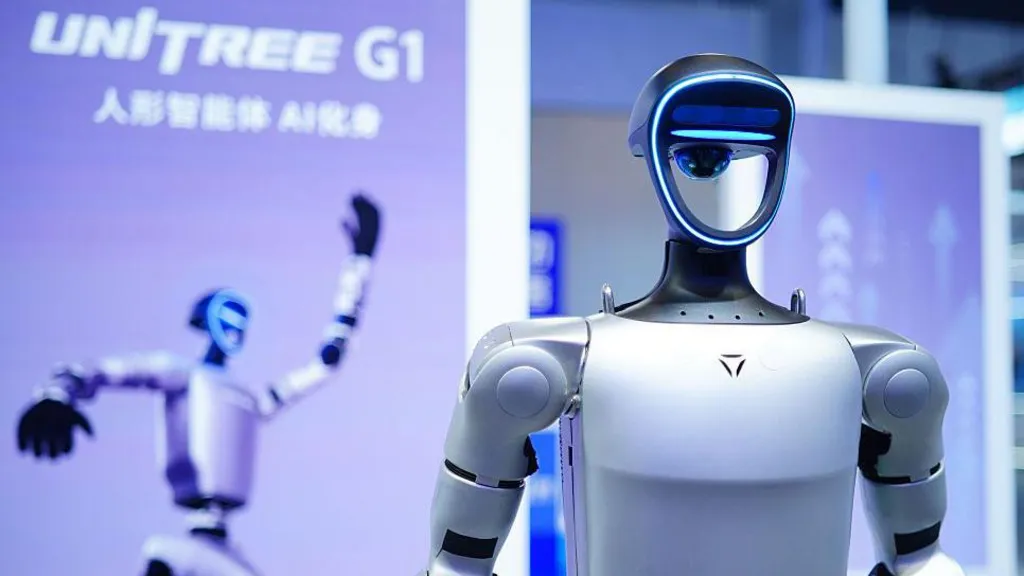
Unitree Robotics makes a dramatic stock market debut in Shanghai as China’s humanoid robot industry expands
Unitree Robotics made a dramatic debut on Shanghai’s technology-focused Star Market on Wednesday, with its shares closing more than 460% above their initial offering price.
The Chinese company offered its shares at 150.80 yuan (£16.50; $22.36). They ended the first trading session at 845 yuan.
The extraordinary jump gives Unitree a major boost as China seeks to strengthen its position in advanced robotics. It also comes as the United States and China compete for influence over robotics, artificial intelligence and other strategic technologies.
The Unitree Robotics debut marks the first mainland Chinese stock market listing by a humanoid robot maker.
A major moment for China’s robotics industry
The listing has attracted significant attention from investors and technology companies.
China already has a large robotics manufacturing base. Automated machines operate across factories, warehouses and homes. Humanoid robots, however, represent a newer and rapidly developing part of the industry.
Major companies such as Tesla, BYD and Amazon are also developing machines that can perform tasks normally handled by humans.
Unitree has emerged as one of China’s most visible robotics companies. Its products range from sensors and robotic arms to four-legged robots and humanoid machines.
The company shipped more than 5,500 humanoid robots in 2025. It also reported a net profit of 278 million yuan last year, making it one of the few profitable companies in the sector.
Unitree competes on price
Founded in 2016, Unitree is officially known as Yushu Technology Co Ltd. The company operates from Hangzhou, a major technology centre in eastern China.
The region has developed a large cluster of robotics companies. Government investment has helped fuel the sector’s expansion.
Unitree has gained attention partly because its products can cost far less than comparable machines from some US competitors.
Its robot dogs start at about $2,700. Boston Dynamics’ Spot, by comparison, costs roughly $70,000, although the products differ in size and capability.
Unitree entered the humanoid robot market in 2023. Its child-sized G1 model later reached customers with a price of about $13,500.
Humanoid robots attract global investment
The growing interest in humanoid robots reflects broader expectations about how artificial intelligence could change physical work.
Researchers see potential applications in factories, hospitals and other commercial environments. China also views robotics as a possible response to its ageing population and future labour shortages.
Fei Qin, an associate professor at the University of Bath, said Beijing considers robotics a strategic priority in its effort to lead advanced technology.
Robotics researcher Harold Soh said Chinese manufacturers have an advantage in pricing, while US companies often offer more user-friendly software.
However, experts warn that humanoid robots still face major technical challenges. Battery life, reliability and privacy remain important concerns.
Soh said widespread use inside homes remains several years away. He expects factories and hospitals to become important early markets.
Unitree builds global profile
Unitree has also used high-profile demonstrations to promote its technology.
Its robots are competing at the 2026 World Humanoid Robot Games in Beijing. Teams are taking part in running, football and other tasks, including opening boxes and sorting library books.
The company attracted further attention during China’s Spring Festival Gala in February. Its G1 robots performed martial arts movements during the nationally televised event.
Robotics researcher David Hsu described the performance as a sign of the industry’s rapid development.
The strong public response has helped Unitree become one of the most recognisable names in China’s emerging humanoid robotics market.
IPO could set benchmark for rivals
Investors are now watching Unitree’s performance for signs of how much appetite exists for humanoid robotics companies.
Jack Pearson of investment firm RoboStrategy said the listing gives ordinary investors a rare opportunity to invest directly in a humanoid robotics company.
He also described the debut as an important moment for China’s robotics sector.
Other Chinese robotics companies could soon seek similar listings. UBTech Robotics already trades in Hong Kong, while companies including Leju Robotics and AgiBot are expected to pursue stock market listings.
The success of Unitree could encourage more investment across the sector.
US-China technology rivalry intensifies
Robotics has become another major front in the technology competition between Washington and Beijing.
The United States has introduced restrictions on Chinese technology in several areas, including artificial intelligence and electric vehicles.
The Trump administration also announced plans to restrict new Chinese-made humanoid and quadruped robots over national security and manufacturing concerns.
China has rejected such measures and accused Washington of politicising trade and technology.
Christine Wan of the Peterson Institute for International Economics said China’s strength in robotics reflects a wider challenge for the United States.
Chinese companies have become deeply integrated into global manufacturing networks. Other countries may find it difficult to reduce their dependence on Chinese suppliers without disrupting domestic production.
Pakistan Condemns Israeli Strike on Syrian Air Base, Warns of Regional Risks
China gains momentum in robot race
US companies continue to develop competing humanoid machines.
Tesla is working on its Optimus robot and plans to produce the machines at its California manufacturing facilities. Amazon has also tested humanoid robots in warehouses and continues to research next-generation robotics.
Boston Dynamics, meanwhile, plans to introduce human-like machines at Hyundai factories.
Despite those efforts, some researchers believe Chinese companies have moved ahead in commercial visibility and affordability.
Hsu said the global conversation around robotics has increasingly shifted towards Chinese manufacturers.
Unitree’s extraordinary first-day stock market performance now gives that industry momentum a powerful financial signal. Whether the surge reflects lasting investor confidence or early market enthusiasm will become clearer as the company expands production and the global humanoid robotics race intensifies.