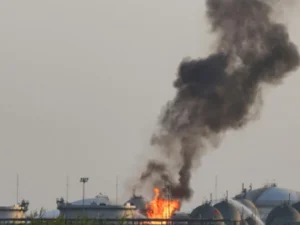
Trump Says Iran War May Be Nearing End as Houthi-Saudi Fighting Escalates
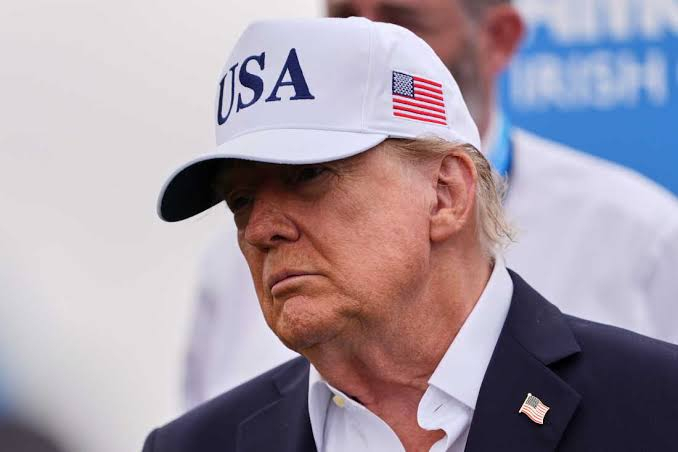
Trump signals hope for an end to the Iran war as fighting between Saudi Arabia and Houthi forces escalates in Yemen.
U.S. President Donald Trump said he hoped the war against Iran was nearing an end as fighting expanded into Yemen. Saudi aircraft carried out strikes on Houthi positions, while the Iran-backed group launched drones and missiles toward Saudi targets.
The latest escalation has added another front to a conflict that has disrupted energy markets and shipping routes. It has also increased concerns about the security of Saudi Arabia’s oil infrastructure.
Houthi-Saudi Fighting Raises Energy Concerns
Houthi forces have advanced along Yemen’s Red Sea coast and increased attacks on Saudi targets. The group said it carried out strikes against targets in Yanbu and Khamis Mushait using missiles and drones.
Saudi Arabia has not confirmed the Houthi claims regarding those specific targets. Riyadh has, however, acknowledged military operations against Houthi positions in Yemen.
Asim Munir Urges Iran to Help Halt Houthi Attacks on Saudi Energy Sites
The renewed fighting follows a period of relative calm in the Yemen conflict. The latest Houthi advance has given the group greater control over territory near the strategic Bab el-Mandeb Strait.
That waterway remains important for global shipping and energy supplies. Any prolonged disruption could add further pressure to already strained oil markets.
Trump Says Iran Wants a Deal
Speaking to reporters on Wednesday, Trump said he hoped the war was approaching its final stages.
“Hopefully we are towards the end of the war,” Trump said.
The U.S. president also said Iran wanted to reach a deal. He added that he had received communication from Iran directly, but did not provide further details.
Trump has previously offered different timelines and objectives for ending the conflict. The war began on February 28 after U.S. and Israeli strikes on Iran, followed by Iranian attacks on Israel and U.S. bases in Gulf countries.
Oil Markets Remain Under Pressure
The expansion of the conflict has increased concerns about global energy supplies. Fighting has already disrupted shipping through the Strait of Hormuz, one of the world’s most important oil transit routes.
Damage to Saudi Arabia’s East-West oil pipeline has added to those concerns. Traders have warned that a prolonged shutdown could affect a significant share of global oil supplies.
Brent crude traded near $108 a barrel on Wednesday. Prices remained elevated as traders assessed the potential impact of further attacks on regional energy infrastructure.
Oil prices later moved lower after reports that Saudi Arabia was arranging additional crude shipments through Oman. Brent crude fell to around $104.59 a barrel in early Thursday trading, while U.S. West Texas Intermediate also declined.
U.S. diesel prices have also reached record levels. Rising fuel costs have become an important economic issue as the conflict continues.
Trump Expected to Meet Gulf Leaders
The widening conflict is also drawing greater diplomatic attention. Axios reported that Trump was expected to meet Gulf leaders during the United Nations General Assembly in New York.
Officials from Saudi Arabia, the United Arab Emirates, Qatar, Bahrain, Kuwait and Oman could take part in the discussions, according to the report. The talks are expected to focus on the conflict and possible next steps.
The White House and U.S. State Department had not publicly confirmed the reported meeting at the time of publication.
Houthi Attacks Add to Regional Risks
Houthi military spokesman Yahya Saree said the group had launched further missile and drone attacks against Saudi targets. He also claimed that Saudi forces had conducted hundreds of airstrikes in Yemen during the week.
Saudi-backed Yemeni forces have acknowledged fighting against the Houthis alongside Saudi forces. Riyadh has not publicly confirmed the full number of strikes claimed by the Houthi movement.
The United States has also tightened its travel warning for Saudi Arabia. American government employees have been barred from travelling within 20 miles of the Yemen border.
Meanwhile, U.S. officials have continued diplomatic contacts with the Houthis through Oman, according to Reuters. The discussions have focused on maritime security and the group’s commitment to an earlier ceasefire with Washington.
The latest developments have widened the geographic scope of the Iran conflict. They have also increased uncertainty over oil supplies, shipping routes and the broader security situation across the Middle East.