SpaceX: Starship Launch Scrubbed After Engine Abort Delays 13th Test Flight
SpaceX halted its first Starship mission since going public after an automatic launch abort, with Elon Musk targeting a new launch attempt early next week.
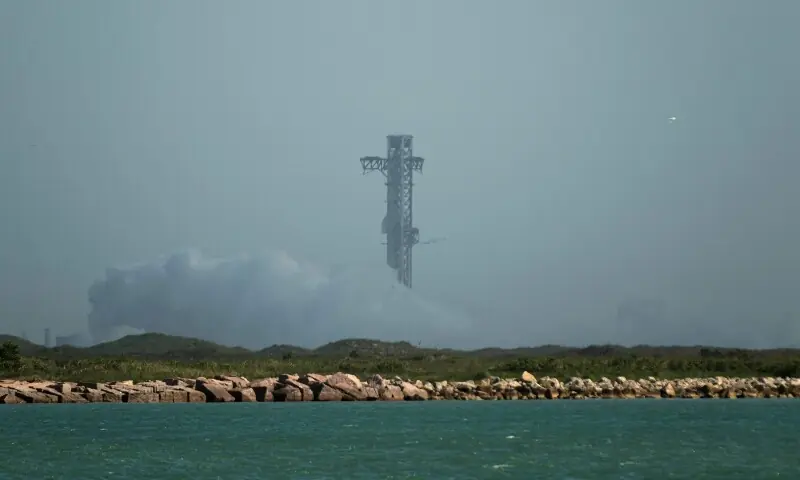
SpaceX aborts the Starship launch after engine ignition issues during the countdown.
SpaceX postponed its highly anticipated Starship launch on Thursday after its automated safety system detected engine issues just moments before liftoff, delaying the rocket’s 13th test mission.
The flight was set to become Starship’s first mission since SpaceX debuted on the public stock market. However, the countdown ended abruptly as the Super Heavy booster began igniting its engines.
SpaceX founder and CEO Elon Musk said several Raptor engines failed to ignite, prompting the onboard launch system to abort the mission.
“Some of the engines didn’t start, triggering an automatic launch abort. Now offloading propellant,” Musk wrote on X.
Musk later confirmed that engineers will replace two Raptor engines before scheduling another launch attempt.
“To be confident of a good flight, two Raptors will be removed and replaced. The most probable launch timing is early next week,” he added.
The delayed mission will mark Starship’s 13th test flight and follows a largely successful mission in May, when SpaceX introduced the rocket’s third-generation design.
AI predictions for Spain to Edge Argentina in Historic 2026 Showdown
Although that flight showcased several technical improvements, engineers encountered engine problems during the Super Heavy booster’s return. The issues prevented a controlled landing, forcing the booster to splash down in the Gulf of Mexico instead of completing its planned precision recovery.
To improve reliability, SpaceX has implemented several hardware and software upgrades based on data gathered during the previous mission.
The company aims to complete a full flight profile, including liftoff, stage separation, the boostback burn and a successful offshore landing burn for the Super Heavy booster.
During the mission, the Starship upper stage will deploy 20 next-generation Starlink V3 satellites into orbit. Engineers will also attempt to relight a Raptor engine in space and evaluate upgrades to the spacecraft’s heat shield during atmospheric re-entry.
The flight carries additional significance because it marks Starship’s first mission since SpaceX completed its record-breaking initial public offering in June.
Despite strong investor interest, SpaceX shares closed at $131.11 on Thursday, below the company’s IPO price of $135.
Alongside its launch programme, SpaceX continues to expand the Starlink satellite internet network while advancing plans to support future space-based artificial intelligence data centres.
Starship also remains central to NASA’s Artemis programme. The U.S. space agency selected SpaceX to develop a modified version of the spacecraft that will serve as the lunar landing system for future Moon missions.
A successful return to flight would strengthen SpaceX’s commercial ambitions while advancing NASA’s long-term plans for human exploration beyond Earth.