

AI Creates Functional Viruses in Lab Breakthrough That Scientists Call a Turning Point
Researchers say generative AI has designed complete viral genomes for the first time, opening new possibilities for medicine while raising major safety questions
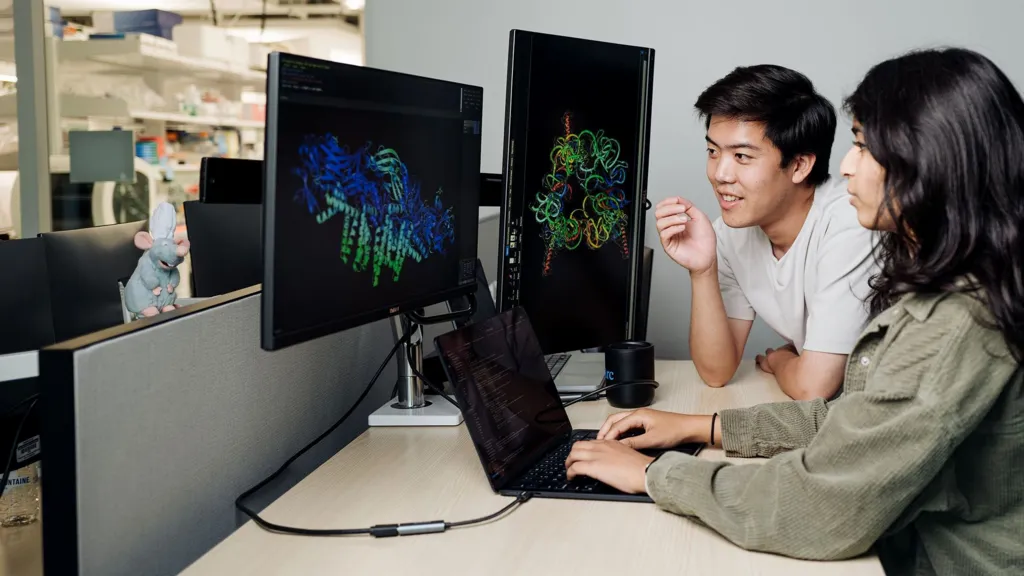
Scientists use artificial intelligence to design functional bacteriophages in a laboratory breakthrough.
Researchers in the United States say artificial intelligence has designed complete viral genomes that scientists successfully tested in a laboratory.
The researchers created 16 novel bacteriophages, viruses that infect bacteria rather than people. The finding marks a significant advance in AI-designed viruses and synthetic biology.
Scientists say the breakthrough could eventually support new treatments for bacterial infections, particularly infections that no longer respond to antibiotics. However, experts warn that the same technology raises serious biosafety and security concerns.
Gianni Infantino Faces Growing Pressure as FIFA Power Struggle Deepens
Brian Hie, an assistant professor at Stanford University, described the work as a new level of complexity for generative AI. He said the technology has moved from predicting biological sequences to designing complete genomes that can function inside cells.
How AI designed the new viruses
The researchers used AI models called Evo1 and Evo2. These systems work in a similar way to large language models, but they analyse biological sequences instead of ordinary text.
The models learned from genetic information collected from viruses, bacteria, plants and humans.
The Stanford team then focused on bacteriophages. These viruses naturally target specific types of bacteria.
Researchers generated hundreds of potential designs and tested selected candidates in a laboratory. Sixteen of the resulting viruses successfully infected and killed E. coli bacteria.
Samuel King, a PhD student involved in the research, said the team realised the viruses were working when they saw clear areas appear on bacterial cultures.
The discovery excited the researchers and raised hopes for developing new approaches to bacterial infections.
Potential for antibiotic-resistant infections
Scientists have increasingly explored phage therapy as a possible alternative when antibiotics fail.
Bacteriophages naturally attack bacteria. Researchers hope they could eventually help treat infections caused by antibiotic-resistant bacteria.
Hie said AI could expand the range of biological tools available for medicine. Researchers could potentially use the technology to develop new therapies and other medical applications.
The latest study also demonstrates how AI can move beyond analysing biology and begin designing biological systems.
That shift has become a major focus of synthetic biology.
Scientists warn of serious safety concerns
The breakthrough has also prompted warnings from experts in biosafety and biosecurity.
In a commentary accompanying the study in Science, Dr Thomas Inglesby and Dr Moritz Hanke of the Johns Hopkins Center for Health Security said the findings raise urgent questions about how scientists should control the technology.
They argued that researchers must consider whether generative AI can design biological systems without increasing the risk of serious harm.
The experts also warned against pursuing AI-designed viruses that could cause disease.
The Stanford researchers took several precautions during their work. They focused on bacteriophages rather than viruses that infect humans and excluded viruses capable of infecting complex organisms from their training data.
The experiments also took place in a secure laboratory.
Hie said existing safeguards can help ensure that the technology develops in beneficial directions.
A major step for synthetic biology
The research demonstrates an important change in how scientists can approach biological design.
Prof Marc Güell of Pompeu Fabra University in Spain called the study a “very significant turning point”. He said scientists are beginning to design biology using computers.
The potential applications extend beyond treating bacterial infections.
Researchers could eventually explore AI-assisted biological tools for drug development, genetic medicine and immunotherapy.
Prof Patrick Cai, chair of synthetic genomics at the Manchester Institute of Biotechnology, described the work as an important milestone.
He said genome-focused AI models may be beginning to identify biological design principles that evolved naturally.
Living organisms remain a much bigger challenge
The researchers stressed that creating functional bacteriophages does not mean AI can now create living organisms from scratch.
Viruses occupy a different biological category from cellular life. Their genetic systems are also far smaller than those of living cells.
The gap becomes much larger when researchers consider complex organisms such as humans.
Hie said designing simple living organisms with AI would require much more work. However, he suggested that researchers are interested in exploring how far the technology can eventually go.
For now, the study represents a major milestone in AI-designed viruses and synthetic biology.
It shows that generative AI can move beyond analysing existing biological information and contribute to the design of functional biological systems.
That progress could help scientists develop new medical treatments. At the same time, it makes stronger safeguards increasingly important as AI becomes more capable of manipulating biological information.