South China Sea Reef Expansion Escalates Tensions
Web Desk June 4, 2026China and Vietnam expand artificial islands in the South China Sea, escalating tensions as rival claimants strengthen control over disputed waters.
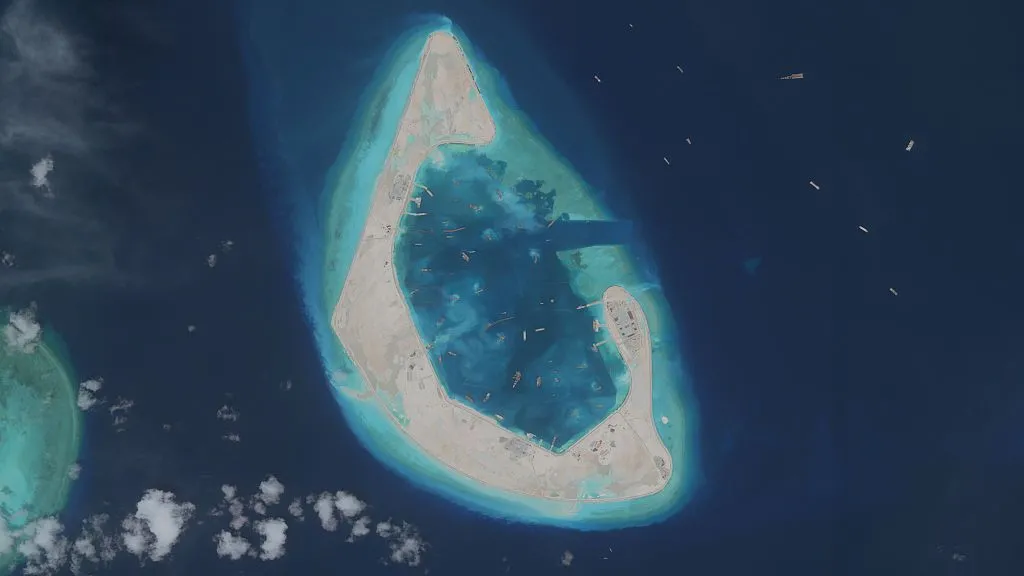
Antelope Reef, located in the north-western South China Sea, has undergone major transformation. Until recently, it remained mostly underwater. However, large-scale dredging has now turned it into a 6 sq km artificial island.
Sharjeel Memon Mohsin Naqvi Discuss Law & Order Cooperation
Millions of tonnes of sand were extracted from the seabed. As a result, a crescent-shaped landmass has emerged with new structures and shipping activity. Satellite imagery shows rapid construction completed within months.
China leads large-scale dredging operations
China operates the world’s largest fleet of dredging vessels. These ships have the capacity to move thousands of cubic metres of sand per hour. Consequently, Beijing has previously converted reefs in the Spratly Islands into military-capable islands.
These developments include runways, ports, and military facilities. China continues to assert its claims over most of the South China Sea through its so-called nine-dash line.
Vietnam and other claimants follow similar approach
Vietnam has also increased its reclamation activities in disputed waters. In response to China’s expansion, Hanoi has upgraded around 20 reefs in recent years. In addition, it has created multiple artificial harbours.
Other claimants, including the Philippines, Malaysia, and Taiwan, are also strengthening their positions. However, their scale remains smaller compared to China’s operations.
Rising military and strategic tensions
Experts say the latest expansion at Antelope Reef may signal strategic messaging. It could also indicate preparation for potential military use, although nearby Chinese bases already exist on Hainan Island.
Meanwhile, tensions continue between Chinese forces and regional coastguards. Frequent maritime encounters highlight growing instability in disputed waters.
Diplomatic efforts show limited progress
ASEAN members have attempted for decades to establish a binding code of conduct. However, negotiations have made little progress.
A 2016 international ruling rejected China’s expansive claims. Despite this, Beijing has not recognized the decision. Instead, regional countries continue to strengthen military cooperation with external partners, including the United States, Japan, and Australia.
Situation remains unresolved
As land reclamation continues, analysts say the South China Sea is becoming increasingly fragmented. Each claimant is now reinforcing its own positions. Consequently, diplomatic solutions remain distant.