Sindh Pledges Support to Put Pakistan at Forefront of Global Tech Revolution
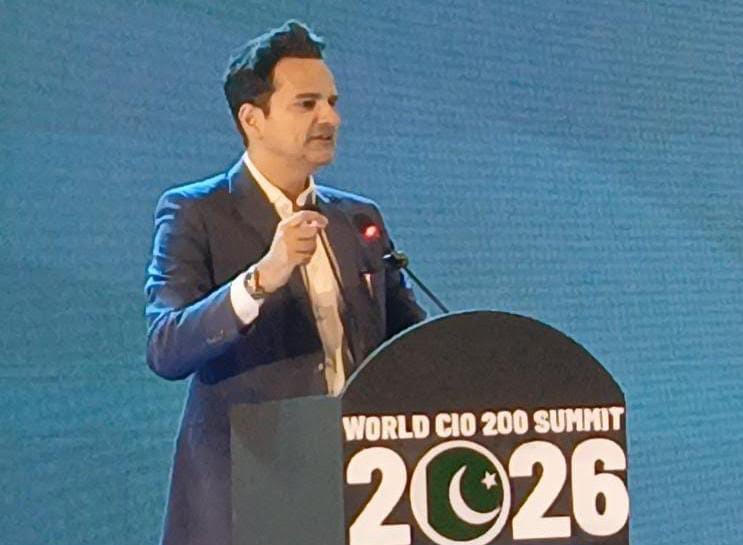
Sindh Special Assistant Ali Rashid addresses the World CIO 200 Summit & Awards 2026 in Karachi.
The Sindh government has pledged full support to equip Pakistan’s emerging technology talent with advanced skills and create a stronger environment for startups and entrepreneurs.
Special Assistant to the Sindh Chief Minister for Science and Information Technology Ali Rashid made the commitment while addressing the Pakistan edition of the World CIO 200 Summit & Awards 2026 as chief guest.
He called for closer cooperation between the government, private sector and technology leaders. According to Rashid, such partnerships can accelerate Pakistan’s digital transformation and support economic growth.
The daylong summit was organised by the Global CIO Forum in partnership with ITCN Asia at a Karachi hotel. Around 1,000 senior IT professionals, cybersecurity experts, entrepreneurs, innovators and corporate executives attended the event.
Pakistani technology professionals working abroad also participated in the summit.
Sindh Focuses on Advanced IT Skills
Addressing technology leaders and young professionals, Rashid said the large turnout showed Pakistan had a strong pool of technology talent.
He said the Sindh government had launched IT education and training programmes for college and university students. These programmes aim to address the growing demand for advanced and emerging technology skills.
“Learning the latest IT skills is no longer an option; it has become essential for fresh talent entering Pakistan’s economic, financial and industrial workforce if we are to turn around the country’s economy,” Rashid said.
Sindh’s Child Healthcare Progress Sets Regional Benchmark Sukhdev Hemnani
Moreover, he stressed that university graduates must develop modern technology skills to remain relevant as digital tools reshape science, business and industry.
The CM’s Special Assistant also reaffirmed the government’s commitment to supporting emerging technology professionals. At the same time, he said the government would work to create better conditions for technology entrepreneurs to innovate and build sustainable businesses.
He invited technology professionals and IT leaders to work with the government on meaningful public-private partnerships.
“The doors of my office are always open to emerging technology talent and technology leadership in Pakistan,” Rashid said.
Talent Can Shape Pakistan’s Digital Future
In his keynote address, Syed Abdul Qadir, Executive Director at A.F. Ferguson (PwC Pakistan) and Global Advisor to the summit, said Pakistan’s technology professionals could become the “architects and brains” behind the country’s digital future.
Qadir said Pakistan’s IT sector had reached a defining stage. The country has a large pool of emerging talent and increasingly sophisticated technology infrastructure.
He identified three major strengths: a growing technology workforce, a strong aptitude for innovation and expanding technology infrastructure.
Furthermore, he said combining these strengths could transform Pakistan’s IT landscape and improve its position in the global technology economy.
Qadir added that the Global CIO Summit could connect talent, leadership, innovation and technology. As a result, the platform could help Pakistan move closer to the centre of the global IT revolution.
Pakistan’s Tech Workforce Can Compete Globally
Dr. Erdal Ozkaya, President of the Global CISO Forum, said Pakistan had a highly capable technology workforce.
He noted that the summit brought together senior IT leaders and emerging professionals. This combination, he said, demonstrated the country’s ability to compete with technology professionals from developed economies.
Meanwhile, Ozkaya said the World CIO Summit would continue to recognise and support Pakistan’s emerging IT talent.
He said the Karachi event formed part of the World CIO 200 Roadshow 2026, a global initiative connecting technology and business leaders across more than 60 countries.
Such platforms, he added, can connect Pakistan’s technology community with the international ecosystem. They can also showcase local talent, innovation and technology capabilities.
Karachi Has Potential to Become Regional IT Hub
Muhammad Umair Nizam, CEO of ITCN Asia, said Sindh, particularly Karachi, could emerge as a major regional technology hub.
He pointed to the city’s growing technology workforce and modern infrastructure as key advantages.
However, Nizam stressed that the government must work closely with the private sector, entrepreneurs and industry leaders. Such cooperation can help create a stronger and more competitive IT ecosystem.
He also highlighted the role of universities in developing future technology leaders.
According to Nizam, universities should focus beyond traditional degree programmes. Instead, they should help produce innovators, startup founders, entrepreneurs and technology leaders capable of developing globally competitive businesses.
Corporate Sector Urged to Invest in Young Talent
Syed Amir Ali, CEO and President of Meezan Bank, urged Pakistan’s corporate sector to play a greater role in developing technology talent.
He said companies should support young professionals and provide opportunities for training and career development.
In addition, he called for a business environment that encourages innovation.
Greater corporate investment in technology skills, he said, could help Pakistan accelerate innovation and strengthen its position in the global technology landscape.
Around 50 Technology Leaders Honoured
The summit also recognised senior technology professionals for their contributions to the sector.
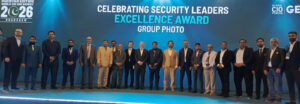
Around 50 technology and IT executives received the Tech Leader Excellence Award for professional achievements and leadership.
The event also created an opportunity for CIOs, CISOs, technology executives, cybersecurity specialists, entrepreneurs and young professionals to exchange ideas.
Furthermore, participants explored opportunities for cooperation across the technology ecosystem.
The speakers agreed that Pakistan’s technology future will depend on connecting young talent with advanced skills, modern infrastructure and entrepreneurial opportunities.
They also highlighted the importance of corporate investment, supportive government policies and stronger links between industry and academia.
As Pakistan’s technology ecosystem continues to expand, the summit reinforced a growing view that the country has the human capital and technological potential to compete internationally.
However, turning that potential into global leadership will require sustained investment in skills, innovation, infrastructure and entrepreneurship. Strong cooperation among government, industry, academia and technology leaders will also remain essential.