SEPA Urged to Facilitate Industry While Strengthening Environmental Compliance
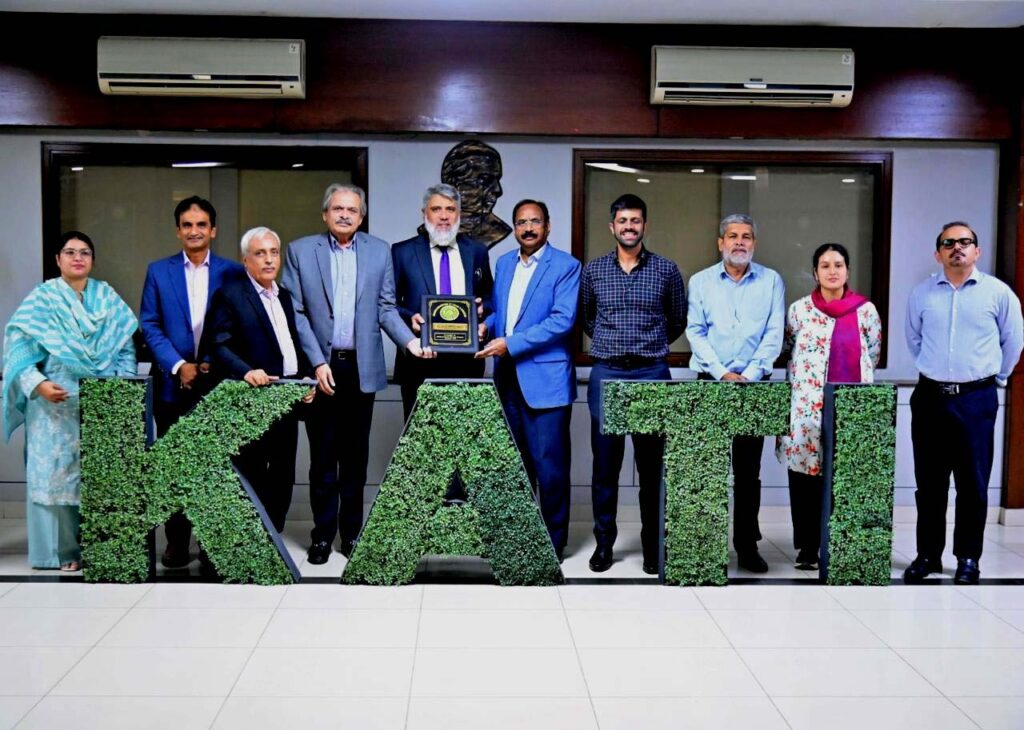
KATI officials meet Sindh Environment Secretary Faisal Ahmed Uqaili to discuss industrial environmental compliance.
Sindh Environment Secretary Faisal Ahmed Uqaili has called for stronger environmental management and closer coordination with industry.
He said the Sindh Environmental Protection Agency (SEPA) should support industries while ensuring compliance with environmental laws.
Uqaili made the remarks during a meeting with industrialists at the Korangi Association of Trade and Industry (KATI).
SEPA to Improve Industry Coordination
Uqaili said the government would strengthen the environmental management system to address issues at their source.
He said the department would extend possible support to the industrial sector. The government also plans to improve coordination between SEPA and industries.
A SEPA Deputy Director has been appointed as a focal person for complaints. The official will also update complainants about the progress of their cases.
Uqaili said a WhatsApp group already handles complaints. Another group will connect SEPA and KATI for faster communication.
Six Projects Under PPP Model
The secretary said his department had received six projects for development under the public-private partnership (PPP) model.
He added that the government would seek timely completion of these projects.
BankIslami Opens Flagship Priority Banking Centre in Multan
Furthermore, workshops and seminars will promote better coordination among stakeholders. Uqaili also proposed awareness sessions on carbon financing.
He suggested a joint committee with two representatives from SEPA and two from KATI. The committee would coordinate, facilitate and monitor environmental projects.
KATI Seeks Guidance for Industries
KATI President Muhammad Ikram Rajput said industrialists recognized the need to control pollution and protect the environment.
However, he said industries need practical guidance, reasonable time and technical support before enforcement action.
Rajput noted that most industries in Korangi Industrial Area are export-oriented. Many receive international orders only after meeting global environmental standards and securing required certifications.
He said major industries generally comply with Pakistani and international environmental requirements.
According to Rajput, regulators should provide awareness, monitoring and technical guidance. Industries should also receive a clear timeframe to install required environmental systems.
Wastewater Treatment Remains a Challenge
Rajput said wastewater treatment remains a major issue in Korangi Industrial Area.
He said government assurances had not yet resulted in the establishment of wastewater treatment plants in the area.
Meanwhile, several major industrial units have installed treatment plants through their own resources.
Rajput also highlighted challenges facing cottage industries. He said smaller businesses often lack the financial capacity to meet international environmental standards.
He called for individual and collective wastewater treatment solutions. Shared facilities, he added, could prove more practical and affordable in some industrial areas.
Zubair Chhaya Calls for Balanced Enforcement
KATI Deputy Patron-in-Chief Zubair Chhaya said SEPA plays an important role in environmental protection.
He said the agency should combine enforcement with guidance and facilitation for industrialists.
Chhaya also raised concerns about the long-delayed Combined Effluent Treatment Plant (CETP) system. He said the system was introduced nearly two decades ago but has yet to become fully operational.
He further called for greater attention to vehicular emissions. Chhaya said vehicular sources account for around 75 to 80 percent of air pollution, while industrial emissions account for about 20 to 25 percent.
He therefore urged SEPA to address vehicular and industrial pollution together.
Industry Seeks Transparent Inspection System
Chhaya called for a balanced environmental policy that supports both environmental protection and industrial development.
He also raised concerns about surprise inspections. Such inspections, he said, can sometimes disrupt factory operations.
Where legally possible, he proposed planned inspections through coordination with industry bodies. He also suggested involving KATI in the process.
Chhaya proposed a one-window system for environmental permits, approvals and No Objection Certificates (NOCs).
Such a system could reduce delays and simplify regulatory procedures, he said.
He clarified that industrialists were not seeking weaker environmental standards. Instead, they want a transparent and predictable system that supports compliance while allowing investment, employment and industrial growth.
KATI Seeks Full Digitalisation of SEPA
Saleem-uz-Zaman, Chairman of KATI’s Standing Committee on Health, Safety and Environment, said environmental protection must remain a priority.
However, he called for more practical mechanisms to address environmental challenges.
He proposed a long-term environmental management plan for industrial areas.
Saleem-uz-Zaman also urged the government to fully digitize SEPA.
He said digital systems could improve transparency, inspections, approvals, record management and monitoring. They could also improve communication between SEPA and the industrial sector.
The meeting was attended by KATI senior office-bearers, SEPA officials, representatives of the Karachi Centre for Climate Change and other industrialists.