
Pakistan’s Legal AI Future Takes a Step Forward with Conclavity Launch

Conclavity launches in Karachi as a new AI platform for Pakistani legal professionals.
Pakistan’s legal sector has entered a new phase of technological development with the launch of Conclavity, an artificial intelligence platform designed specifically for Pakistani law.
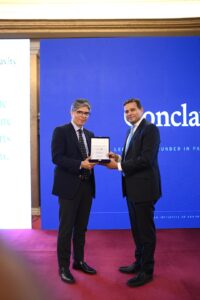
The platform was launched on September 2, 2026, at the Mövenpick Hotel in Karachi. Rabel Z. Akhund, Managing Partner of Akhund Forbes, introduced the platform before an audience that included members of the judiciary, lawyers, corporate executives, banking professionals and clients.
The launch comes as artificial intelligence increasingly changes professional work around the world. However, the legal profession faces particular challenges because inaccurate information or outdated legal references can affect important decisions.
Legal AI is becoming increasingly important for professionals who need faster access to reliable legal information. Conclavity aims to address this challenge by focusing specifically on Pakistani statutes, regulations, rules and amendments.
The platform is designed to help lawyers and businesses carry out legal research, prepare first drafts and review important documents.
A Platform Built for Pakistani Law
General-purpose AI tools can provide useful information. However, they may also rely on legal material from other jurisdictions.
This can create serious problems for Pakistani lawyers. For example, an AI system may refer to English or American legal principles that do not apply in Pakistan.
It may also cite outdated provisions or incorrect legal authorities.
Beyond Stability IBA Maps a New Path for Pakistan Economy
Conclavity takes a different approach. The platform uses a maintained database of Pakistani legislation. It covers statutes, ordinances, rules, regulations and amendments.
As a result, users can trace answers back to the relevant legal provisions.
The aim is to help lawyers verify information rather than simply accepting an AI-generated response.
Research, Drafting and Legal Review
Conclavity focuses on three major areas of legal work: research, drafting and review.
For legal research, the platform can help users identify relevant Pakistani laws and statutory provisions.
For drafting, it can assist lawyers in preparing initial versions of agreements, notices, board resolutions and other legal documents.
The platform can also review contracts and other documents against legislation currently in force. It can identify areas where a document may not address legal requirements.
However, Conclavity does not provide legal advice.
Its developers say the platform is intended to support qualified lawyers rather than replace professional judgment.
The system aims to reduce the time spent on routine research and first drafts. Lawyers can then focus more closely on analysis, strategy and client advice.
Judiciary and Business Leaders Attend Launch
The launch brought together senior representatives from Pakistan’s legal and business communities.
Mr Justice Yousuf Ali Sayeed of the Sindh High Court delivered the keynote address.
He discussed both the opportunities and limitations associated with artificial intelligence.
Justice Sayeed highlighted the importance of verified information in legal technology.
He said lawyers and judges had long hoped for tools that could provide accessible and reliable legal intelligence.
He also warned that AI systems can sometimes present inaccurate information as fact.
According to him, a system that relies on verified legal sources could help address this challenge.
Rabel Akhund also introduced Conclavity and demonstrated its capabilities during the event.
Nasim Beg of the Arif Habib Group delivered closing remarks.
Rabel Akhund Outlines Conclavity Vision
Rabel Akhund said Conclavity was conceived and developed in Pakistan for Pakistani law.
He said the platform’s purpose was not to replace lawyers.
Instead, he said, the technology could help improve the standard and accessibility of legal work.
Akhund said the project was developed by Pakistani lawyers and engineers using local resources.
He added that the platform represents the work of a wider team rather than a single technology system.
Conclavity was developed under Akhund’s leadership at Akhund Forbes.
A graduate of University College London and a solicitor of England and Wales, Akhund previously worked at international law firms in London.
He returned to Pakistan in 2008 and founded Akhund Forbes.
His experience in corporate, finance and projects work helped shape the platform’s design.
Early Access Planned Before Wider Release
Following the launch, Conclavity will initially become available to a selected group of early users.
The first group will mainly include in-house legal teams and corporate clients.
Their feedback will help guide the platform’s future development.
The developers also plan to expand the platform’s legal database beyond its current legislation-focused corpus.
Confidentiality has also been treated as a central part of the platform’s design.
Legal professionals regularly handle sensitive information. Therefore, the platform aims to provide a secure environment for professional users.
A New Step for Pakistan’s Legal Technology Sector
The launch represents a significant development for Pakistan’s growing legal technology sector.
Conclavity has emerged from a practising corporate and commercial law firm rather than a technology company with no direct legal practice background.
Its developers believe this gives the platform a practical understanding of the daily needs of lawyers and businesses.
Akhund Forbes has worked on major corporate, financial and commercial transactions in Pakistan for nearly two decades.
With Conclavity, the firm is now extending that experience into legal technology.
The platform aims to make research, drafting and document review faster and more consistent.
At the same time, its developers stress that professional judgment and accountability must remain central to legal practice.
The launch could also begin a broader discussion about the role artificial intelligence will play in Pakistan’s legal profession.
As AI technology develops, lawyers and businesses will increasingly need systems that understand local laws, provide reliable sources and support informed professional decisions.
Conclavity’s early adoption phase will now test how such technology can work in everyday Pakistani legal practice.