

Mac Users Lag Behind Windows Users in Cybersecurity Practices, Kaspersky Survey Finds
Kaspersky survey highlights cybersecurity gaps between Mac and Windows users.
Mac users appear to follow weaker cybersecurity practices than Windows users, according to a new survey by cybersecurity company Kaspersky.
The survey found that 12% of macOS users reported malware infections over the past year. By comparison, 9% of Windows users reported similar incidents.
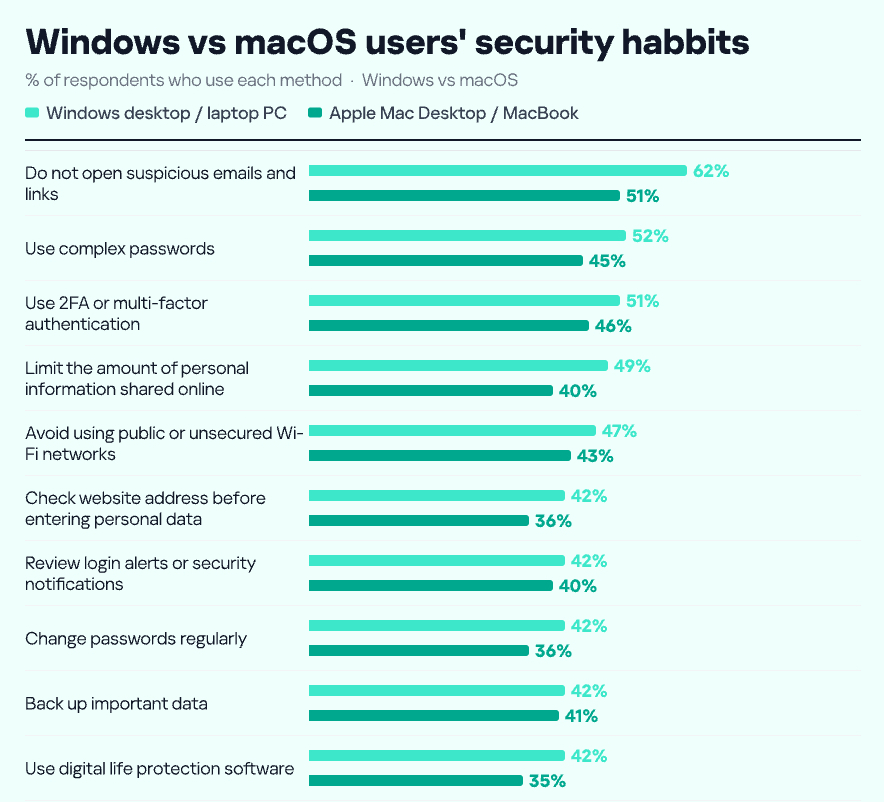
Kaspersky also found a significant difference in the use of dedicated security software. Only 35% of macOS users said they use security software. Among Windows users, the figure reached 42%.
The findings challenge the common belief that Macs face fewer cybersecurity risks. Kaspersky said attackers increasingly target users across different operating systems.
Windows Users Show Stronger Security Habits
The biggest difference appeared in how users handle suspicious emails and links.
According to the survey, 62% of Windows users said they avoid opening suspicious emails and links. The figure dropped to 51% among macOS users.
This gap can increase exposure to phishing attacks. Cybercriminals often use malicious links and fake messages to steal passwords, financial information and personal data.
What Is ACCA? A Complete Guide to the Global Accounting Qualification in 2026
Meanwhile, Kaspersky said macOS users also lagged behind Windows users in adopting dedicated digital security software.
Only 35% of Mac users reported using such protection. In contrast, 42% of Windows users said they use security software.
Mac Users Report Higher Online Fraud
The survey also identified higher rates of several online threats among macOS users.
Online fraud affected 16% of Mac users, compared with 13% of Windows users.
Personal data theft also showed a notable difference. Twelve percent of Mac users reported such incidents, compared with 7% of Windows users.
The survey also recorded privacy violations among 11% of macOS users and 8% of Windows users.
Kaspersky said users should combine built-in operating system security with additional protection against modern online threats.
Password Security Remains a Concern
Windows users also reported stronger password-security habits.
Around 38% of Windows users said they use a unique password for every account. Among Mac users, the figure stood at 35%.
The difference increased for complex passwords. Some 52% of Windows users reported using complex passwords, compared with 45% of Mac users.
Two-factor or multi-factor authentication showed a similar pattern. Around 51% of Windows users reported using these protections, compared with 46% of macOS users.
These practices can help reduce the damage caused by stolen or reused passwords.
Password Managers Offer an Extra Layer
Kaspersky recommends password managers as another way to improve account security.
Password managers store credentials in an encrypted vault. Users can then protect the vault with a master password instead of remembering many individual passwords.
Modern password managers can also support passkeys and other authentication methods.
These tools can make secure sign-ins easier across multiple devices. They can also reduce the temptation to reuse simple passwords across different accounts.
Why Macs Are Not Immune to Cyber Threats
Kaspersky cybersecurity expert Sergey Puzan said misconceptions about Mac security remain widespread.
He said some users believe macOS faces fewer threats because its user base is smaller. Others rely on the platform’s built-in security features.
However, the cybersecurity landscape has changed.
Attackers now use phishing campaigns and supply-chain attacks that can target users across multiple operating systems. Puzan also pointed to malware families designed specifically for Macs.
He said every internet-connected device needs protection against a broad range of cyber threats.
Kaspersky Highlights Need for Additional Protection
Kaspersky said dedicated security software can complement the protection already built into macOS.
The company also pointed to independent testing as evidence that security products can provide additional protection for Mac users.
Kaspersky said its Premium security solution for macOS received strong results in AV-TEST’s 2025 evaluations.
However, software alone cannot eliminate every cybersecurity risk.
Users also need to avoid suspicious links, use unique passwords and activate multi-factor authentication where available.
Cybersecurity Requires Better User Habits
The survey highlights a broader issue in digital security.
Having a secure operating system does not remove the risks created by unsafe online behaviour. Phishing, credential theft and social engineering can affect users regardless of their device.
For Mac users, the findings suggest that confidence in built-in protection should not replace basic security practices.
Avoiding suspicious links, using strong and unique passwords, enabling multi-factor authentication and keeping security software updated can all reduce exposure.
As cyber threats continue to evolve, Kaspersky’s findings underline the need for users to treat cybersecurity as an ongoing responsibility rather than a feature tied to one operating system.