Pakistan Economy: Aurangzeb Seeks $10 Billion US Support to Strengthen Financial Stability
Pakistan asks Washington for a five-year exchange stabilisation facility as it aims to boost foreign exchange reserves, improve sovereign credit ratings and expand access to global capital markets.
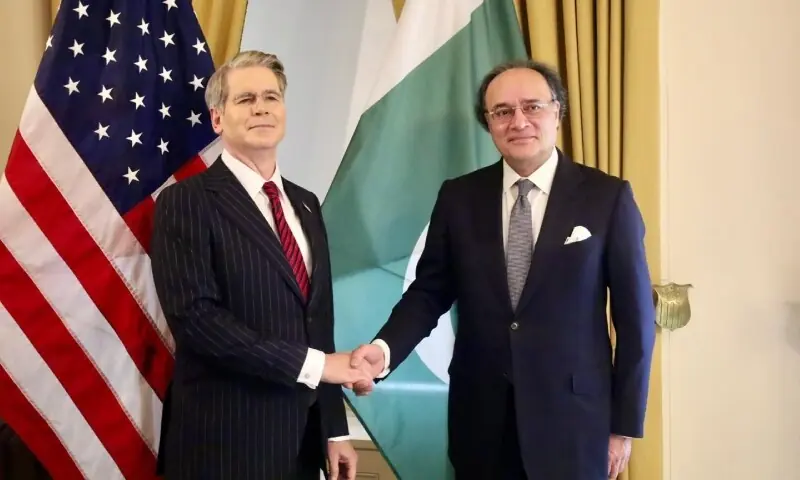
Finance Minister Muhammad Aurangzeb meets US Treasury officials in Washington.
WASHINGTON: Pakistan Finance Minister Muhammad Aurangzeb has asked the United States to provide a $10 billion Exchange Stabilisation Support Facility to strengthen the country’s economy and reinforce financial stability.
The request, first reported by Reuters and later confirmed by officials at Pakistan’s embassy in Washington, came during Aurangzeb’s meeting with US Treasury Secretary Scott Bessent. Neither the Pakistani officials nor the US Treasury disclosed further details of the proposal.
In an official statement, Pakistan’s embassy said Aurangzeb sought US support for the country’s economic roadmap, highlighting priorities such as improved access to international capital markets, stronger foreign exchange reserves and higher sovereign credit ratings. The statement, however, did not directly mention the proposed $10 billion facility.
According to Reuters, Pakistan wants the bilateral financial support package with a maturity period of up to five years.
Monsoon Deaths: KP Rain Toll Rises to 18 as Floods and Landslides Disrupt South Waziristan
The proposed facility would allow the US government, through the Treasury’s Exchange Stabilisation Fund, to provide loans or financial backing aimed at strengthening Pakistan’s foreign exchange reserves, reducing debt-related pressures and supporting broader economic stability.
Exchange stabilisation facilities are designed to limit currency volatility and, when necessary, help partner countries stabilise their currencies through intervention in foreign exchange markets.
Diplomatic sources in Washington told Dawn that the proposal has a strong chance of receiving approval. One source said the Trump administration remains committed to engaging with Pakistan and has repeatedly expressed its willingness to support the country’s economic recovery and long-term financial resilience.