Pakistan Agriculture Budget: Provinces Expand Spending Despite Rising Farming Costs
Provincial governments have increased funding for agriculture through digital initiatives and subsidies, but experts warn that rising input costs and new tax measures continue to threaten farm profitability.
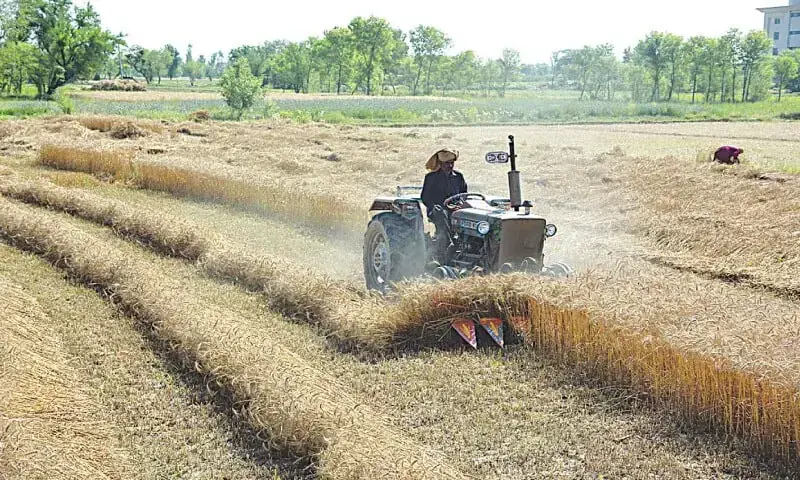
Provincial governments have increased agriculture spending, but farmers continue to face rising production costs.
Pakistan Agriculture Budget: Provincial governments have unveiled ambitious agriculture spending plans for the 2026-27 financial year, focusing on digital services, mechanisation and farmer support programmes. However, analysts say rising production costs and higher agricultural taxes could limit the impact of these initiatives.
Punjab has announced the largest allocation, setting aside Rs132.54 billion for agriculture, livestock and fisheries, including Rs91.9 billion dedicated to the agriculture sector. The province has allocated Rs10 billion for the second phase of its Kissan Card programme after issuing more than 832,000 cards and disbursing over Rs100 billion in previous assistance.
The provincial government has also earmarked Rs7.7 billion for low-horsepower tractors and Rs9.9 billion for high-horsepower tractors, aiming to distribute another 20,000 subsidised tractors.
Sindhri Mangoes: Disease, Export Delays and Weak Demand Deepen Crisis for Sindh Growers
Sindh has incorporated its Benazir Hari Card into a Rs13.2 billion social protection package after issuing more than 306,000 cards. Meanwhile, Balochistan has allocated Rs23.6 billion for agriculture, including Rs2.5 billion for an Agro Market Hub, Rs1 billion for its Kissan Card programme and Rs200 million for a cotton development initiative.
Khyber Pakhtunkhwa has prioritised water conservation projects, directing funding towards irrigation and command area development to expand cultivation in the province’s southern districts.
Despite the increased spending, agricultural experts argue that digital initiatives alone cannot offset the growing financial burden on farmers.
They point to sharp increases in fertiliser prices since 2021, with the cost of DAP and urea rising by more than 50% to 100%, while electricity tariffs for agricultural tube-wells have also increased significantly. Analysts say these higher input costs continue to reduce farm profitability despite expanded access to subsidised credit.
Some economists have also questioned the effectiveness of large tractor subsidy programmes, arguing that they mainly benefit medium and large landowners, while the majority of Pakistani farmers cultivate less than 12.5 acres. They suggest that greater investment in climate-resilient seeds, efficient irrigation systems and solar-powered tube-wells could deliver more sustainable long-term gains.
Another major feature of the provincial finance bills is the proposed expansion of the Agricultural Income Tax (AIT). Provincial governments aim to increase AIT collection to Rs12.5 billion in the 2026-27 fiscal year, compared with approximately Rs4.1 billion collected previously, as part of broader fiscal reforms aligned with commitments under the International Monetary Fund (IMF) programme.
To protect small farmers, landholdings of up to 12.5 acres have been exempted from the tax. Larger commercial farms and high-income landowners are expected to bear most of the additional tax burden.
Punjab Police: Assembly Committee Raises Concerns Over Accountability and Delayed Safety Reforms
However, experts caution that weak tax administration and political resistance could complicate implementation, while farmer organisations have warned that higher taxes, combined with rising diesel, fertiliser and electricity costs, may trigger nationwide protests unless additional relief measures are introduced.
Beyond provincial allocations, economists say Pakistan faces a broader challenge of strengthening long-term food security. The country has become increasingly dependent on imports of edible oil, pulses and, in some years, wheat and cotton, placing additional pressure on foreign exchange reserves and exposing consumers to fluctuations in global commodity prices.
Analysts argue that reducing production costs through coordinated federal and provincial policies on energy, fertiliser and agricultural inputs will be essential if the latest budget measures are to improve productivity and support sustainable growth in the farming sector.