
New Uzbekistan Builds a New Era of Peace, Trust and Regional Cooperation
From long-disputed borders to open crossings and rising trade, Uzbekistan is reshaping its ties with Central Asian neighbours through dialogue and cooperation
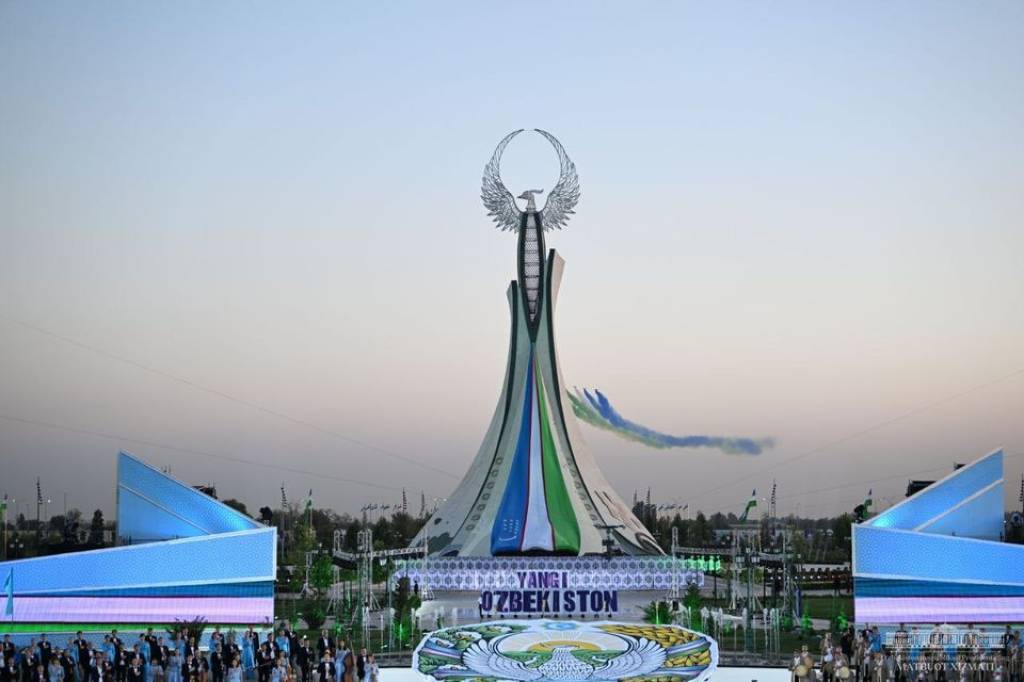
Uzbekistan is strengthening regional cooperation through open borders, diplomacy and expanding trade across Central Asia
At a border checkpoint, a passport is checked, a stamp is placed on a fresh page and the traveller moves on. The process may take only a few seconds. Yet behind that simple moment are years of negotiations, agreements and diplomatic efforts.
As Uzbekistan approaches the 35th anniversary of its independence, its transformation in relations with neighbouring countries stands out as one of its major achievements. The country has increasingly focused on open borders, dialogue and good-neighbourly relations across Central Asia.
Independence, however, means more than political sovereignty. It also gives a country the ability to shape its future, build peaceful partnerships and engage with neighbours on the basis of mutual respect.
For Uzbekistan, this approach has become a central part of what it calls the New Uzbekistan.
When Borders Divided Communities
After the Soviet Union collapsed in 1991, five independent states emerged in Central Asia. Many of their borders, however, remained unresolved.
Administrative lines from the Soviet era suddenly became international frontiers. The challenge became especially difficult in the Fergana Valley, where borders crossed villages, roads, farmland, pastures and irrigation networks.
For local communities, the issue was not simply political.
A short journey to a neighbouring village could require a detour of many kilometres. Families faced difficulties visiting relatives. Local businesses also faced higher transport costs.
One personal story illustrates the human cost.
Fourteen years ago, the author travelled across Uzbekistan with her parents. During a lunch stop, a woman named Gulzoda began crying while watching the family together.
She explained that she had married in a nearby village only 10 to 15 minutes from her parents’ home. But the border separated her village from her family.
Her parents ended up in Tajikistan while she remained in Uzbekistan.
When her father later died, she could not cross the border to attend his funeral.
The story shows that borders can affect far more than maps and politics. They can shape family relationships and personal lives.
A New Diplomatic Approach
Over the past decade, Uzbekistan has adopted a more open approach to regional diplomacy.
Central Asia has become a key focus of the country’s foreign policy. Officials have promoted dialogue with neighbouring states, practical cooperation and mutually beneficial economic ties.
The policy has also produced visible changes at border crossings.
New checkpoints have opened, old routes have returned to service and transport links have expanded.
On 1 March 2018, the Jartepa-Sarazm checkpoints on the Uzbek-Tajik border resumed operations. In August 2025, two more checkpoints in the Syrdarya region received international status.
The changes have made it easier for passengers and third-country citizens to cross the border.
Uzbekistan has also reopened and upgraded several crossings along its border with Kyrgyzstan.
The Uch-Kurgan Auto and Ken-Sai Auto checkpoints now form an important transport route. Together, they can handle more than 500 cargo trucks and 300 passenger vehicles a day.
Other crossings between Uzbekistan and Kyrgyzstan have also reopened or undergone major upgrades.
The Sogment-Chorbagh border complex now links communities in the Fergana and Batken regions.
Trade Grows With Greater Trust
Uzbekistan has also expanded economic ties with its neighbours.
A New Free Trade Zone has opened near the Shavat-Dashoguz crossing between Uzbekistan and Turkmenistan.
Meanwhile, Uzbekistan has upgraded major crossings with Kazakhstan.
The Gishtkuprik-Zhibek Zholy checkpoint increased its daily capacity from about 30,000 to 70,000 people. It can now process more than 2,000 passenger vehicles a day.
The Navoi-Kaplanbek checkpoint in the Tashkent region has also expanded. Traffic lanes increased from two to six, helping reduce average crossing times.
These improvements reflect a broader shift in Central Asia. Border infrastructure is no longer viewed only as a security measure. It is increasingly seen as part of trade, tourism and regional economic development.
The figures underline the change.
Uzbekistan’s trade turnover with other Central Asian countries stood at around $2.5 billion in 2016. By the end of 2025, it had risen above $8 billion.
Trade with Kazakhstan reached $5 billion. Turkmenistan and Kyrgyzstan each recorded trade volumes of about $1.2 billion with Uzbekistan, while trade with Tajikistan exceeded $900 million.
Historic Agreement in Khujand
One of the most important recent developments came on 31 March 2025 in Khujand, Tajikistan.
Uzbek President Shavkat Mirziyoyev, Tajik President Emomali Rahmon and Kyrgyz President Sadyr Japarov signed a treaty concerning the junction point of their three state borders.
The leaders also adopted the Khujand Declaration and unveiled a Friendship Stele at the meeting point.
The agreement marked a significant step in resolving one of Central Asia’s longest-running diplomatic challenges.
For the region, the deal carried meaning beyond the legal settlement of a border.
It showed that difficult disputes could be addressed through negotiation rather than confrontation.
That change can create wider economic opportunities. When governments build trust, transport routes become easier to develop. Businesses can expand across borders. Investment can increase and regional security can improve.
Uzbekistan’s Growing Regional Role
Uzbekistan’s approach has also received international attention.
Several regional initiatives supported by the country have gained backing through United Nations General Assembly resolutions focused on peace, stability and sustainable development in Central Asia.
International experts increasingly describe Central Asia as a region moving towards closer cooperation.
Chinese researcher Li Yonghui, a senior research fellow at the Institute of Russia, Eastern Europe and Central Asia at the Chinese Academy of Social Sciences, said the Khujand meeting represented an important moment for regional cooperation.
He said the Friendship Stele reflected stronger good-neighbourly relations, trust and strategic partnership between the three countries.
Tazin Akhtar, editor of Pakistan in the World, also highlighted the importance of stronger regional links.
She said that border agreements, rising trade and infrastructure projects could make Central Asia more open to international partnerships.
The developments point to a wider transformation. Central Asian countries are increasingly looking beyond their individual borders and focusing on shared economic and security interests.
Governor Sindh Urges Youth to Embrace AI and IT for a Brighter Future
From Dividing Lines to Bridges
The story of Uzbekistan’s changing borders is ultimately a story about people.
A border that once prevented a daughter from reaching her dying father can become a crossing that allows families to meet more easily.
A checkpoint that once represented separation can become a route for trucks, tourists, students and businesses.
This is the broader significance of Uzbekistan’s diplomatic shift.
The country’s foreign policy now places greater emphasis on openness, pragmatism and mutual benefit. Its neighbours are increasingly viewed as partners in regional development.
The transformation is still continuing. But the direction is clear.
At a border post, a guard checks a passport, applies a stamp and opens the gate. The traveller moves forward without thinking about the negotiations that made that journey possible.
That may be the simplest measure of diplomatic success.
When international agreements become ordinary moments in people’s daily lives, diplomacy has moved beyond official documents and into everyday life.
For New Uzbekistan, the past decade has therefore been about more than strengthening sovereignty. It has also been about building a regional architecture based on trust, connectivity and shared prosperity.
By: Zilola Akhmedova,
Dunyo IA.