National Assembly Committee Reviews 40 Power Transmission Projects, Sets Focus on $63bn Export Target
The Economic Affairs Committee examines project delays, financing constraints and infrastructure challenges while reviewing Pakistan’s export performance and trade deficit.

Power Projects and Pakistan’s $63 billion export target discussed at the National Assembly committee meeting.
The National Assembly Standing Committee on Economic Affairs Division has reviewed the progress of 40 ongoing power transmission projects. It also examined 38 proposed projects and discussed measures to strengthen Pakistan’s exports and reduce dependence on foreign borrowing.
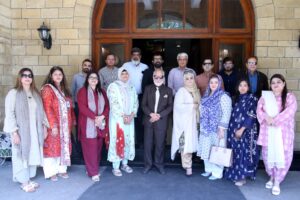
Dr Mirza Ikhtiar Baig, MNA, chaired the committee’s 16th meeting at Committee Room No. 7, Parliament House, Islamabad.
40 Ongoing Transmission Projects Under Review
The committee received a briefing on ongoing and planned transmission projects in the energy and power sector. Officials discussed their financing arrangements, implementation progress and expected completion dates.
The meeting was informed that international development partners support 40 ongoing projects through 17 loan agreements. These partners include the World Bank, Asian Development Bank, Agence Française de Développement, KfW Development Bank and Japan International Cooperation Agency.
Officials said the government had received approximately 52% of the total agreed loan amount.
The projects cover six major areas. These include transmission and distribution system upgrades, grid station construction and rehabilitation, and the CASA-1000 transmission project. Other initiatives aim to strengthen Pakistan’s power transmission infrastructure.
The committee also reviewed 38 additional projects in the proposed pipeline. Their planned completion timeline extends to 2036. Meanwhile, ongoing projects have expected completion dates ranging from November 2026 to December 2028.
Funding and Approvals Delay Project Implementation
Officials identified several obstacles affecting the timely completion of transmission projects.
Delays in allocating the required rupee cover remain a major constraint. These delays affect loan disbursements, the use of available funds and payments under approved project schedules.
Declining European Export Receipts Highlight Need to Protect GSP+ and Cut Costs Mian Zahid Hussain
Officials also highlighted difficulties in securing shutdown windows for transmission line upgrades and reconductoring. Such work requires careful scheduling during low-load months to avoid disruptions to electricity supplies.
The committee also discussed delays in securing approvals and No Objection Certificates (NOCs). Officials particularly highlighted the Tarbela 5th Extension Project and Jauharabad.
Right-of-Way (RoW) restrictions and pending NOCs from provincial governments have further affected project execution.
Dr Mirza Ikhtiar Baig assured the committee that he would raise the matter with the Sindh government. He said the effort would help resolve pending issues and accelerate affected projects.
Security and Coordination Challenges
Officials also cited coordination problems with district administrations, particularly when securing access to project sites.
Security concerns in Zhob and other parts of Balochistan have created additional challenges for implementation.
The committee also discussed the CASA-1000 cross-border transmission link. Officials said the contractor would retain care and custody of the associated stations until the Afghanistan section becomes operational. This arrangement continues to affect the project’s overall completion and commissioning.
Committee Appreciates New Grid Technologies
The committee appreciated the introduction of BEST-PAK Phase-I and STATCOM technology in Pakistan for the first time.
Members recognised their potential to improve power system stability and transmission efficiency. They also noted their importance in strengthening the reliability and capacity of existing infrastructure.
Pakistan Sets $63 Billion Export Target
The committee also reviewed government measures to reduce dependence on foreign borrowing through stronger exports, wider market access and economic diversification.
Officials informed members that Pakistan had set an export target of $63 billion for FY 2028–29.
The committee commended export performance during FY 2025–26, when total exports reached $40.4 billion. However, imports stood at $80.9 billion during the same period, resulting in a trade deficit of $40.5 billion.
Workers’ remittances increased to $41.6 billion, providing significant support to Pakistan’s external account and foreign exchange position.
Policy Measures to Strengthen Exports
Officials outlined several initiatives to achieve the export target and improve the trade balance.
These measures include:
- Expanding access to export financing.
- Reducing the cost of doing business for exporters.
- Supporting export-led growth through small and medium-sized enterprises.
- Securing zero-duty market access through Free Trade Agreements (FTAs), Preferential Trade Agreements (PTAs) and GSP arrangements.
- Rationalising tariffs and expanding access to international markets.
- Implementing the Strategic Trade Policy Framework for FY 2026–2031.
The committee also reviewed efforts to explore emerging export opportunities, particularly in the information technology sector. Officials said diversification could increase foreign exchange earnings and improve Pakistan’s competitiveness in international markets.
Committee Calls for Effective Implementation
The committee stressed the importance of effective implementation, coordination and monitoring of export policies.
Members emphasised that Pakistan must achieve its prescribed export targets through sustainable growth in foreign exchange earnings. They also called for gradual reduction in reliance on external borrowing.
The meeting concluded with a focus on removing implementation barriers, strengthening energy infrastructure and improving the country’s trade position.