Modi Government Pledges Exam Reforms as India’s Education Protests Intensify
Thousands of students rally across New Delhi over exam paper leaks as the government promises accountability and opposition leaders demand urgent parliamentary debate.
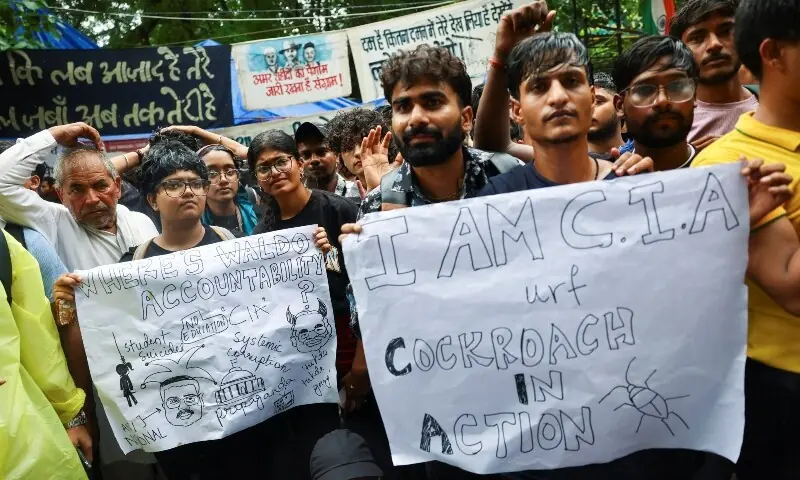
Students protest in New Delhi over alleged exam paper leaks and education reforms.
Exam reforms have moved to the centre of India’s political debate after the Narendra Modi government pledged to address concerns raised by students protesting against alleged examination paper leaks and flaws in the country’s testing system.
Education Minister Dharmendra Pradhan said the government remained fully committed to discussing the National Eligibility cum Entrance Test (NEET) controversy and introducing reforms to restore confidence in India’s examination process.
His remarks came as youth-led demonstrations continued to grow across New Delhi. The protests began after allegations that leaked medical entrance exam papers affected nearly two million students and were linked to several student suicides. What started as an online satirical campaign by the self-styled Cockroach Janta Party (CJP) has evolved into one of the largest youth movements challenging Mr Modi’s third term in office.
On Monday, tens of thousands of protesters marched through the capital, where clashes broke out after police used tear gas and batons to disperse crowds attempting to move toward government buildings.
Enola Holmes 3: Netflix Sequel Loses Its Mystery in a Predictable Romance
The protests gathered further momentum on Tuesday after opposition leader Rahul Gandhi and the Congress party staged a sit-in outside the road leading to Prime Minister Modi’s residence. Police detained Mr Gandhi, his sister Priyanka Gandhi Vadra and several senior Congress leaders before releasing them later that night.
In a statement posted on X, Mr Pradhan said the government remained “100 per cent committed” to discussing NEET and addressing the genuine concerns of students. He criticised opposition protests, saying young people should not become political tools, and pledged greater transparency, accountability and long-term reforms.
Prime Minister Narendra Modi also addressed the issue for the first time this week, promising strict action against those responsible for examination leaks while directing lawmakers to help build a more secure and reliable examination system.
Health Minister JP Nadda separately met representatives of the Cockroach Janta Party on Monday and assured them the government would consider their demands.
The growing protests have become one of the most significant political challenges facing Mr Modi since beginning his third term. The movement reflects wider frustration among young Indians over recurring examination leaks, limited employment opportunities and the rising cost of education.
Rahul Gandhi called for an urgent parliamentary debate, questioning why examination papers continue to leak and why many families face severe financial hardship to educate their children. He urged the prime minister to apologise for the police response to protesters and begin comprehensive education reforms without delay.
The movement has also gained support from social activist Sonam Wangchuk, whose hunger strike drew national attention before police transferred him to hospital. Following a court order, authorities later moved him to a private hospital after his family challenged his detention.
With student demonstrations continuing and political pressure mounting, the government’s response to demands for examination reforms is likely to remain a major issue in India’s national debate.