KCCI leaders urge policy reforms ahead of Budget 2026-27. PHOTO FILE
The KCCI has urged the federal government to avoid repeating policy mistakes that have weakened exports, discouraged investment, and reduced industrial competitiveness. As policymakers finalize the Federal Budget 2026-27, business leaders are calling for the reversal of several measures they believe have harmed economic growth.
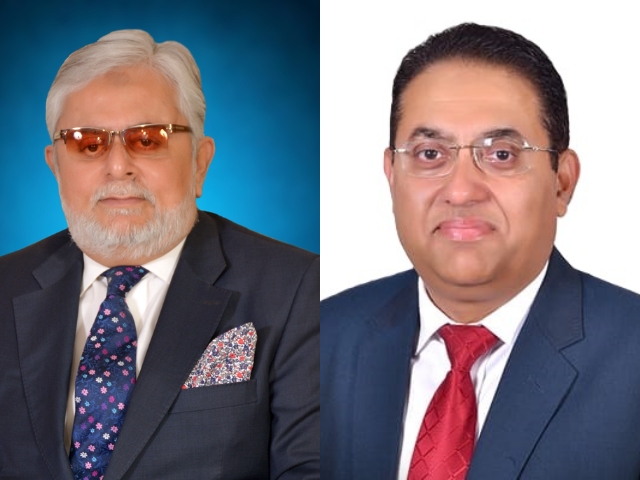
Moreover, the KCCI says the lessons from the past two years should guide future decisions. According to a joint statement by Chairman Businessmen Group Zubair Motiwala and President Karachi Chamber of Commerce and Industry Rehan Hanif, policymakers should consider business community recommendations to support exports, investment, and employment.
KCCI Criticizes Export Tax Changes
Zubair Motiwala stated that the shift from the Final Tax Regime (FTR) to the Normal Tax Regime (NTR) under the Finance Act 2024 negatively affected exporters. He argued that the policy increased the tax burden on exporters while reducing their competitiveness in international markets.
Furthermore, he said Pakistan missed opportunities to expand exports during recent global supply chain disruptions. According to Motiwala, export growth remains the most sustainable way to strengthen foreign exchange reserves and economic stability.
He reiterated the demand to restore the Final Tax Regime at a one percent rate for exporters. He stated that such a measure could help improve export performance and encourage investment.
Rehan Hanif Raises EFS Concerns
Rehan Hanif expressed concern over the removal of Export Facilitation Scheme benefits on yarn and fabric. He stated that the scheme played a significant role in improving the competitiveness of export-oriented industries.
However, Hanif noted that KCCI never supported misuse of the scheme. Instead, the chamber reportedly recommended stronger monitoring and transparency measures. He said the decision has affected exporters’ liquidity while failing to achieve its intended objectives.
KCCI Opposes Super Tax Continuation
The KCCI leadership also criticized the continuation of Super Tax under Section 4C. According to Motiwala, the levy discourages investment, business expansion, and entrepreneurship.
He stated that businesses creating jobs and making investments should receive support rather than face additional taxation. As a result, investor confidence may weaken, while foreign direct investment could decline.
Additionally, he argued that short-term revenue gains from such taxes may come at the expense of long-term economic growth.
Energy Costs Impact Export Competitiveness
Rehan Hanif highlighted rising energy costs as a major challenge for industries. He stated that the withdrawal of the Regionally Competitive Energy Tariff (RCET) has significantly reduced Pakistan’s export competitiveness.
Meanwhile, countries such as India, Bangladesh, and Vietnam continue to attract export orders through competitive energy pricing structures.
Hanif stated that restoring RCET could help revive industrial growth, increase employment opportunities, and strengthen exports. Therefore, KCCI considers the policy essential for improving economic performance.
Zubair Motiwala Highlights Energy Sector Issues
Motiwala also raised concerns about gas pricing and supply policies. He stated that productive industries continue to bear the financial burden of inefficiencies, theft, leakages, and cross-subsidies within the energy sector.
According to him, industrial consumers maintain some of the highest bill recovery rates. Nevertheless, they continue to face rising costs while circular debt remains unresolved.
To address these challenges, he proposed separating SSGC operations for industrial and non-industrial consumers. He said this approach could improve transparency and help identify the sources of circular debt more effectively.
KCCI Seeks Digital Invoicing Reforms
The KCCI also highlighted concerns regarding digital invoicing, annual biometric verification requirements, E-Bilty procedures, advance tax regimes, customs penalties, and other regulatory measures affecting businesses.
Rehan Hanif stated that technical glitches, duplicate entries, integration issues, and delayed corrections continue to create operational difficulties for companies.
Therefore, KCCI recommended extending the digital invoicing integration deadline until December 2026. He stated that additional time would allow businesses and authorities to resolve existing shortcomings before full implementation.
Shehbaz Sharif Engagement Welcomed
Despite its concerns, KCCI welcomed recent engagement with Shehbaz Sharif. The chamber appreciated commitments reportedly made during a meeting with business representatives on June 1, 2026.
These commitments included establishing a PRAL office in Karachi, accelerating pending sales tax refunds, increasing the presence of senior FBR officials in Karachi, and introducing amendments to the Electric Vehicle Policy.
Motiwala stated that these measures reflect a constructive response to concerns raised by the business community.
KCCI Calls for Business-Friendly Budget
As the Federal Budget 2026-27 approaches, the KCCI is urging policymakers to review recommendations submitted by trade bodies and business associations. According to the chamber, economic growth, export expansion, industrialization, and revenue generation are closely linked.
The leadership stated that sustainable growth requires consultation between the government and the private sector. They urged authorities to reverse policies that have reportedly failed and adopt measures that encourage investment, exports, competitiveness, and long-term economic development.