Kalshi Investigation: White House Teleprompter Operator Probed Over Bets on Trump’s Speeches
Web Desk July 17, 2026Federal employee allegedly used advance knowledge of presidential speeches to place prediction market bets worth nearly $100,000.
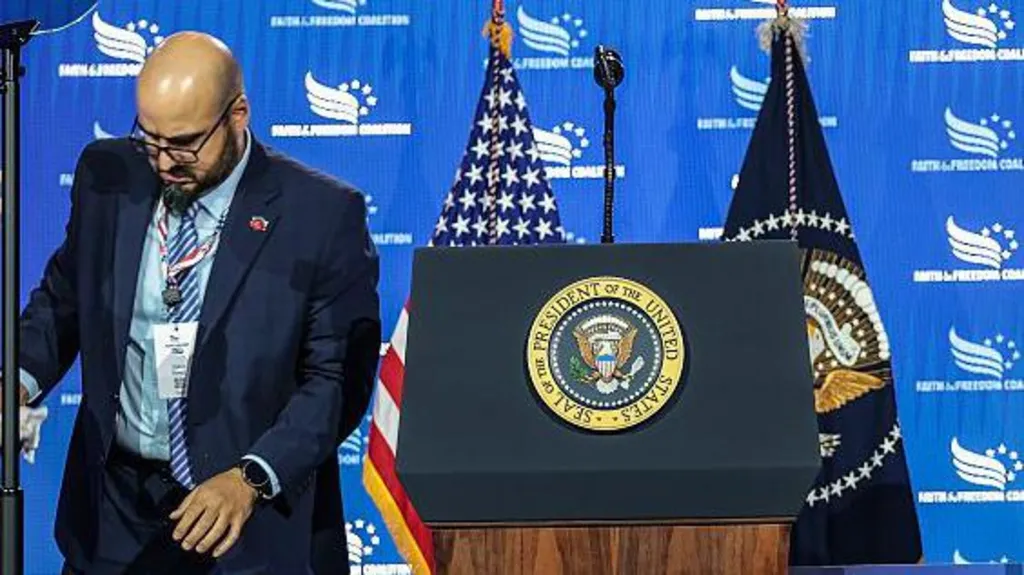
A White House teleprompter operator faces scrutiny over alleged prediction market bets.
Kalshi Investigation has put a White House teleprompter operator under scrutiny after allegations surfaced that he used advance knowledge of President Donald Trump’s speeches to place profitable prediction market bets.
Gabriel Perez, who worked at the White House since 2016, allegedly wagered on words President Donald Trump would use during major public addresses, including the State of the Union speech.
Perez placed the bets through Kalshi, a regulated prediction market platform that lets users trade contracts based on real-world events.
Kalshi’s monitoring team detected unusual trading activity in March involving “mention markets,” where users predict whether a public figure will use specific words or phrases during a speech.
Company analysts traced the account to a federal employee responsible for operating White House teleprompters. Kalshi immediately froze the account, preventing nearly $90,000 in alleged profits from being withdrawn, and referred the case to the Commodity Futures Trading Commission (CFTC) for review.
Messi vs Yamal: Barcelona Icons Set for Historic First World Cup Final Clash
Kalshi’s Head of Enforcement, Robert DeNault, said the company voluntarily alerted federal regulators and submitted evidence related to the suspicious trades.
White House Press Secretary Karoline Leavitt confirmed that President Trump had received a briefing on the allegations. She said officials placed Perez on unpaid leave and removed him from his White House position.
ABC News first reported the allegations, and the BBC’s US partner, CBS News, later confirmed the report.
Media reports also said Perez has fully cooperated with the CFTC’s inquiries. However, federal prosecutors in Manhattan reportedly declined to pursue criminal charges.
When asked about the matter, the CFTC declined to confirm or deny whether it had opened a formal investigation.
The case has renewed scrutiny of prediction markets and raised fresh concerns about whether government employees could misuse confidential information for personal financial gain.