India Protests: Sonam Wangchuk Continues Hunger Strike as Education Reform Demonstrations Intensify
The activist says he has lost 11kg after 26 days without food, while nationwide pressure grows on the Indian government over education reforms and the handling of student protests.
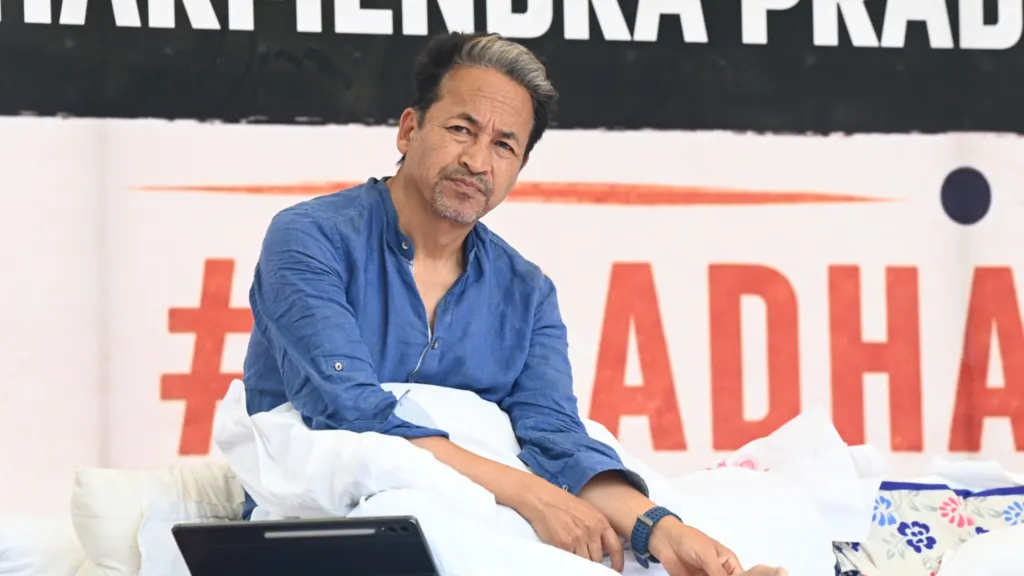
Supporters gather at Jantar Mantar as Sonam Wangchuk continues his hunger strike for education reforms.
India protests intensified on Thursday as activist Sonam Wangchuk continued his hunger strike for a 26th day, saying he had lost 11 kilograms but remained determined to press for education reforms and the protection of student protesters.
AI Investment: Alphabet’s Cash Flow Turns Negative as Google Increases AI Spending
Wangchuk, who has become a prominent figure in the youth-led movement organised by the Cockroach Janta Party (CJP), remains in hospital after police removed him from the protest site at Jantar Mantar in New Delhi over the weekend.
Activist Refuses to End Fast
In a video message from his hospital bed, Wangchuk said he wanted to end his fast but would do so only after receiving assurances that no force or retaliatory action would be taken against students.
He praised demonstrators for remaining peaceful despite the police crackdown during Monday’s march to Parliament.
“I want to salute all the students who conducted themselves with remarkable restraint,” he said, adding that the violence strengthened his resolve to continue the hunger strike.
Thousands Continue Demonstrations
Large crowds have continued gathering at Jantar Mantar despite a heavy security presence.
The protests gained momentum after clashes between demonstrators and police during Monday’s march. Authorities used batons and tear gas to disperse crowds, leaving protesters and police officers injured.
Police said 60 protesters and 118 police personnel were injured. Organisers, however, claimed around 150 demonstrators were hurt. Reports indicated that more than 300 people had received medical treatment following the unrest.
Government Responds
Prime Minister Narendra Modi has not commented directly on the protests. However, he announced plans to establish fast-track courts to ensure swift punishment for those responsible for examination paper leaks.
In a post on X, Modi said protecting students’ futures remained a government priority and warned that those responsible for harming young people’s prospects would face strict action.
Health Minister JP Nadda visited Wangchuk in hospital and appealed to him to end his hunger strike. He said the government remained open to discussions on the issues raised by the activist.
Protesters Maintain Their Demands
The Cockroach Janta Party said the government’s announcement did not address the root causes of repeated examination paper leaks.
Movement leaders insisted that Education Minister Dharmendra Pradhan should resign, arguing that he must take responsibility for repeated failures in the examination system.
Organisers also vowed to continue peaceful demonstrations until their demands are met.
Human Rights Concerns Raised
Human Rights Watch criticised the use of force against protesters and called for an independent investigation into the police response.
The organisation urged Indian authorities to protect the right to peaceful assembly and avoid unnecessary restrictions, including temporary suspensions of mobile internet services.
Meanwhile, police have maintained tight security around Jantar Mantar and closed several metro stations in central New Delhi as demonstrations continue.
Movement Gains National Attention
The Cockroach Janta Party began as a satirical movement but has rapidly evolved into a nationwide campaign demanding education reforms and greater accountability.
The protests have drawn support from opposition politicians, civil society groups and students across India, making the movement one of the country’s largest youth-led demonstrations in recent years.