
Government Securities Account for 96.1% of Bank Investments; Industry and SMEs Need Better Credit Access: Mian Zahid Hussain
Business leader urges government to reduce bank borrowing, expand private-sector financing and improve access to credit for industry, agriculture and exporters
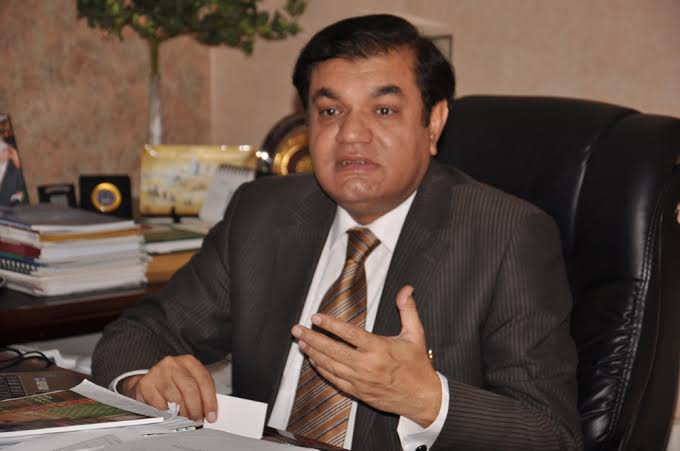
Mian Zahid Hussain calls for better SME financing and reduced government reliance on bank borrowing.
KARACHI, November 23, 2026: President of the Pakistan Businessmen and Intellectuals Forum (PBIF) and All Karachi Industrial Alliance (AKIA), and Chairman of the National Business Group Pakistan, Mian Zahid Hussain, has urged the government to gradually reduce its reliance on banks for budget financing.
He said this would create more room for lending to industry, agriculture, exporters and small and medium enterprises (SMEs).
Referring to the State Bank of Pakistan’s Quarterly Compendium: Banking Statistics, September 2026, released on November 19, he highlighted the growing concentration of bank investments in government securities.
According to the report, government securities accounted for 96.1 per cent of banks’ total investments at the end of September 2026. These included Treasury bills, Pakistan Investment Bonds and Government Ijara Sukuk.
While these instruments provide financing to the government and help banks manage liquidity, Hussain warned that excessive reliance on them could restrict lending to businesses.
Bank Investments Far Exceed Private-Sector Advances
Hussain said banks’ net investments reached Rs41.35 trillion at the end of September 2026. In comparison, their total net advances across all sectors stood at Rs15.70 trillion.
This means investments were approximately 2.63 times higher than net advances.
For more: TikTok Redesigns Family Pairing with New Parental Insights and Educator Resources
Between June and September, net investments declined by Rs2.29 trillion. Meanwhile, net advances increased by Rs339 billion.
He stressed the need to examine how much of this additional lending reached new businesses. He also questioned how much financing supported machinery purchases, production expansion and export orders.
Five Major Banks Hold Significant Share of Investments
Hussain said five major banks held combined investments of Rs25.69 trillion in September 2026. These included United Bank Limited, Habib Bank Limited, National Bank of Pakistan, Meezan Bank and Bank AL Habib.
Together, these institutions accounted for:
- 57.3 per cent of total banking-sector assets.
- 52.8 per cent of total bank deposits.
- 62.1 per cent of banking-sector investments.
- 47.9 per cent of private-sector advances.
- 42.4 per cent of SME financing.
He said large banks could use their extensive branch networks and trade-finance facilities to reach more first-time business borrowers.
Government Borrowing Highlights Need for Balanced Financing
Referring to the State Bank’s annual report, Hussain said the government borrowed Rs5,492.7 billion from scheduled banks to meet budgetary requirements during FY2025-26.
During the same period, outstanding bank credit to private businesses increased by Rs1,173.2 billion. Manufacturing businesses received Rs656.6 billion of this increase.
He welcomed the growth in business lending. However, he stressed that financing terms and repayment periods must reflect actual business requirements.
Timely working capital helps businesses purchase raw materials, pay salaries and fulfil export orders. Similarly, long-term financing allows companies to install machinery and expand production capacity.
SME Financing Needs Greater Transparency
Hussain said outstanding SME financing reached Rs1,137 billion at the end of September 2026. This financing covered 350,862 borrowers.
He proposed that the State Bank use SMEConnect, which became mandatory on November 1, to improve transparency in SME lending.
He recommended quarterly bank-wise reporting of the following indicators:
- Number of first-time SME borrowers.
- Financing applications approved.
- Actual amounts disbursed.
- Time taken to process financing decisions.
- Applicable mark-up rates and loan tenors.
- Main reasons for rejecting applications.
He also urged banks to rely more on business cash flows and verified sales records when assessing repayment capacity.
According to him, viable small businesses should not lose access to financing simply because they lack sufficient property collateral.
Calls for Reduced Government Borrowing and Wider Investment Base
Hussain urged the Ministry of Finance to reduce unnecessary government expenditure and broaden the tax base. He also called for quarterly comparisons of actual bank borrowing against budget estimates.
Furthermore, he suggested improving access to government securities for pension funds, insurance companies, mutual funds and individual investors. This could help diversify government financing and reduce dependence on a few large banks.
He stressed that the success of financial-sector reforms should be measured by their impact on businesses.
More companies should be able to obtain financing on reasonable terms. They should then be able to increase production, expand exports and create employment opportunities.
He said a better balance between government financing and private-sector credit was essential for sustainable economic growth.