

Genetic Counselling Drives a New Era of Personalised Healthcare and Fertility Planning in the UAE
Advances in genetic medicine and fertility care are helping families make informed reproductive decisions while supporting the UAE’s vision for preventive, precision healthcare.
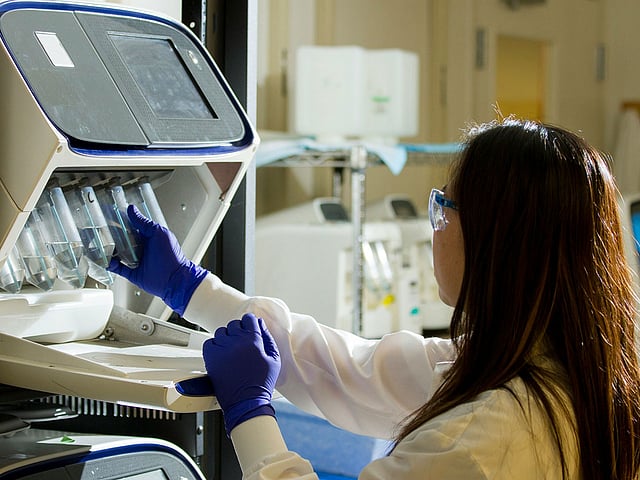
A genetic counsellor discusses personalised fertility and healthcare options with patients.
Genetic Counselling is rapidly becoming a cornerstone of modern healthcare as countries worldwide shift from treating disease after it develops to preventing health risks before they emerge. Across the global medical landscape, advances in genetic medicine are transforming how doctors assess inherited conditions, personalise treatments, and support individuals in making informed decisions about their long-term health and family planning.
Healthcare experts say predictive and preventive care is increasingly replacing traditional reactive approaches. The World Health Organization has reported that congenital and genetic disorders remain a major cause of infant and childhood deaths worldwide, highlighting the growing need for early screening, accurate diagnosis, and timely intervention.
Pakistan Tightens Foreign Media Rules as New Reporting Restrictions Draw Press Freedom Concerns
Around 100 words into this transition, Genetic Counselling has emerged as one of the most valuable tools in reproductive healthcare. It enables prospective parents to understand inherited risks, evaluate reproductive options, and make informed medical decisions before pregnancy or fertility treatment begins.
The importance of these services is particularly evident across the Gulf region, where inherited blood disorders such as thalassaemia and sickle cell disease remain relatively common. Health authorities have strengthened premarital genetic screening programmes to identify carriers and couples at higher risk of passing inherited conditions to future generations. Newborn screening programmes also play an essential role by allowing early diagnosis and prompt medical care.
Medical specialists stress that fertility treatment and genetic counselling complement these public health initiatives rather than replace them. Procedures such as in vitro fertilisation (IVF) combined with preimplantation genetic testing help reduce reproductive risks in selected cases, while premarital, prenatal and newborn screening continue to form the foundation of comprehensive reproductive healthcare.
The UAE has positioned itself at the forefront of this transformation by expanding access to integrated fertility and genetic medicine services. Supported by continued investment in healthcare innovation, hospitals and specialist centres are adopting multidisciplinary approaches that combine advanced reproductive medicine with personalised genetic assessment.
Experts note that genetic counselling today extends far beyond diagnosing rare inherited diseases. It now plays a significant role in fertility planning, investigations into recurrent pregnancy loss, inherited disease screening, and assisted reproductive technologies such as IVF and intracytoplasmic sperm injection (ICSI).
For many couples experiencing fertility challenges, genetics may be an underlying factor that is not immediately apparent. Genetic screening can identify inherited conditions linked to infertility, recurrent miscarriages, failed embryo implantation, or other reproductive complications. Detecting these risks early allows clinicians to tailor treatment strategies and improve the chances of a healthy pregnancy.
A recent clinical case at SEHA fertility centres demonstrated the impact of this personalised approach. A couple undergoing fertility treatment discovered through pre-IVF carrier screening that both carried a pathogenic variant in the CD36 gene associated with Platelet Glycoprotein IV (GPIV). After experiencing recurrent miscarriages, an ectopic pregnancy and years of fertility difficulties, they underwent an individualised treatment plan combining IVF with Preimplantation Genetic Testing for Aneuploidy (PGT-A) and Preimplantation Genetic Testing for Monogenic Disorders (PGT-M). The carefully selected embryo transfer ultimately resulted in a successful pregnancy.
Healthcare professionals say the case illustrates how combining reproductive medicine with advanced genetic assessment can reduce inherited risks while improving pregnancy outcomes.
The growing role of genetic medicine also highlights the importance of collaboration between fertility specialists, genetic counsellors, embryologists, haematologists and laboratory experts. Working together enables healthcare providers to deliver coordinated care tailored to each patient’s medical history, reproductive goals and emotional wellbeing.
As the UAE continues investing in genomics, biotechnology and artificial intelligence, experts believe genetic counselling will become an increasingly important component of preventive medicine. By identifying risks early and supporting personalised healthcare decisions, the field is expected to play a central role in improving maternal health, reproductive outcomes and future generations’ wellbeing.
Modern healthcare is steadily moving towards a future where prevention, precision and personalised care are prioritised over reactive treatment. Genetic counselling stands at the centre of this evolution, helping individuals make informed choices while shaping healthier communities across the UAE and beyond.