FRLD Funding: Pakistan Awaits Climate Finance as Loss and Damage Fund Delays Approvals
The FRLD Board postpones funding decisions until December after receiving 176 proposals from 119 developing countries, while Pakistan seeks support for three climate resilience projects.
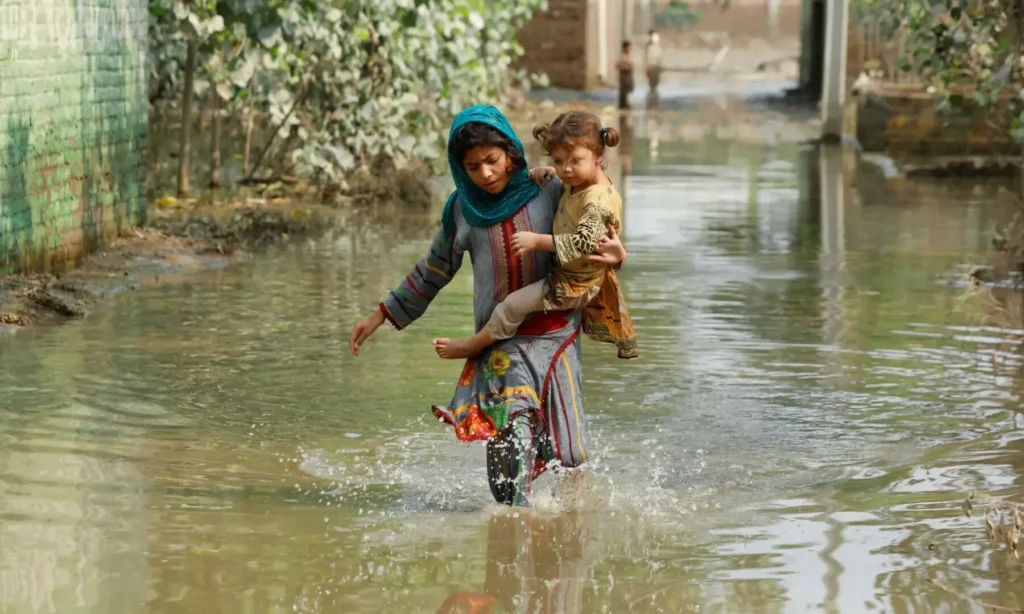
FRLD Board meeting reviews global climate funding proposals in Manila.
FRLD Funding for Pakistan and other climate-vulnerable nations will face further delays after the Board of the Fund for Responding to Loss and Damage (FRLD) postponed funding approvals until December 2026 to review an overwhelming number of applications.
The FRLD Board reached the decision during its ninth meeting in Manila from July 8 to 10, citing the need to evaluate 176 funding requests submitted by 119 developing countries against limited financial resources.
The Fund, established at COP27 in Egypt in 2022 and made operational through subsequent UN climate conferences, received requests worth $2.8 billion, far exceeding the $250 million available for its first round of disbursements.
WAICO: Pakistan to Join Global AI Organisation as Founding Member
Pakistan has submitted three funding proposals focused on climate resilience, agriculture, healthcare and recovery from flash flood losses.
According to official sources, one proposal has completed the peer-review process and received encouraging feedback, while reviewers are still assessing another proposal for climate-resilient health systems in Balochistan.
Pakistan’s proposals include a $20 million project titled Responding to Unavoidable Climate Impacts through Recovery and Systems Strengthening, which the United Nations Development Programme (UNDP) will implement.
The second proposal seeks $18 million through the World Health Organization (WHO) to strengthen climate-resilient health systems for vulnerable communities in Balochistan.
The third proposal requests $20 million to compensate and rehabilitate private fish farms and public-sector hatcheries damaged by recent flash floods in Khyber Pakhtunkhwa.
Pakistan’s representative on the FRLD Board, Ali Tauqeer Sheikh, said the Board received nearly 100 applications on the final submission day alone, making it impossible to complete reviews before the Manila meeting.
He said the Board aims to assess around two-thirds of all proposals before its next meeting in December and expects to approve about a dozen projects if additional financial contributions increase the available funding.
The Board currently plans to approve projects under the Barbados Implementation Mechanism (BIM), a two-year pilot programme backed by an initial allocation of $250 million.
Civil society organisations criticised the Board for delaying both funding approvals and its long-awaited resource mobilisation strategy.
The Fill the Fund campaign warned that the current funding pool would cover only a small fraction of the total demand and urged donor countries to mobilise the hundreds of billions of dollars needed annually to help climate-vulnerable nations recover from disasters.
Campaign member Harjeet Singh said the Board must remove institutional obstacles and accelerate funding decisions, warning that continued delays would undermine the Fund’s purpose.
Civil society groups also criticised governance issues, including unresolved World Bank hosting arrangements and restrictions on observer participation during Board discussions, arguing that greater transparency and faster decision-making remain essential for supporting frontline communities affected by climate change.