France Protests Clashes Erupt in Paris and Marseille Despite Massive Security Deployment
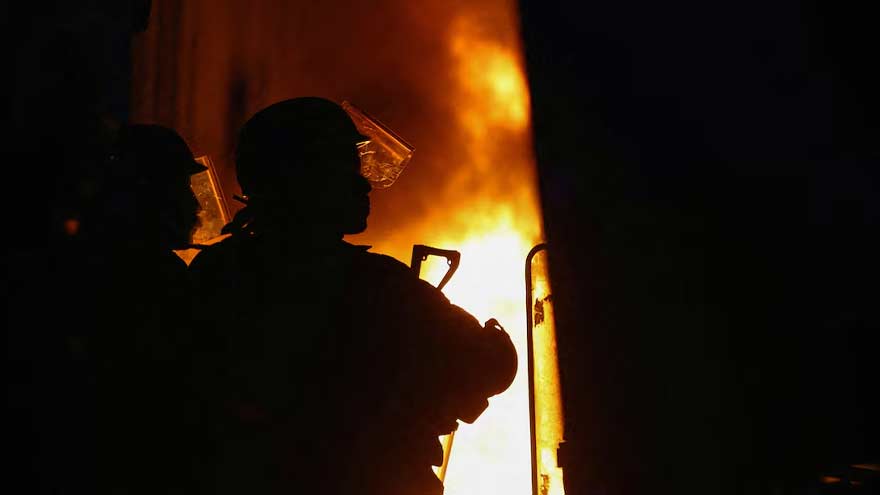
France Protests Demonstrators rally against rising living costs as clashes erupt across major French cities.
Hundreds of thousands of people protested across France on Saturday. They opposed rising living costs and growing inequality. Most rallies remained peaceful during the day. However, clashes erupted in Paris, Marseille and several other cities after nightfall.
France’s Interior Ministry estimated the nationwide turnout at 410,000. Trade unions claimed the actual figure was twice as high.
The largest demonstration took place on the southeastern outskirts of Paris. At least 110,000 people joined the rally, according to reported figures. Tensions rose sharply after the demonstration ended.
Riot police fired tear gas and water cannon at around 500 hooded youths. The group eventually dispersed during a cold, rainy evening.
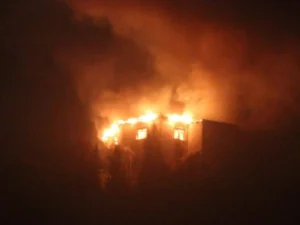
In Marseille, youths set fire to rubbish bins and blocked roads. They also threw rocks and bottles at security forces. Police reported that several shops were ransacked, including two jewellery stores.
Obama Accuses Trump of Starting Unnecessary War with Iran, Says Tehran Is Strategically Stronger
Clashes also occurred in Lyon, Bordeaux, Grenoble, Clermont-Ferrand, Lille, Rennes, Nantes and Toulouse.
Interior Minister Laurent Nunez said high-risk groups repeatedly broke away from the main marches. He accused far-left activists and criminal gangs of trying to provoke violence.
Paris Tightens Security as Businesses Close
Authorities deployed 70,000 police officers and gendarmes across France. That was 10,000 more than the previous week. The government had admitted underestimating the unrest on October 17.
Nunez said Saturday’s violence was less severe than the previous weekend’s unrest. At that time, looters and vandals caused widespread damage.
“What changed was anticipation,” he told reporters.
The minister also accused far-right activists of seeking confrontations with left-wing groups. He cited incidents in Nice and Montpellier. These developments raised concerns about further political clashes.
Central Paris took on the appearance of a city under lockdown. Shopkeepers boarded up their storefronts. Museums closed, while more than 20 metro stations shut as a precaution.
Business groups urged retailers to remain closed. Thousands of shops and businesses had suffered damage or looting the previous weekend.
“There are hardly any customers, so it’s not really worth staying open,” said Oskar, manager of a Kiton boutique in Paris.
Several major cultural attractions also closed for the day. These included the Louvre, the Musée d’Orsay and the Paris Opera. The closures disrupted sightseeing plans for many tourists.
“Everything’s boarded up and we’re not quite sure where we should be,” said Xavier Dolliole, a visitor from New Orleans, United States.
Protests Spread Across Europe
The unrest began with student demonstrations in suburban Paris last month. Students initially protested conditions in schools. The movement later expanded into opposition to government economic policies and rising living costs.
Demonstrations also spread to other European countries. In Brussels, Belgian police used tear gas and pepper spray during clashes with anti-government protesters.
Several Italian cities also witnessed a second weekend of protests. Demonstrations took place in Albania as well.
Jean-Luc Mélenchon, leader of the left-wing France Unbowed party, joined the Paris rally. He predicted that protests would continue unless President Emmanuel Macron addressed public concerns.
Mélenchon urged the government to respond to growing social discontent. He warned that demonstrations could become a weekly occurrence if conditions did not improve.
Protesters Challenge Government Response
Some demonstrators accused authorities of prioritising businesses over ordinary people. They argued that the government had overlooked the financial pressures facing households.
Soldiers also patrolled the Champs-Élysées. The famous Paris boulevard features luxury shops and restaurants.
“We shed tears for shops, not for the people who are being impoverished all year round,” said Clara Lebbadi, a 22-year-old arts student.
Lebbadi said she and a friend had considered staying home because of security concerns. However, they decided to attend because they opposed what they viewed as excessive repression.
In Orléans, around 120 kilometres south of Paris, an authorised march proceeded peacefully. Demonstrators protested against Marine Le Pen’s far-right National Rally party. The party was holding its congress in the city.
A shooting west of Paris on Friday had already heightened tensions. A gunman suspected of acting out of Islamophobic hatred killed one person. He also wounded four others, including a 12-year-old girl.
Bally Bagayoko, mayor of Saint-Denis and a member of France Unbowed, said the march aimed to challenge the far right directly.
Political Pressure Mounts on Macron
The protests have increased pressure on Macron’s government. Demonstrators want action on living costs, inequality and economic policy.
Authorities have expanded security to prevent further violence. However, the demonstrations reveal continuing public frustration across France.
The unrest has also spread beyond French borders. This reflects wider concerns about economic hardship and government policies in parts of Europe.
The coming days will test the government’s response. Its handling of protesters’ demands and public security could shape the next phase of the demonstrations.