Federal Budget 2026-27 Positive For Economic Stability and National Security; PKR 2.264 Trillion Increase In FBR Target Is A Challenge: Mian Zahid Hussain

Mian Zahid Hussain outlines proposals to boost Loralai's economic development.
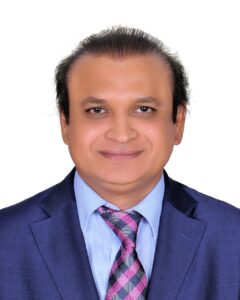
KARACHI (15-June-2026): Mian Zahid Hussain, President of Pakistan Businessmen and Intellectuals Forum (PBIF), President of All Karachi Industrial Alliance (AKIA), Chairman of National Business Group Pakistan, Chairman of FPCCI’s Policy Advisory Board, and Former Provincial Minister for Information Technology Sindh, has termed the Federal Budget 2026-27 as a balanced, consistent, and reformative document in the context of the country’s current economic situation.
Mian Zahid Hussain said that in this budget, with a total outlay of Rs 18.77 trillion, setting a tax target of Rs 15.264 trillion for the FBR compared to the previous Rs 13 trillion is a major challenge. The FBR will have to collect Rs 2.264 trillion more in the new fiscal year than last year’s actual recovery, which will be achieved through tax adjustments and enforcement measures, making a hard time for the business community as well. Mian Zahid Hussain noted that despite improvements in economic indicators, retaining the growth rate target at four percent is beyond comprehension. Achieving a 5 percent growth rate is now imperative for employment generation, poverty reduction, and industrial development in Pakistan. In this budget, increasing the minimum tax for the export sector from 1 percent to 1.25 percent and not restoring the fixed tax regime is unexpected. However, the continuation of the existing tax structure for the IT sector for three years and the government’s commitment to promoting IT exports will breathe new life into the digital economy, which is absolutely vital for the country’s foreign exchange reserves.
Mian Zahid Hussain stated that at the government level, reforms in the super tax system and the abolition of the super tax on incomes between Rs 150 million and Rs 500 million is a major relief for corporate entities. Similarly, reducing the rate from 10 percent to 8 percent on incomes exceeding Rs 500 million will be instrumental in promoting investment. The saving of Rs 3.7 trillion through negotiations with Independent Power Producers (IPPs) in the energy sector is a clear testament to the government’s improved performance, which will play a pivotal role in curbing circular debt. Taking the defense budget to Rs 3 trillion for the first time in Pakistan’s history is a commendable measure, and the record allocation of Rs 838 billion for the Benazir Income Support Program (BISP) for social protection proves that the government is determined to prioritize public welfare and National security.
The veteran business leader pointed out that the allocation of a massive sum of Rs 8.054 trillion for interest payments indicates the growing burden of the country’s debts. To tackle this, increasing non-tax revenue and generating Rs 1.67 trillion from the petroleum levy was inevitable, although it will fuel inflation. However, the business community expects that measures will be taken to reduce electricity and gas tariffs to pave the way for the competitiveness of export industries in the global market; this approach can potentially yield a $10 billion increase in Pakistan’s exports. Mian Zahid Hussain also welcomed the government’s concessionary rate of 4.5 percent on bank loans for exporters. Various targeted measures taken in the budget for the development of agriculture are also highly welcome. The allocation of Rs 100 billion for infrastructure, especially for the Quetta to Karachi N-25 highway, will significantly promote connectivity and trade in the country. The relaxation in the income tax slabs for the salaried class and setting the minimum wage at Rs 40,700 is a much-needed relief for the inflation-stricken public.
Mian Zahid Hussain concluded that the business community is optimistic that these budget targets, coupled with the consultation of the private sector and the implementation of sound policies, will steer the country toward economic stability. This will ultimately increase foreign investment and create abundant employment opportunities.