
China-Pakistan Youth Dialogue Calls for Stronger Academic and Technological Cooperation
Dr Atta-ur-Rahman presents 20-point development strategy as diplomats and university leaders urge greater research, innovation and student exchanges
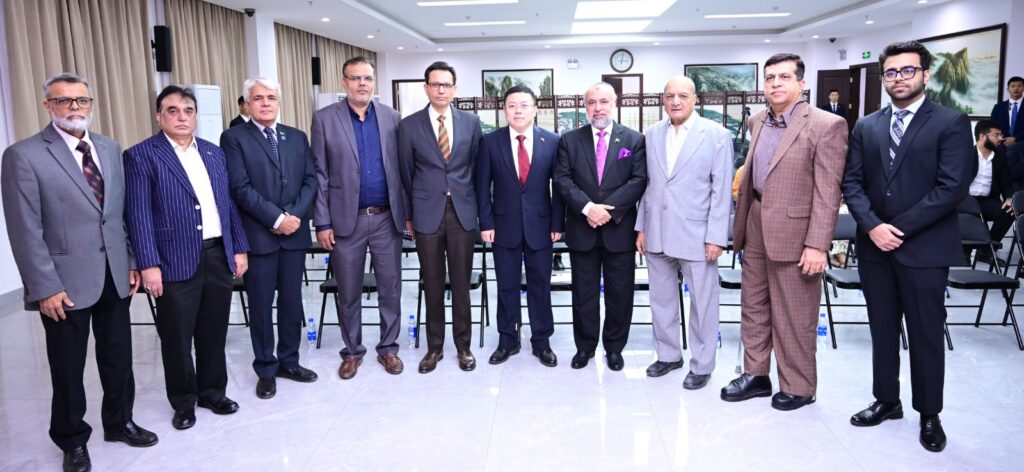
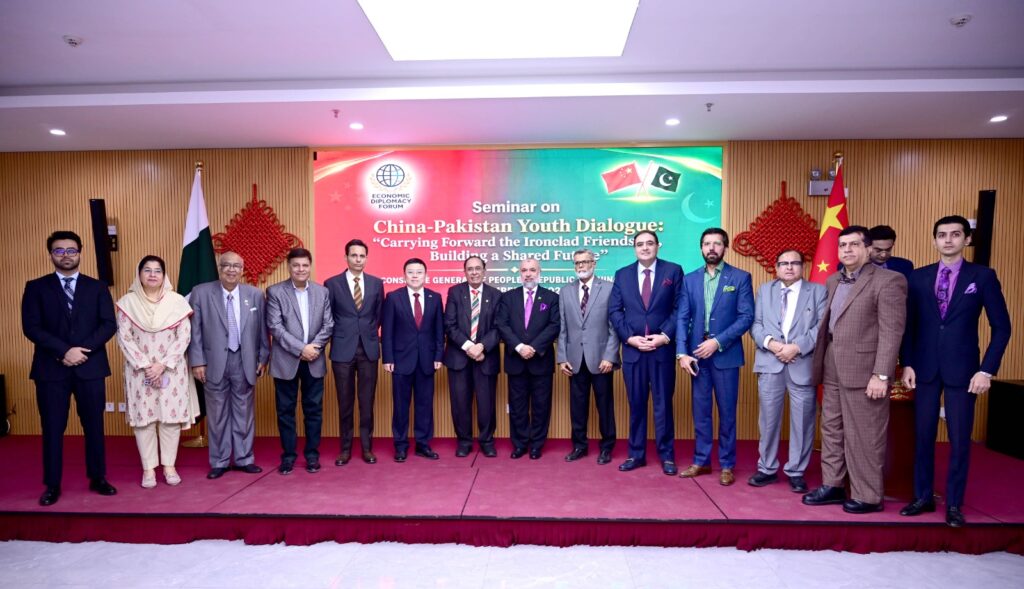
Diplomats, scientists and university leaders attend the China-Pakistan Youth Dialogue in Karachi.
The Economic Diplomacy Forum (EDF), Pakistan, and the Chinese Consulate in Karachi have jointly organised a seminar calling for stronger academic, scientific and technological cooperation between Pakistan and China.
Titled “China-Pakistan Youth Dialogue: Carrying Forward the Ironclad Friendship, Building a Shared Future”, the event was held at the Chinese Consulate in Karachi.
The dialogue took place during the year marking the 75th anniversary of diplomatic relations between the two countries. It brought together diplomats, scientists, university leaders, faculty members, students, EDF members and media representatives.
The seminar focused on youth engagement, academic diplomacy, scientific cooperation and stronger people-to-people ties.
Professor Dr Atta-ur-Rahman, former federal minister for science and technology and founding chairman of the Higher Education Commission (HEC), attended as chief guest. Dr Feng Deheng, Acting Consul General of China in Karachi, delivered the keynote address.
EDF calls for stronger university partnerships
In his welcome address, Dr Muhammad Farooq Afzal, Founder President of the Economic Diplomacy Forum, said young people must carry forward the longstanding friendship between Pakistan and China.
He highlighted the role of education, research, innovation and entrepreneurship in strengthening bilateral relations.
Dr Afzal said the partnership had expanded over 75 years. It now covers trade, investment, infrastructure, technology, education, culture and people-to-people exchanges.
Governor House Karachi Hosts Ceremony to Mark 557th Birth Anniversary of Baba Guru Nanak Dev Ji
He also highlighted the China-Pakistan Economic Corridor (CPEC). He said its next phase should place greater emphasis on technology, research, innovation and human resource development.
He urged Pakistani universities to build stronger links with Chinese institutions. These partnerships could include joint research, faculty exchanges, student mobility and innovation programmes.
“The future of Pakistan-China relations cannot depend on governments and diplomats alone. It must also be shaped by universities, researchers, entrepreneurs, professionals and, above all, our young people,” he said.
Addressing students, Dr Afzal encouraged them to learn from China’s progress in science, technology and industrial development. He urged them to adapt relevant lessons to Pakistan’s needs.
He added that young people were not simply beneficiaries of bilateral friendship. They were also its future custodians and builders.
Chinese Consulate highlights education and CPEC 2.0
In his keynote address, Dr Feng Deheng highlighted the strength of China-Pakistan friendship. He stressed the responsibility of young people in carrying the partnership forward.
He described educational cooperation as essential to stronger people-to-people relations and youth development.
Dr Feng said more than 30,000 Pakistani students were pursuing higher education in Chinese universities. He also noted that the CPEC Consortium of Universities included 93 Pakistani and 40 Chinese institutions.
He highlighted joint academic programmes, scientific research and faculty and student exchanges.
The Acting Consul General also outlined the Chinese Consulate’s educational initiatives in Sindh and Balochistan. These include the Consul General Scholarship programme, support for the Confucius Institute at the University of Karachi and Chinese language education.
Referring to CPEC Version 2.0, Dr Feng said cooperation was expanding into several emerging sectors. These include modern industry, agriculture, scientific research, digital technology and green development.
He encouraged young people to promote mutual learning and practical cooperation. He also reaffirmed the Consulate’s commitment to stronger academic links and wider educational opportunities.
Atta-ur-Rahman presents 20-point development strategy
Addressing the seminar, Professor Dr Atta-ur-Rahman presented a 20-point strategy based on China’s development experience.
He said Pakistan must prioritise research, innovation and technology investment to build a sustainable knowledge-based economy.
His proposals included increased research funding and tax incentives for private-sector research and development. He also called for accessible financing for technology companies.
The strategy further emphasised modern technology zones and advanced research laboratories.
Dr Atta-ur-Rahman stressed that stronger scientific and technological capabilities could accelerate Pakistan’s economic development.
He also appreciated the EDF and Chinese Consulate for bringing young people into an important discussion on bilateral cooperation.
University leaders discuss academic collaboration
Professor Dr Wasim Qazi, Vice Chancellor of the University of Karachi, and Professor Dr Sajida Zaki, Head of the Department of Humanities at NED University of Engineering and Technology, also addressed the gathering.
They highlighted their institutions’ efforts to promote Chinese language education and cooperation with Chinese universities.
They also discussed institutional partnerships and memoranda of understanding. These arrangements aim to support joint research, academic collaboration and student exchanges.
Professor Dr Tariq Rahim Soomro of the Institute of Business Management (IoBM) stressed the importance of regular engagement between young people from both countries.
He said such dialogues allow students to exchange ideas, understand different perspectives and learn from one another.
Pakistani and Chinese students exchange ideas
Students from the University of Karachi, NED University, IoBM and Muhammad Ali Jinnah University attended the seminar.
Three students from Sichuan Normal University in China also joined virtually. They shared their experiences and discussed the support available to students pursuing education, science and technology in China.
Pakistani students interacted with their Chinese counterparts during an extended question-and-answer session.
The exchange offered participants an opportunity to build mutual understanding. It also encouraged discussion on future academic and scientific partnerships.
Organisers pledge continued engagement
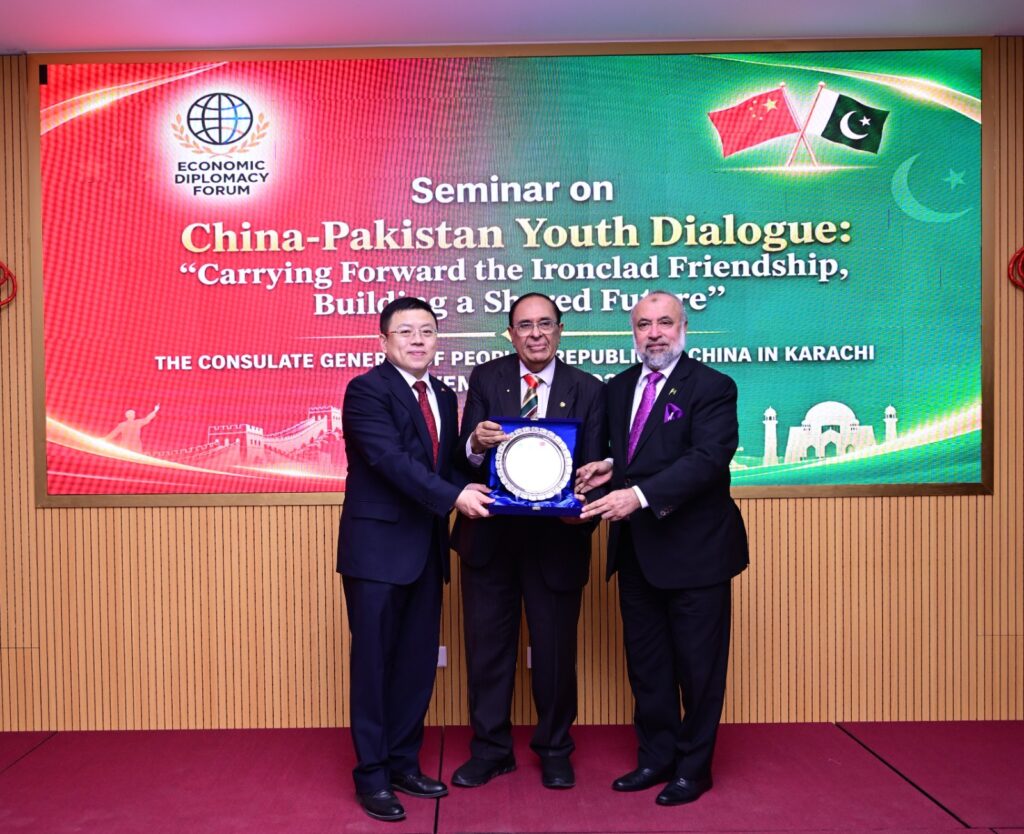
The organisers presented commemorative shields to the chief guest and distinguished speakers in recognition of their contributions.
Delivering the vote of thanks, Dr Muhammad Farooq Afzal appreciated the Acting Consul General, chief guest, academic leaders and participating universities.
He also thanked the students, Chinese diplomatic team, EDF members and media representatives.
Dr Afzal expressed hope that the dialogue would lead to continued engagement between the Chinese Consulate, Pakistani and Chinese universities, and the Economic Diplomacy Forum.
The seminar highlighted the importance of building on 75 years of diplomatic relations. It called for a future partnership driven by knowledge, scientific advancement, innovation and youth leadership.